Nairobi weather in February
February in Nairobi: warm, dry — an excellent time to visit.
Updated September 2026 · climate normals from ERA5 reanalysis
#7 of 12 months in Nairobi · #172 of 1413 destinations to visit in February · comfort 90/100 (tier S)
- Days
- 28°C
- Nights
- 16°C
- Wet days
- 5
- Sun
- 11.2 h
- Humidity
- 58%
- Daylight
- 12 h
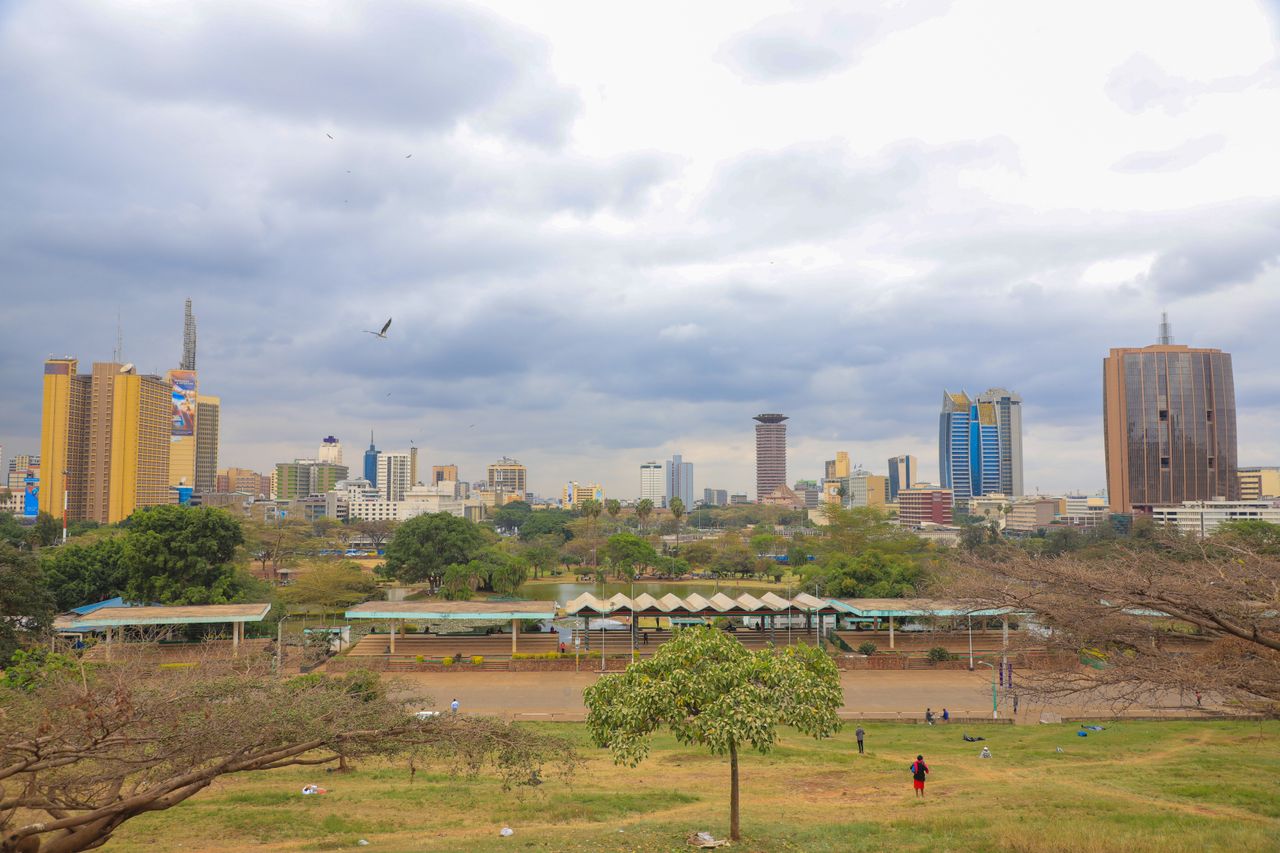
What February is like in Nairobi
The hottest, clearest and driest month, when animals concentrate around the remaining water in the park.
peak
confidence: high
Traveller notes on Nairobi in February
Forum consensus places February in the hot, dry stretch that makes January-February the main tourist season - mornings in the low 60sF give way to highs in the high 70s/low 80sF, then it cools off nicely at night with no need for air conditioning. One quirk repeated often: it can get genuinely chilly after dark out on the Mara, to the point hotels tuck a hot water bottle into your bed. The standard packing tip is a short-sleeve base layer plus a medium-weight fleece for the cool morning hours until around 9:30am, shed once the sun's up. Posters call it a strong month for game viewing, including the red elephants around Tsavo.
Other months in Nairobi
Regulars are specific that November's short rains typically start easing by mid-month, this stretch marking a genuine turn toward plenty of sunshine without yet tipping into properly hot - regulars call this among the more enjoyable months for exactly that combination. Our row backs that warm, still-showery read, 26C over 15.7C nights, with 47.8mm of rain across 8 days and humidity at 71 percent. Regulars are consistent this counts as traditionally the start of the region's warmer stretch, evenings still cool enough at this elevation for a light layer even as days turn pleasant. A rain jacket remains worth packing for the tail end of the short rains rather than relied upon as a given. The record: 10.8 hours of sun, a 17 kph wind and AQI 47.
Regulars call July part of Kenya's winter and its best travel season at once - dry, cooler than the rest of the year, and the more expensive stretch for exactly that reason. The catch they name every time is the morning: mild warm days give way to properly cold nights and dawns, overcast and damp more often than not, needing a real jacket or fleece rather than a light layer. Our row backs both halves, 23.3C reading as 23C over 12.9C nights, with rain almost gone at 16mm across 4 days. This is also safari season at altitude rather than at the coast, so the chill belongs to Nairobi and the highlands rather than to Kenya as a whole. The record: humidity 67 percent, 8.3 hours of sun, a 10.7 kph wind and AQI 71.
Regulars keep correcting the same assumption: this city is cooler and drier-feeling than the rest of Kenya because it sits high, so June here is not an equatorial month. They give low to mid 70s by day, cool mornings and evenings, and days that can stay at 16 to 18C - our row reads 23.7C over 13.6C at 70 percent humidity. June also runs towards July and August, the coldest part of the year. Their packing list is a spring one: a light rain jacket, a fold-up umbrella and a fleece for the evening. Rain is modest at 35.2mm across 6.8 days. The figure worth knowing is the air, at AQI 81. The record: 9.8 hours of sun and an 11 kph wind.
September sits inside Kenya's dry season, with little and possibly no rain before the short rains arrive in late October - our row gives 25.9mm across 4.7 days at 63 percent humidity. Regulars describe mid-September to mid-October as dry and warming, with Nairobi's own weather picking up through the month, and one benefit they mention unprompted: the mosquitoes are largely out of season. The standing warning is about the ends of the day rather than the middle - early morning and sunset game drives get genuinely cold in an open vehicle, which our row's 13.9C night under a 26.3C day explains. Layers, always. The record: 10 hours of sun, a 13.8 kph wind and AQI 53.
Year-round notes are on Nairobi's overview. Add your own note from Nairobi's card on the map.
Nairobi climate normals — February
Monthly averages from ERA5 reanalysis. AQI is the mean US Air Quality Index for the month.
Crowds in Nairobi in February
How busy the place itself is — school and mass holidays, the months an editor tagged, and how sought-after the weather makes them. Never part of the comfort score.
Peak crowdsthe editor's peak month, school holidays in 2 of the markets that fill it
Peak crowdsBusyShoulder seasonQuiet
Best months for Nairobi's weather
Ranked by this destination's own climate comfort score across the year — a different thing from how busy it gets (see Crowds above).
Fair weatherNairobi's weather doesn't swing hard through the year — comfort stays fairly steady in every month.
What's on in Nairobi in February
Recurring seasonal events, natural spectacles, closures and holidays — curated and sourced.
- Season
Dry-season game viewing
1 Jan – 28 FebDry seasonThe short break between the two rainy seasons. Animals concentrate on what water is left in Nairobi National Park, and the tracks are firm enough to drive properly.
- Nature
Migrant bird season
1 Nov – 15 Apr · usuallyBirdlife seasonPalearctic migrants arrive with the short rains and stay into April, which is when the national park, the Athi plains and the Rift lakes an hour away hold the most species. The residents are there all year. Source ↗
Nearby, and something's on
Within 300 km of Nairobi — a day trip or a short hop — with something on this month. Never part of the comfort score.
Where is Nairobi?
Nairobi in February — FAQ
- Is February a good time to visit Nairobi?
- February in Nairobi: warm, dry — an excellent time to visit. It ranks #7 of 12 months for Nairobi on SeasonMap's comfort score (90/100).
- What is the weather like in Nairobi in February?
- In February, Nairobi averages a daily high of 28.2°C and a low of 15.5°C, with about 25 mm of rain over roughly 4.7 rainy days.
- What is the air quality in Nairobi in February?
- Nairobi has a mean US Air Quality Index of about 51 in February.
Within 300 km: Amboseli's Migrants on Lake Amboseli around 15 Nov – 31 Mar, and Arusha's Wildebeest calving season around 20 Jan – 15 Mar.