Wetter in Haleakalā-Nationalpark im Januar
Januar in Haleakalā-Nationalpark: kühl, regnerisch, mit sauberer Luft – eine ausgezeichnete Reisezeit.
Aktualisiert: September 2026 · Klimanormalwerte aus der ERA5-Reanalyse
Platz 5 von 12 Monaten in Haleakalā-Nationalpark · Platz 330 von 1413 Reisezielen im Januar · Komfort 85/100 (Stufe A)
- Tagsüber
- 15°C
- Nachts
- 11°C
- Regentage
- 14
- Sonne
- 9.8 h
- Luftfeuchte
- 78%
- Tageslicht
- 11 h
Notizen von Reisenden zu Haleakalā-Nationalpark im Januar
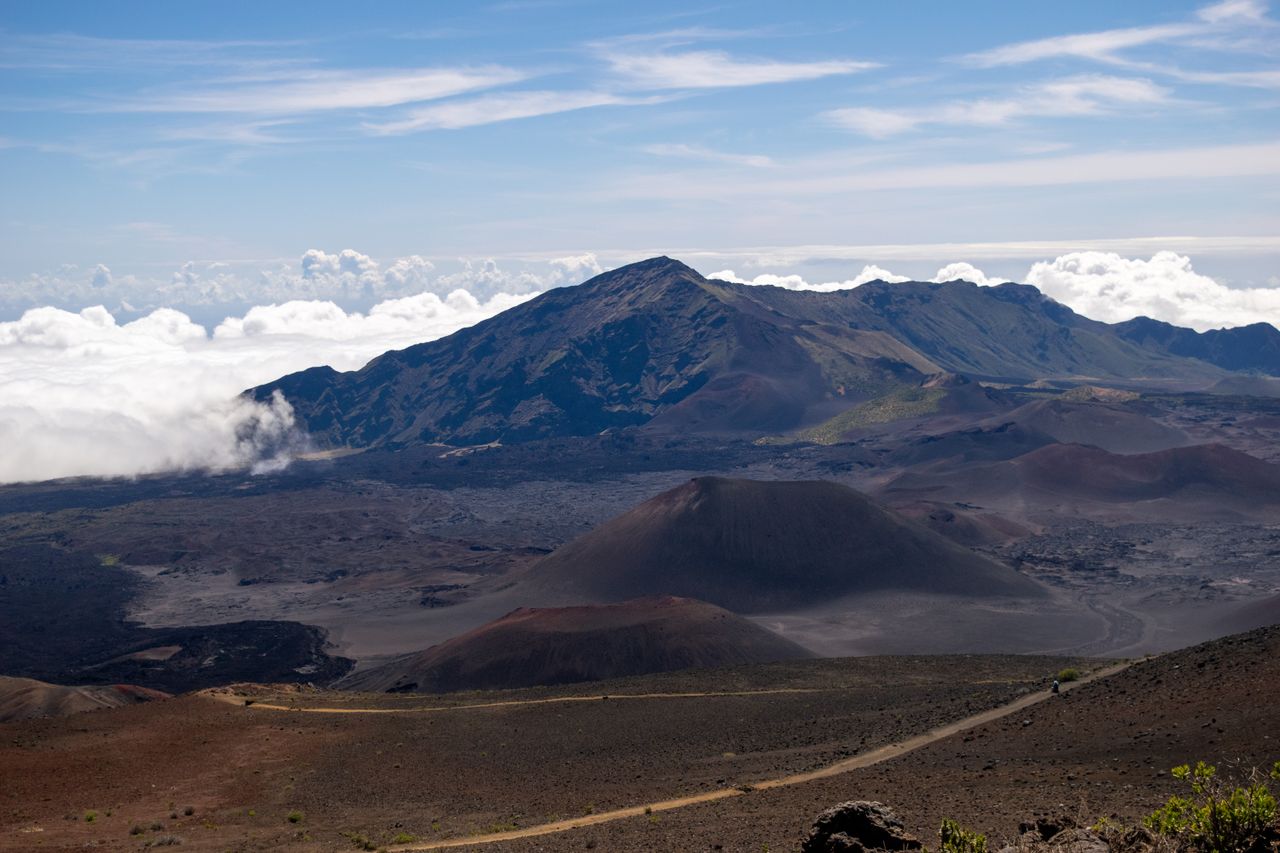
Haleakala-forum threads on a January visit describe the sunrise reservation window as running three to seven a.m., posters naming a January sunrise landing close to seven as why timing still matters this late in the window. Regulars call the summit genuinely cold regardless of how mild Maui feels at sea level, several posters recommending a comforter or heavy blanket alongside standard warm layers. Posters call conditions occasionally socked in and wet, several regulars naming this a real possibility even though outright closures are rare, forum consensus putting the odds under one percent on any given day. Regulars call a two-hour drive from Ma'alaea a standard estimate, several threads naming a four a.m. departure as necessary for a confirmed slot. Posters recommend real flexible expectations, several regulars recalling a visit years back where the park closed minutes before arrival. The record: 14.7C days, 11C nights, 81.1mm across over 14 days and 78 percent humidity.
Andere Monate in Haleakalā-Nationalpark
Haleakala-forum threads on a March visit describe the sunrise reservation system as genuinely mandatory, posters naming the three to seven a.m. booking window through Recreation.gov as required before dawn. Regulars call the summit at roughly ten thousand feet genuinely cold in March, several posters warning visitors underestimate how much colder it gets than sea level. Posters call the best colors often genuinely visible a full hour before the actual sunrise, several regulars naming this the reason arriving early matters even with a confirmed slot. Regulars call weather at the summit genuinely unpredictable, several threads describing clear skies turning to cloud cover within the same visit. Posters recommend real layered clothing regardless of the sea-level forecast, several regulars calling this standard given how fast conditions shift at altitude. The record: 13.7C days, 10.1C nights, an extraordinarily high 105.2mm across over 19 days and 79 percent humidity.
Haleakala-forum threads on a July visit describe the summit as genuinely harsh before dawn regardless of season, posters warning it stays cold and windy even in July and recommending real blankets from the hotel for the wait. Regulars call the sunrise moment spectacular but brief, several posters calling a summer sunrise sometimes visually duller since genuinely clear skies mean less dramatic color. Posters recommend staying past sunset instead for real stargazing, several regulars describing a sky full of stars and the Milky Way in full view shortly after dark. Regulars call the Leleiwi Overlook a real standard spot, several threads naming the short quarter-mile hike from its parking area a good alternative to the packed summit. Posters recommend checking forecasts for after-dark clarity, several regulars calling this the standard way to plan a real July stargazing visit. The record: 16.8C days, 12.9C nights, an extraordinarily high 86.8mm across over 24 days and 78 percent humidity.
Haleakala-forum threads on a February visit describe sunrise as genuinely the main draw, posters naming a roughly seven a.m. sunrise this time of year and recommending arrival half an hour early for parking. Regulars call the drive up from Kihei genuinely long, several posters citing about two hours and recommending a two or three a.m. departure to be sure of it. Posters call the summit genuinely harsh before dawn, several regulars warning conditions here stay demanding even in summer, let alone during February's cooler stretch. Regulars call the hill near the lower summit lot a real alternative viewpoint, several threads naming the trailhead there, shared with the Sliding Sands hike, as a direct view into the crater. Posters recommend real heavy layers regardless of how warm the island feels at sea level, several regulars calling this standard for a pre-dawn summit visit. The record: 13.4C days, 9.7C nights, an extraordinarily high 100.4mm across over 17 days and 78 percent humidity.
Haleakala-forum threads on sunrise weather are direct forecasts for the summit run genuinely unreliable, conditions capable of shifting completely between leaving the hotel and reaching the crater rim. Posters call the summit roughly thirty degrees cooler than sea level a real factor, temperatures commonly sitting in the low-to-mid forties before sunrise even during a comfortably warm September on the coast. Regulars recommend a windbreaker layered over something insulating, posters describing wind cutting straight through a sweatshirt alone. Unless an active system is moving through, the summit typically sits above the cloud layer, producing the dramatic halo effect around the rising sun that draws visitors well before dawn. Posters recommend booking the mandatory sunrise reservation ahead with buffer time. Regulars call the reward worth the wake-up regardless of season. The record: 16.8C days feeling like 15C, 13C nights, a high 65mm across nearly 21 days and 78 percent humidity.
Schreib deine eigene Notiz – direkt auf der Karte, bei Haleakalā-Nationalpark.
Klimanormalwerte Haleakalā-Nationalpark – Januar
Monatliche Durchschnittswerte aus der ERA5-Reanalyse. Der AQI ist der mittlere US-Luftqualitätsindex des Monats.
Andrang in Haleakalā-Nationalpark im Januar
Wie voll der Ort selbst ist – Schul- und Massenferien, die Monate, die die Redaktion markiert hat, und wie begehrt das Wetter sie macht. Fließt nie in den Komfort-Score ein.
Viel losWinter / Christmas break in Vereinigte Staaten, Schulferien in 2 der Herkunftsländer, aus denen die Gäste kommen(geschätzt)
HochbetriebViel losZwischensaisonRuhig
Die besten Monate fürs Wetter in Haleakalā-Nationalpark
Gerankt nach dem Klimakomfort-Score dieses Reiseziels übers Jahr – etwas anderes als der Andrang (siehe Andrang oben).
Ordentliches WetterDas Wetter in Haleakalā-Nationalpark schwankt übers Jahr kaum – der Komfort bleibt in jedem Monat recht gleichmäßig.
Was ist los in Haleakalā-Nationalpark im Januar
Wiederkehrende saisonale Events, Naturschauspiele, Schließungen und Feiertage – kuratiert und mit Quelle.
- Regel
Sunrise reservation required
1. Jan. – 31. Dez.Früh buchenEntering the summit district between three and seven in the morning needs a reservation booked on recreation.gov, released sixty days ahead and again forty-eight hours ahead, one per household every three days. Turning up without one does not work. Quelle ↗
- Regel
No swimming at the Pools of Oheo
1. Jan. – 31. Dez.SchließungenThe pools in the Kipahulu district are closed to entry on safety grounds and can only be looked at from the Kuloa Point trail. Flash floods and rockfall come without warning here, and help is an hour away down the Hana road. Quelle ↗
- Natur
Nene breeding season
1. Okt. – 31. MärzVogelsaisonRisikoThe Hawaiian goose nests on the ground through the cool half of the year, across a range of habitats and elevations inside the park. Pairs walk the summit road and the car parks in these months, so drive slowly and give them room. Quelle ↗
- Risiko
Winter storms at the summit
1. Dez. – 31. März · meistWinterstürmeSchließungenWinter storms can bring gale winds, ice and even snow to the summit, and the park closes the road up and cancels sunrise reservations until crews clear it; keep a summit day flexible when a Kona low is forecast. Quelle ↗
In der Nähe ist was los
Im Umkreis von 300 km um Haleakalā-Nationalpark – ein Tagesausflug oder ein kurzer Abstecher – mit etwas, das diesen Monat los ist. Fließt nie in den Komfort-Score ein.
Wo liegt Haleakalā-Nationalpark?
Haleakalā-Nationalpark im Januar – häufige Fragen
- Ist der Januar eine gute Reisezeit für Haleakalā-Nationalpark?
- Januar in Haleakalā-Nationalpark: kühl, regnerisch, mit sauberer Luft – eine ausgezeichnete Reisezeit. Beim Komfort-Score von SeasonMap liegt der Monat für Haleakalā-Nationalpark auf Platz 5 von 12 (85/100).
- Wie ist das Wetter in Haleakalā-Nationalpark im Januar?
- Im Januar liegen die Tageshöchstwerte in Haleakalā-Nationalpark im Schnitt bei 14.7°C und die Tiefstwerte bei 11°C, mit rund 81.1 mm Regen an etwa 14.3 Regentagen.
- Wie ist die Luftqualität in Haleakalā-Nationalpark im Januar?
- Haleakalā-Nationalpark hat im Januar einen mittleren US-Luftqualitätsindex (AQI) von etwa 34.
Im Umkreis von 300 km: Maui: Humpback whale season, 15. Dez. – 15. Mai und Lahaina: Humpback whale season, 15. Dez. – 15. Mai.