Thời tiết Pamukkale (Hierapolis) theo từng tháng
Thời điểm đẹp nhất để đến Pamukkale (Hierapolis) là tháng 4, tháng 5 và tháng 10 — 96/100 vào tháng 4, 24°C và 6 ngày mưa. Mùa đẹp nhất là mùa xuân, tháng 3 đến tháng 5 (trung bình 89/100).
Tháng kém nhất là tháng 7 với 55/100 — nóng hầm hập, khô ráo. Xem tháng 7 →
Cập nhật tháng 9 năm 2026 · số liệu khí hậu trung bình từ tái phân tích ERA5
Đang lên kế hoạch cho cả chuyến đi? Nên đến Thổ Nhĩ Kỳ khi nào →
Mùa đẹp nhất: tháng 3 đến tháng 5 (trung bình 89/100) · kém nhất tháng 7 (55/100)
- Ban ngày
- 24°C
- Ban đêm
- 11°C
- Ngày mưa
- 6
- Nắng
- 11.1 h
- Độ ẩm
- 49%
- Độ dài ngày
- 13 h
Pamukkale, tháng qua tháng
Điểm dễ chịu trên thang 100 cho kiểu chuyến đi mà Pamukkale hợp nhất, cùng nhiệt độ cao nhất trung bình, số ngày mưa và số giờ nắng mỗi ngày lấy từ số liệu khí hậu trung bình, và mức đông khách thường thấy.
Cả năm Pamukkale có gì diễn ra
Lễ hội, kỳ quan thiên nhiên, ngày lễ và những mùa cần để ý — tuyển chọn và dẫn nguồn. Chi tiết nằm ở trang từng tháng.
Mức đông khách ở Pamukkale vào tháng 4
Bản thân nơi này đông tới đâu — nghỉ học, nghỉ lễ lớn, những tháng ban biên tập đánh dấu, và thời tiết khiến chúng được săn đón thế nào. Không bao giờ tính vào điểm dễ chịu.
Đông kháchDay-tour coach season, kỳ nghỉ học ở 3 thị trường khách chính của nơi này(ước tính)
Cao điểm đông đúcĐông kháchMùa chuyển tiếpVắng vẻ
Nên biết trước khi đến Pamukkale
Trải nghiệm thật từ chính bài viết của du khách, trích dẫn kèm liên kết tới bản gốc.
Mang gì theo
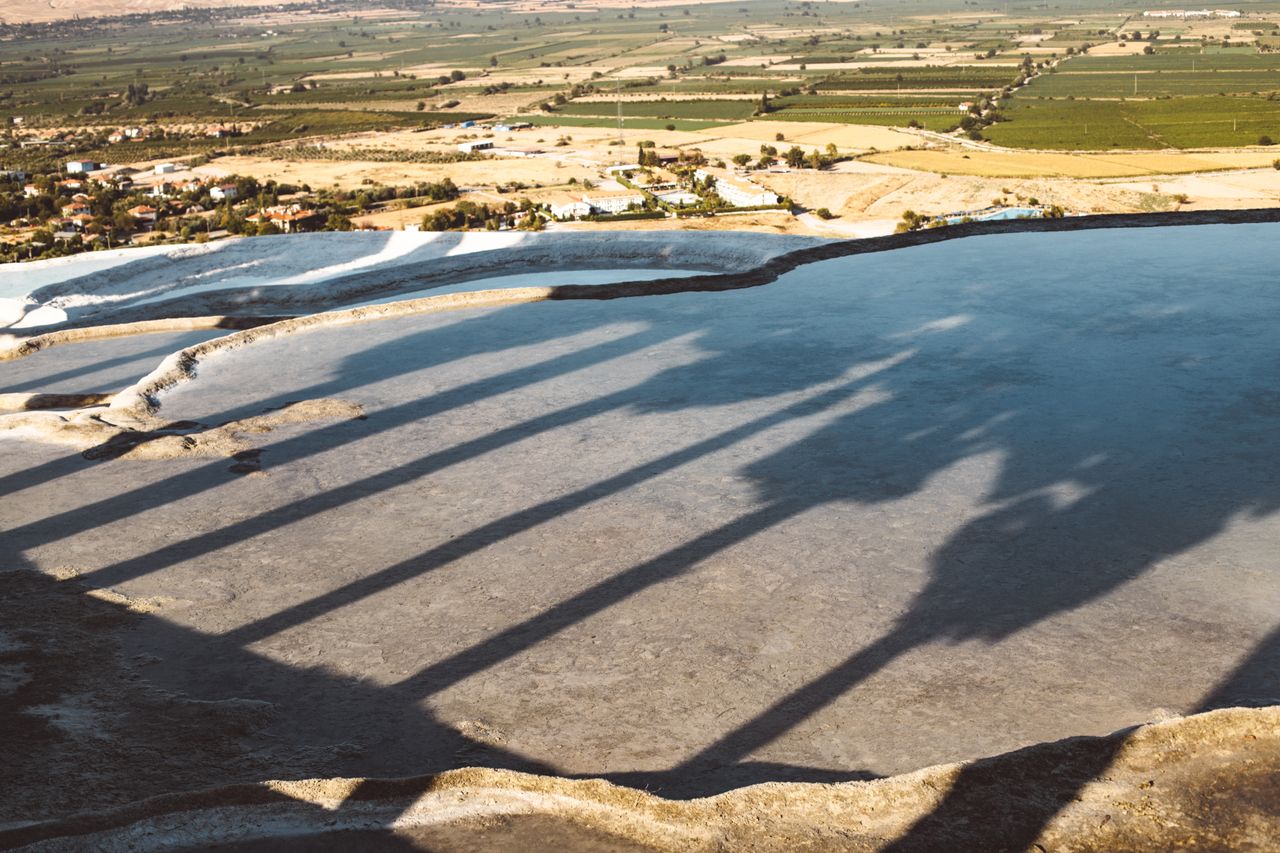
A traveler describes the moment her bare feet touched Pamukkale's warm, mineral-coated travertine terraces as genuinely feeling like walking on clouds - the smooth, unusual limestone texture underfoot a real sensory highlight distinct from anywhere else she'd traveled. She's direct that going barefoot isn't optional, it's a rule specifically to protect the fragile mineral crust from shoe damage, and that arriving right at opening in the early morning means the rock itself is still cold before the flowing thermal water reaches your section and warms things up - a genuinely uncomfortable few minutes worth pushing through for the quieter, less crowded conditions that early timing also delivers. Other visitors describe the walk down the sloped terraces as tougher on bare soles than expected, closer to walking on small, uneven stones than the smooth marble look suggests in photos. Posters generally recommend sunrise or sunset specifically for photography, since the softer light makes the white terraces and turquoise pools noticeably more vivid, and pairing the terrace walk directly with the ancient Roman ruins of Hierapolis sitting just above, reachable on the same barefoot route before putting shoes back on.
Ghi chép của du khách về Pamukkale
Người đã đến nói gì về nơi này — ghi chép quanh năm trước, rồi đến từng tháng.
Regulars place this destination in the middle of a regional gradient, specifically cooler than Antalya on the coast but noticeably warmer than Cappadocia inland - a genuinely useful comparison for anyone stitching together a multi-stop Turkey itinerary this month. Our row backs the cool-but-not-cold read, 18C over 7.3C nights feeling 5C, with 54.7mm of rain across 9.3 days and a trace of leftover snow, 2.2cm. Regulars are candid that mid-March days in the mid-teens Celsius mean the travertine's mineral pools are better admired than lingered in for families with young children, and recommend a wool mid-layer plus a jacket to adjust through the day. The record: humidity 58 percent, 9.6 hours of sun, a 10.9 kph wind and AQI 44.
Forum posters describe April as a genuine transition month - air temperatures typically 25-30C but evenings still a bit chilly, and the famous white travertine pools themselves running in the low 20sC, not quite warm enough for a comfortable outdoor soak unless using one of the indoor thermal pools. Posters note April is when the site's real 'season' begins - more water is let into the natural limestone terraces than during the quieter winter months, restoring the classic look the site is known for. The separate, much warmer Cleopatra Pool (around 38C) stays a reliable warm-water option regardless of the season. Overall, posters describe the site as well-maintained year-round, but April specifically as the point where conditions clearly start improving toward the busier summer season.
May is the month people are told to walk the travertines in - warm enough, before the summer heat, and without the humidity of the coast. The forum's advice is then entirely about the hour. The site opens at 08:00 and the recommendation is to be at the gate around 07:30 and go straight up, because the terraces fill quickly and the white surface throws the sun back at you once it is high. Sunset is the other good slot. The consequence regulars draw is to sleep in Pamukkale or a nearby town rather than arrive on a coach from the coast at midday, which is the busiest and hottest way to see it - Hierapolis, the Greco-Roman city on the ridge above, needs a couple of hours of its own. The record: 28.4C days, 15.5C nights, 8 precipitation days, humidity 46 percent and 12 hours of sun.
Pamukkale-forum threads asking whether the travertines run dry in late August get a reassuring answer: access to the upper terraces is controlled by site management specifically to keep water flowing over them, so the famous white pools stay filled and clean rather than drying out even in the hottest, driest stretch of summer. Posters describe daytime heat well into the high 30s Celsius, occasionally pushing past 40, but call the air genuinely dry rather than muggy, more bearable than a similarly hot but humid destination. The standing advice is to time the visit for mid-to-late afternoon, avoiding the harshest midday sun and catching sunset light on the terraces later. Regulars call the site well worth the heat regardless. The record: a scorching 37.7C by day feeling like 38C, 23.4C nights, essentially no precipitation at all, a bone-dry 34 percent humidity and 12.3 hours of sun.
Regulars are specific this counts as a genuinely pleasant month across the wider region, past the searing peak of mid-summer with the largest crowds and hottest stretch gone, blue skies and warm days still the norm. Our row backs that hot, genuinely dry read, 33.1C reading as a hot 33C, over 19.1C nights, with rain essentially absent, 10.5mm across just 2.8 days, and humidity down to just 37 percent. Regulars are consistent nights can turn genuinely chilly by the last two weeks of the month, especially further inland, a cardigan or light layer worth packing even for a trip planned around shorts and sun cream. This remains one of the better windows to visit before autumn's real rain arrives in October. The record: 11.3 hours of sun, a 10.3 kph wind and AQI 44.
Pamukkale's forum calls mid-October frequently near-perfect — sunny, warm days that cool a couple of hours before sunset. Regulars note it runs warmer than Istanbul or Cappadocia this time of year and is less exposed to October's rain increase, though evenings do turn genuinely chilly enough to want a cardigan or light jumper as the month wears on.
November at Pamukkale can be lovely and is definitively off-season: accommodation and bus seats are easy, the crowds are thin, and the days are shortening with evenings and nights turning very cold. Our row gives 19.9C by day reading as 18C, over a 9.1C night. The specific problem is that you must walk the travertines barefoot. Visitors report the first pools still comfortable and the rest properly cold, warm enough only to stand a couple of minutes for photographs - and the antidote they name is Cleopatra's pool, which is genuinely warm and at its best in October and November. The record: 5.6 precipitation days carrying 42.4mm, humidity 60 percent and 8.1 hours of sun.
Thêm ghi chép của bạn từ thẻ của Pamukkale trên bản đồ.