Thời tiết Arequipa (Colca Canyon) theo từng tháng
Thời điểm đẹp nhất để đến Arequipa (Colca Canyon) là tháng 5, tháng 9 và tháng 10 — 96/100 vào tháng 9, 24°C và 0 ngày mưa. Mùa đẹp nhất là mùa xuân, tháng 9 đến tháng 11 (trung bình 94/100).
Tháng kém nhất là tháng 2 với 69/100 — dễ chịu, mưa dầm, không khí trong lành. Xem tháng 2 →
Cập nhật tháng 9 năm 2026 · số liệu khí hậu trung bình từ tái phân tích ERA5
Đang lên kế hoạch cho cả chuyến đi? Nên đến Perú khi nào →
Mùa đẹp nhất: tháng 9 đến tháng 11 (trung bình 94/100) · kém nhất tháng 2 (69/100)
- Ban ngày
- 24°C
- Ban đêm
- 10°C
- Ngày mưa
- 0
- Nắng
- 11.2 h
- Độ ẩm
- 35%
- Độ dài ngày
- 12 h
Arequipa, tháng qua tháng
Điểm dễ chịu trên thang 100 cho kiểu chuyến đi mà Arequipa hợp nhất, cùng nhiệt độ cao nhất trung bình, số ngày mưa và số giờ nắng mỗi ngày lấy từ số liệu khí hậu trung bình, và mức đông khách thường thấy.
Cả năm Arequipa có gì diễn ra
Lễ hội, kỳ quan thiên nhiên, ngày lễ và những mùa cần để ý — tuyển chọn và dẫn nguồn. Chi tiết nằm ở trang từng tháng.
- tháng 1
- Andean rainy season1 Th1 – 31 Th3 (thường lệ)Mùa
- tháng 3
- Semana Santa20 Th3 – 20 Th4 (thường lệ)Ngày lễ
- tháng 4
- Virgen de Chapi pilgrimage1 Th5Lễ hội
- Clear season on the volcanoes15 Th4 – 30 Th11 (thường lệ)Mùa
- tháng 5
- Condors at Cruz del Condor1 Th5 – 30 Th9 (thường lệ)Thiên nhiên
- tháng 7
- Fiestas Patrias28–29 Th7Ngày lễ
- tháng 8
- Semana de Arequipa14–16 Th8Lễ hội
- tháng 12
- Wititi dance festival, Chivay5–11 Th12Lễ hội
Mức đông khách ở Arequipa vào tháng 9
Bản thân nơi này đông tới đâu — nghỉ học, nghỉ lễ lớn, những tháng ban biên tập đánh dấu, và thời tiết khiến chúng được săn đón thế nào. Không bao giờ tính vào điểm dễ chịu.
Đông kháchkỳ nghỉ học ở 2 thị trường khách chính của nơi này, một trong những tháng thời tiết đẹp nhất(ước tính)
Cao điểm đông đúcĐông kháchMùa chuyển tiếpVắng vẻ
Nên biết trước khi đến Arequipa
Trải nghiệm thật từ chính bài viết của du khách, trích dẫn kèm liên kết tới bản gốc.
practical
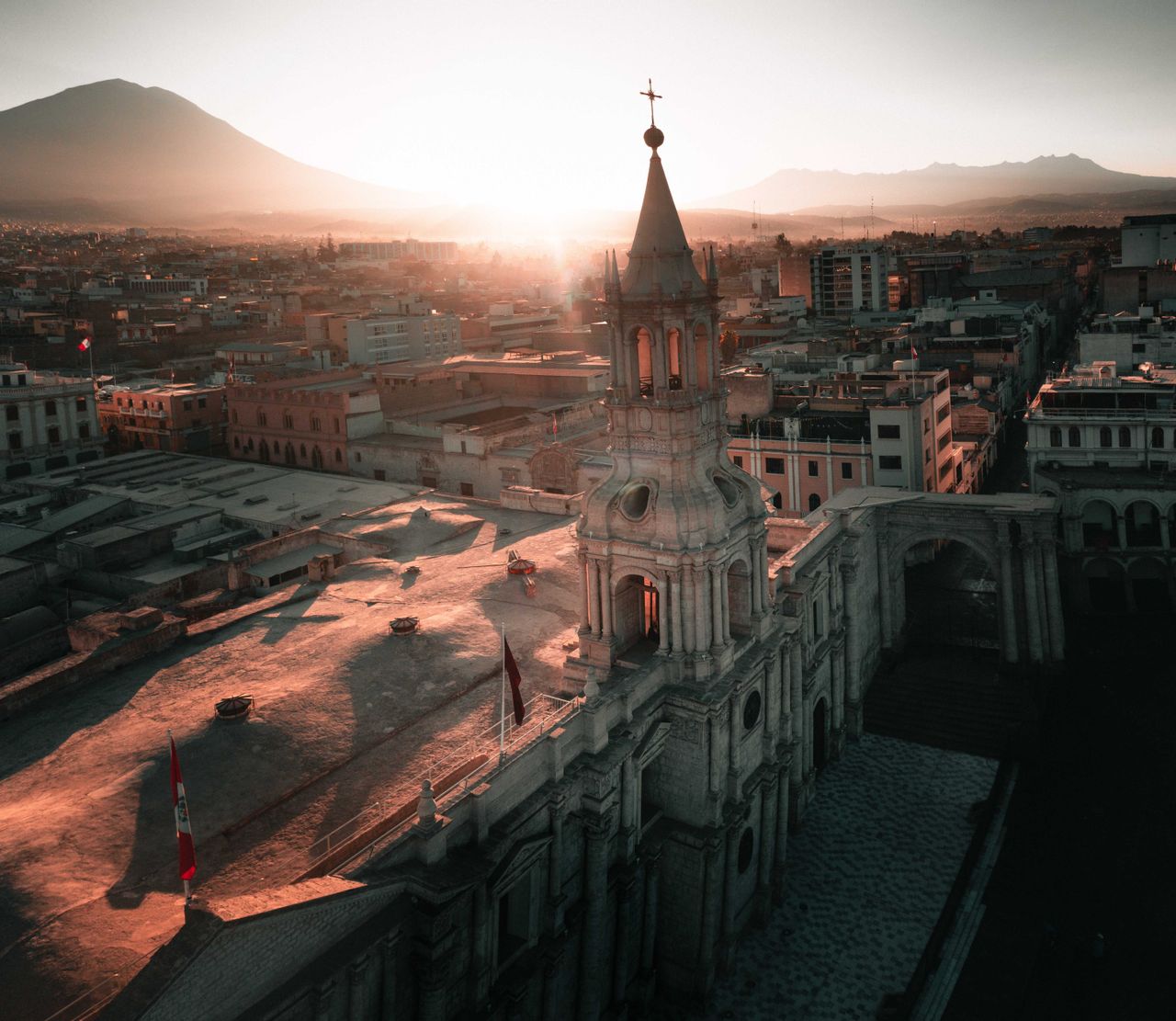
El Misti loomed over the white sillar-stone rooftops the whole time we walked the colonial center, and the volcano views ended up being what stuck with us more than the architecture itself. We layered clothing hard for the Colca Canyon side trip, since the days were warm but the nights in the valley dropped sharply, and we'd packed coca leaves after reading that altitude can sneak up on you even below Cusco's elevation. Clear morning skies at Cruz del Condor rewarded us with a condor sighting, wings easily spanning what felt like eight or nine feet, gliding right along the canyon rim.
Ghi chép của du khách về Arequipa
Người đã đến nói gì về nơi này — ghi chép quanh năm trước, rồi đến từng tháng.
Forum posters describe March as the tail end of the Peruvian highland wet season, with real rain still likely and posters recommending travelers pack for both wet and sunny conditions rather than assume the rains have fully stopped. The real monthly data for this southern-highland region actually shows March as one of the wettest of the whole wet-season stretch (roughly on par with January and February, all part of the seasonal convective rains common to this part of the Andes), only easing off sharply from April onward into a bone-dry winter that runs essentially rain-free from June through September. Posters are consistent this rain rarely disrupts a whole trip - genuine washouts are the exception rather than the rule even within the wetter months - but visitors specifically hoping for the driest possible highland conditions should lean toward the May-September stretch instead of March.
May opens Arequipa's dry winter - May through September - and regulars pick it over July and August for the same weather with fewer people in it. One May report on the forum describes rain most nights with almost entirely dry days - worth reading as a single year rather than the pattern, since our row has 1.2 precipitation days carrying 3mm across the whole month. What they insist on is the altitude, and the numbers make the argument. Arequipa sits just over 2,300m, which does little to prepare anyone for Cabanaconde at around 3,300m, and the bus to the Colca crosses above 4,900m getting there. Two nights in the city before the canyon is the standard advice rather than the cautious version of it. The record: 23.6C days against 10.4C nights that feel like 7C, 1.2 precipitation days carrying 3mm, humidity 50 percent and 10.5 hours of sun.
Regulars are specific this marks the true dry season here, essentially no rain expected across a typical trip, winter bringing colder nights that can drop into the low 30s Fahrenheit even as days still climb toward 70F. Our row backs that cool, genuinely bone-dry read, 23.2C over 9.6C nights feeling as low as 6C, with rain essentially absent and humidity down to just 37 percent. Regulars are consistent nearby Colca Canyon runs noticeably colder still, warm clothing genuinely necessary for that side trip regardless of how mild Arequipa itself feels. Layering to shed through a warm afternoon and add back for a cold evening remains the standard advice. The record: 10.3 hours of sun, a 10.9 kph wind and AQI 37.
Inland Peru in August is the dry winter and regulars describe it here as warm days around 16C with cool nights and no rain. That 16C is our monthly mean, not the afternoon: our row splits it into 23.5C by day and 8.9C at night, a fifteen-degree spread, and the night reads as 5C once the air is accounted for. It is extraordinarily dry air - 31 percent humidity, a dew point of minus 6.2C - and the rain column is a flat zero for the month. Layers are the answer, ideally ones that cut wind. At 2,330m this is also the gentle first night for anyone heading to Cusco, high enough to start on and low enough to sleep. The record: 10.7 hours of sun and AQI 33.
Southern Peru's forum places September in the shoulder season, still the dry season, with mild days in the 60s-70s°F and genuinely chilly nights in the highlands, sometimes dropping into the 30s-40s°F. Regulars flag blue skies as typical this time of year with little to no rain, though warm layers for the cold nights are essential regardless of how sunny the day was.
October sits just before the rains, which regulars date from December to March, and they put the month at 19 to 24C with a little cloud - our row gives 23.6C by day and 9.8C at night, a fourteen-degree swing at 42 percent humidity that is the high desert rather than the tropics. The altitude point matters more than the temperature: Arequipa is at 2,330m, while a Colca Canyon trip crosses 4,800m, so the cold they warn about belongs to the day trip and not the city, and an extra day or two here is the standard acclimatisation advice. For condors, eight to ten in the morning, when the thermals come up the canyon. May and September are the months they name for dry weather without crowds. The record: 10.5mm across 2.5 precipitation days, 11.5 hours of sun and AQI 35.
Thêm ghi chép của bạn từ thẻ của Arequipa trên bản đồ.