Väder i Cairo månad för månad
Bästa tiden att besöka Cairo är februari, mars och december — 95/100 i mars, 25 °C och 1 regndag. Bästa säsongen är vintern, december till februari (89/100 i snitt).
Sämsta månaden är juli med 54/100 — tryckande hett, torrt. Se juli →
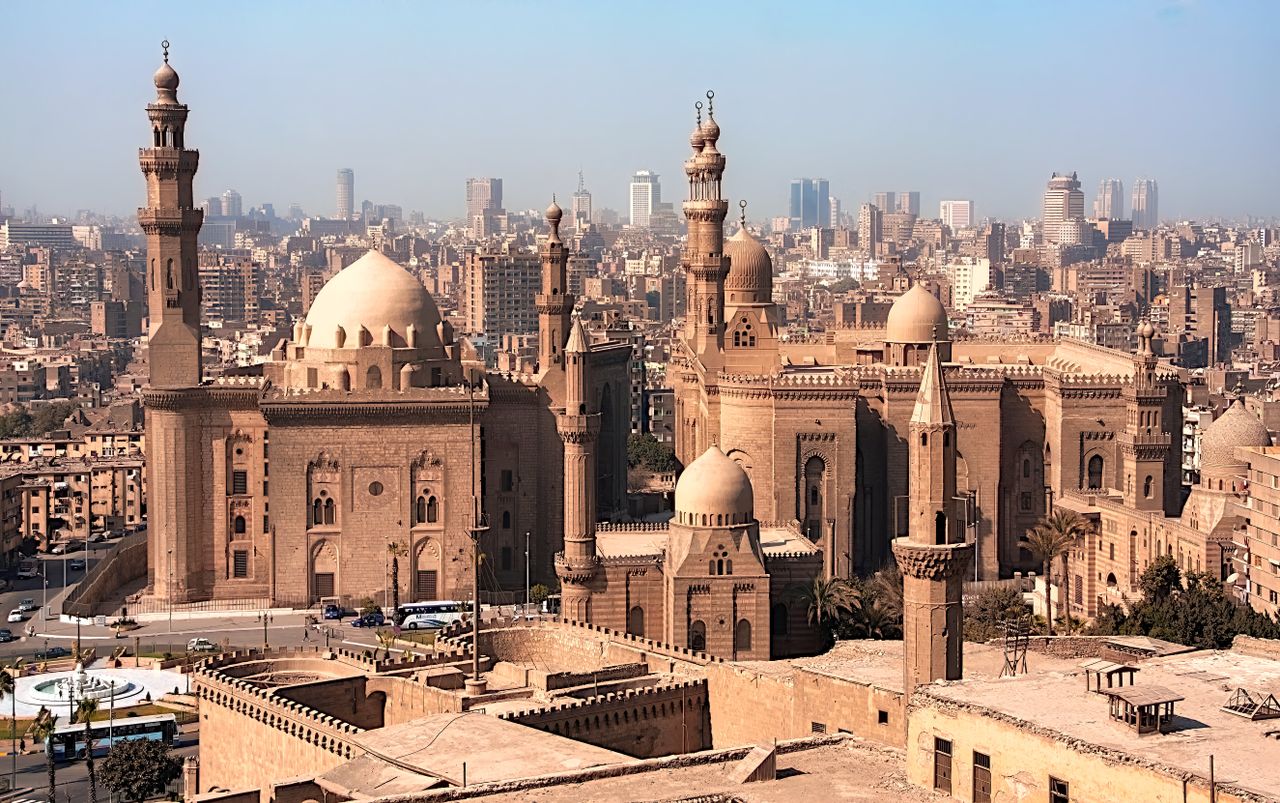
A vast dust-coloured city on the Nile with the pyramids at the edge of the suburbs, made for the cool half of the year. Ramadan and the Eid holidays move about eleven days earlier each year.
Uppdaterad september 2026 · klimatnormaler från ERA5-reanalysen
Planerar du hela resan? Bästa tiden att besöka Egypt →
Bästa säsong: december till februari (89/100 i snitt) · sämst juli (54/100)
- Dagar
- 25°C
- Nätter
- 14°C
- Regndagar
- 1
- Sol
- 10.6 h
- Luftfuktighet
- 49%
- Dagsljus
- 12 h
Cairo, månad för månad
Komfortpoäng av 100 för den sorts resa Cairo passar bäst för, medelhögsta temperaturen, regndagarna och soltimmarna per dag ur klimatnormalerna, och hur trångt det brukar vara.
Så är varje månad i Cairo
Skrivet av SeasonMaps redaktion utifrån vad som faktiskt händer på plats — inte utifrån medelvärdena.
- januari
The coolest month and the peak of the season. Comfortable on the Giza plateau, genuinely cold after dark, and the sites are busy.
peak
- februari
Still cool and clear, and the last easy month. The khamaseen dust winds can start at the end of it.
peak
- mars
Sham el-Nessim (movable, the Monday after Coptic Easter) takes the whole country to the parks and the river with salted fish and spring onions.
festivalshoulder
- april
Khamaseen season: hot dry winds carrying dust that closes the horizon for a day or two at a time.
dustshoulder
- maj
Heat settles in. Sightseeing means being at the pyramids when they open and indoors by the middle of the day.
peak
- juni
Hard dry heat and thin crowds. The riverside and the roof terraces only come alive after dark.
low season
- juli
The hottest stretch. Anyone who can goes to the north coast, and the city runs at night instead.
low season
- augusti
Still extreme and still empty of visitors. Museums and the metro are the only cool places at midday.
low season
- september
The heat starts to break at the end of the month and the season begins to rebuild.
shoulder
- oktober
The comfortable half of the year returns: clear warm days and the sites manageable again.
shoulder
- november
One of the best months. Warm days, cool evenings, less dust, and long light across the plateau.
peak
- december
Cool and busy, with Western and Coptic Christmas either side of the new year and properly cold desert nights.
peak
På gång i Cairo under året
Festivaler, naturskådespel, helger och säsongerna att hålla koll på — utvalda och källhänvisade. Månadssidorna har detaljerna.
- januari
- Coptic Christmas6–7 janFestival
- Timed tickets at the big museums1 jan – 31 decRegel
- februari
- Ramadan19 feb – 19 marHelg
- mars
- Eid al-Fitr20–22 marHelg
- Khamaseen dust winds1 mar – 31 maj (vanligtvis)Risk
- april
- Sham el-Nessim13 aprFestival
- Eid al-Adha25 apr – 15 jun (vanligtvis)Helg
- juni
- High summer heat1 jun – 10 sep (vanligtvis)Risk
- oktober
- The black cloud1 okt – 30 nov (vanligtvis)Risk
- november
- Cairo International Film Festival10–25 nov (vanligtvis)Festival
Trängsel i Cairo i mars
Hur mycket folk det är på själva platsen — skollov och storhelger, månaderna en redaktör har märkt upp, och hur eftertraktade vädret gör dem. Aldrig en del av komfortpoängen.
Mycket folkmellan topparna, Ramadan, Eid al-Fitr
Mest folkMycket folkMellansäsongLugnt
Bra att veta innan du åker till Cairo
Verkliga erfarenheter från resenärers egna texter, citerade med länk till originalet.
Vanliga bluffar
A traveler describes being approached by dozens of camel and horse owners the moment he neared the Giza pyramids entry gate, several of them quite aggressive in pitching a ride, well before he'd even decided whether he wanted one. His practical takeaway from actually negotiating on the spot: a half-day, 3-4 hour camel or horse ride around the site can reasonably be talked down to about 25-30 EUR if you're willing to haggle firmly and be prepared to walk away from a first offer. He recommends deciding your maximum price before engaging with any tout, since the initial asking figures are pitched well above what locals actually expect to receive.
Resenärernas anteckningar om Cairo
Vad de som har varit där säger om platsen — anteckningarna som gäller året runt först, sedan månad för månad.
See also: Egypt#Climate The best time to visit Cairo is during the winter from November to March, when daytime highs mostly stay below 26°C (79°F), with night time lows around 10°C (50°F) with occasional rain showers clearing the air, but still, you do not need an umbrella, even the rainiest months of the year rarely top 10 mm (0.4 in). If visiting during winter, be aware that not all buildings are equipped with heaters, including some hotels and hostels. Visitors should always pack a few warm jumpers (sweaters) and a warm jacket for evening wear. In Cairo, in indoor buildings without air-conditioning, temperatures are about 15°C (59°F) in the coldest winter days and about 34°C (93°F) in the hottest summer days. The brief spring from March to May can be pleasant as long as there are no sand storms, but summer temperatures, on the other hand, can reach a searing 38°C (100°F).…
Egypt forum threads describe January as genuinely chilly in Cairo specifically - daytime highs commonly in the low-to-mid 20s Celsius but nights dropping into the low-to-high single digits, with posters warning that indoor cold can feel worse than outdoor cold since Cairo buildings are designed to keep cool and central heating is rare. Occasional rain and even puddles at the pyramids were mentioned as a real, if infrequent, possibility. The consistent packing advice: layers built around a lightweight long-sleeve top for daytime desert-site visits, plus a hoodie or light jacket for evenings - and posters noted January reliably runs cooler than a November visit, making it the better pick for anyone trying to avoid Cairo's brutal summer heat.
February in Cairo is warm days and cool nights, with the forum's regional figures of 20 to 25C running a touch above our row's 21.5C for the city itself. Two things make it feel colder than the number. The temperature drops fast once the sun goes, so a hoody or a jacket is not optional after dark; and a strong north wind turns up often enough that regulars mention it unprompted - our row's feels-like high of 18C against that 21.5C is the wind in one figure. Rain is close to nothing at 5.6mm across 1.3 days, though a light sandstorm is possible. On dress, the standing advice is long sleeves and covered knees for the streets, which doubles as the evening layer. The record: 11.8C nights, humidity 56 percent, 9.6 hours of sun and AQI 68.
March is when the Cairo forum starts talking about the khamsin - the wind season that can run from March to late May but concentrates from late March into April. Regulars keep the frequency in proportion: one sandstorm day in a two-week stay is a typical report, it varies wildly from year to year, and the advice when one arrives is to stay indoors with the windows shut, because the dust is worse for you than the wind. The rest of the month is the part posters are fond of - the sense of coming out of winter, spring flowers, a freshness the other eleven months lack. The record: 24.9C days, 14.2C nights, 0.8 precipitation days, humidity 49 percent, 10.6 hours of sun and AQI 74, worth weighing if your chest is sensitive.
Regulars name the khamsin, a hot desert wind carrying dust that peaks between March and May, as the real wildcard here, though one regular's own two-week April visit saw only a single sandstorm day, calling the rest of the month genuinely pleasant. Our row backs the warm, dry read, 29.5C over 17C nights feeling 15C, with rain essentially absent at 0.9mm across 0.2 days and humidity down to 44 percent. Regulars are consistent that Cairo itself runs noticeably cooler than Luxor, Aswan, Hurghada or Sharm at this point in the year, so anyone finding Cairo's heat manageable should expect those southern cities to run hotter still. Early April is generally rated more comfortable than the end of the month. The record: 11.7 hours of sun, a 19.2 kph wind and AQI 67.
Cairo forum threads place July deep inside the stretch a long-running Giza guide thread warns about - the period from late spring to mid-autumn when the plateau 'quickly gets very hot'. The advice that repeats through every summer conversation is to be there for the 7am summer opening: the guide's stated reason is beating the crowds, but in July the early start doubles as the only comfortable way to walk ground with no shade as the day climbs toward its 36-37C average high. The heat is the dry desert kind rather than the close, humid kind - our record shows effectively rainless months and 12-13 hours of sunshine - so the risk to manage is exposed-sand sun, not sudden showers, and the early start does double duty against both. The same thread notes the winter contrast, when morning haze holds over the plateau until toward midday - a reminder that Cairo's effortless sightseeing weather belongs to the cool months, and July visits are built around early starts and shaded afternoons.
Regulars name October through January as this city's best stretch, and November sits in the middle of it: one visitor who came specifically for the pyramids called the weather perfect, in contrast with a summer plateau they describe as hot, humid and shadeless. Our row backs the comfortable read, 26.3C reading as 25C at 57.3 percent humidity, over 17.1C nights - the swing regulars pack for with jeans and a cardigan once the sun goes down. Rain is essentially absent, 0.8mm across a fifth of a day. Winter proper can turn cold, they note, but daytime sightseeing stays pleasant even then, which makes November the easier season to plan without needing to hedge. The record: 9.4 hours of sun, a 14.8 kph wind and AQI 76.
December is the month regulars recommend for sightseeing here, warm and sunny by day without the heat that makes summer hard - our row gives 21.7C, feeling like 19C. Their practical note is the clock. The sun goes at about five and the temperature drops quickly after it, with evenings at 17 to 20C and nights that can reach 5C between November and February, so a jacket comes out early and late even on a day spent looking for shade. Wind can make it feel colder than the number. Rain is essentially absent at 2.6mm. The figure to weigh is the air, at AQI 83. The record: 13.3C nights, 8.9 hours of sun inside 10.2 of daylight.
Lägg till din egen anteckning från Cairos kort på kartan.