Pogoda Melbourne — lipiec
Melbourne, lipiec: chłodno, trochę deszczu, do tego czyste powietrze — świetna pora na wyjazd.
Aktualizacja: wrzesień 2026 · normy klimatyczne z reanalizy ERA5
#12 z 12 miesięcy — Melbourne · #844 z 1413 kierunków na wyjazd — lipiec · komfort 74/100 (poziom B)
- Dni
- 15°C
- Noce
- 7°C
- Mokre dni
- 10
- Słońce
- 6.9 h
- Wilgotność
- 79%
- Długość dnia
- 10 h
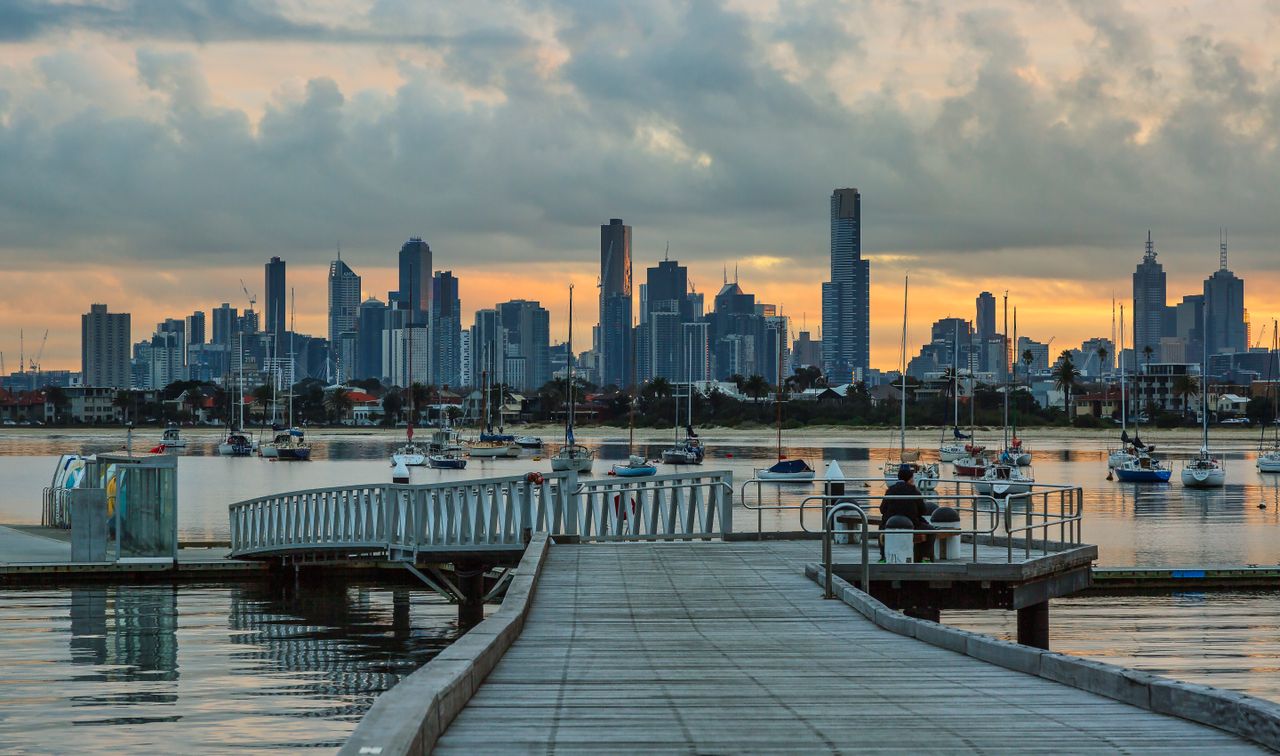
Melbourne, lipiec — jaki to miesiąc
The coldest month, damp and dark in the city, and the best of the snow season up in the Victorian Alps.
snowlow season
pewność: high
Relacje podróżnych — Melbourne, lipiec
Melbourne forum threads describe July as one of the two coldest months of the year - the other being August - with daytime temperatures around 12-17C and nights dropping into single figures, though posters are specific that it rarely reaches 0C in the city and a frosty morning usually promises a sunny, still day rather than a grim one. Rain is framed as drizzle that passes reasonably quickly rather than all-day soakers, with the heavier rain of the year arriving in spring, not winter. The season's defining feature is the swing - still frost-calm mornings against blustery days when a front pushes up from the Southern Ocean - which is why the repeated packing advice is layers. Posters also supply the upside: winter Melbourne means thinner crowds and Australian Rules football in full swing, and several locals note that by northern-hemisphere standards this is a mild winter - cold here is relative to what you are used to.
Inne miesiące — Melbourne
Regulars back their reputation for wild swings with a specific example rather than a general claim: one October saw 16C, then 26C the very next day, then back down to 16C the day after that - three days, three different seasons in effect. Our row backs a mild average across that range, 21C over 10.3C nights, with 78mm of rain across 9.9 days and a real 21.7 kph wind. Regulars describe the realistic range across the month as anywhere from 14 to 35C, most likely landing in the low 20s, with layering the only sensible way to handle a day that can genuinely go either way. The sea sits at a cool 15.8C. The record: humidity 70 percent, 9.7 hours of sun and one of the cleanest air readings in this project, AQI 32.
Regulars are direct that late spring here means genuine swing rather than a single number: a warm afternoon can meet a cold front and drop ten degrees in half an hour, with cool mornings, mild-to-warm afternoons and a cooling evening all inside the same day. Our row backs the range, 22.9C over 12.3C nights, with 68.4mm of rain across 9.1 days and a real 20.8 kph wind - regulars describe the rain itself as more heavy passing showers than steady drizzle. The standard packing list follows directly from the swing: shorts and a t-shirt for the warm stretch, a long-sleeved layer and a cardigan or light jacket for the cooler hours either side. The sea holds 18.2C. The record: humidity 69 percent, 10.4 hours of sun and AQI 32.
Locals will tell you the four-seasons-in-a-day line is more legend than forecast - by their own count it happens two or three days a year - but they will also tell you December is genuinely changeable, running mid-twenties to low thirties with the odd heatwave near forty and cool stormy spells that often follow one. Our row averages that at 25.6C over 14C with 55.4mm across 7.2 days. The night is the part people underpack for: fourteen degrees, feeling thirteen in a 21.2 kph wind, after an afternoon in the high twenties. The bay reaches 19.8C. The record: humidity 66 percent, 11.4 hours of sun inside 14.7 of daylight, and AQI 30.
February is Melbourne's hottest month and its most volatile. Regulars give the local rule bluntly: it can be 40C at two in the afternoon and 26C at half past, and February holds both some of the city's hottest days on record, into the mid-40s, and some of its wettest, with more than 80mm in 24 hours. They are divided on the four-seasons-in-one-day slogan, some calling it more myth than reality, but agreed on the consequence, which is layers and a flexible plan. The geography is the explanation - a hot dry continent to the north and Antarctica as the nearest southern neighbour. The record: 26.7C days, 15.5C nights, 3.8 precipitation days carrying 25.2mm and a 21.2C sea.
Relacje na cały rok znajdziesz tu: przegląd — Melbourne. Dodaj własną notatkę z karty miejsca na mapie — Melbourne.
Normy klimatyczne — Melbourne, lipiec
Średnie miesięczne z reanalizy ERA5. AQI to średni amerykański indeks jakości powietrza w tym miesiącu.
Melbourne, lipiec: tłumy
Jak tłoczno jest w samym miejscu — wakacje szkolne i święta masowe, miesiące oznaczone przez redakcję oraz to, jak bardzo pogoda podbija popyt. Nigdy nie wchodzi do wyniku komfortu.
Spokojniespokojny miesiąc według redakcji, Winter (July) break (Australia), ferie szkolne na 3 rynkach, które je zapełniają
Szczyt sezonuTłocznoSezon przejściowySpokojnie
Melbourne — najlepsze miesiące pod względem pogody
Ranking według własnego wyniku komfortu klimatycznego tego kierunku w skali roku — to co innego niż natężenie ruchu (zob. Tłumy powyżej).
Najtrudniejsza pogodaMelbourne: najlepsza pogoda przypada na luty, marzec i grudzień — to osobne okna, a nie jeden ciągły sezon.
Najlepsza pogodaZnośna pogodaNajtrudniejsza pogoda
Gdzie leży Melbourne?
Melbourne, lipiec — FAQ
- Melbourne: czy lipiec to dobry moment na wyjazd?
- Melbourne, lipiec: chłodno, trochę deszczu, do tego czyste powietrze — świetna pora na wyjazd. Na skali komfortu SeasonMap Melbourne zajmuje 12. miejsce z 12 miesięcy (74/100).
- Melbourne, lipiec: jaka jest pogoda?
- lipiec: Melbourne ma średnią temperaturę maksymalną 14.6°C i minimalną 7.2°C, przy około 43.5 mm deszczu w ciągu mniej więcej 9.5 deszczowych dni.
- Melbourne, lipiec: jaka jest jakość powietrza?
- lipiec: Melbourne ma średni amerykański indeks jakości powietrza na poziomie około 29.