Pogoda Labuan Bajo (Komodo) — styczeń
Labuan Bajo, styczeń: upalnie, ulewnie, do tego parne powietrze — loteria: 28 deszczowych dni.
Aktualizacja: wrzesień 2026 · normy klimatyczne z reanalizy ERA5
#12 z 12 miesięcy — Labuan Bajo · #963 z 1413 kierunków na wyjazd — styczeń · komfort 60/100 (poziom C)
- Dni
- 28°C
- Noce
- 25°C
- Mokre dni
- 28
- Słońce
- 9.1 h
- Wilgotność
- 88%
- Długość dnia
- 13 h
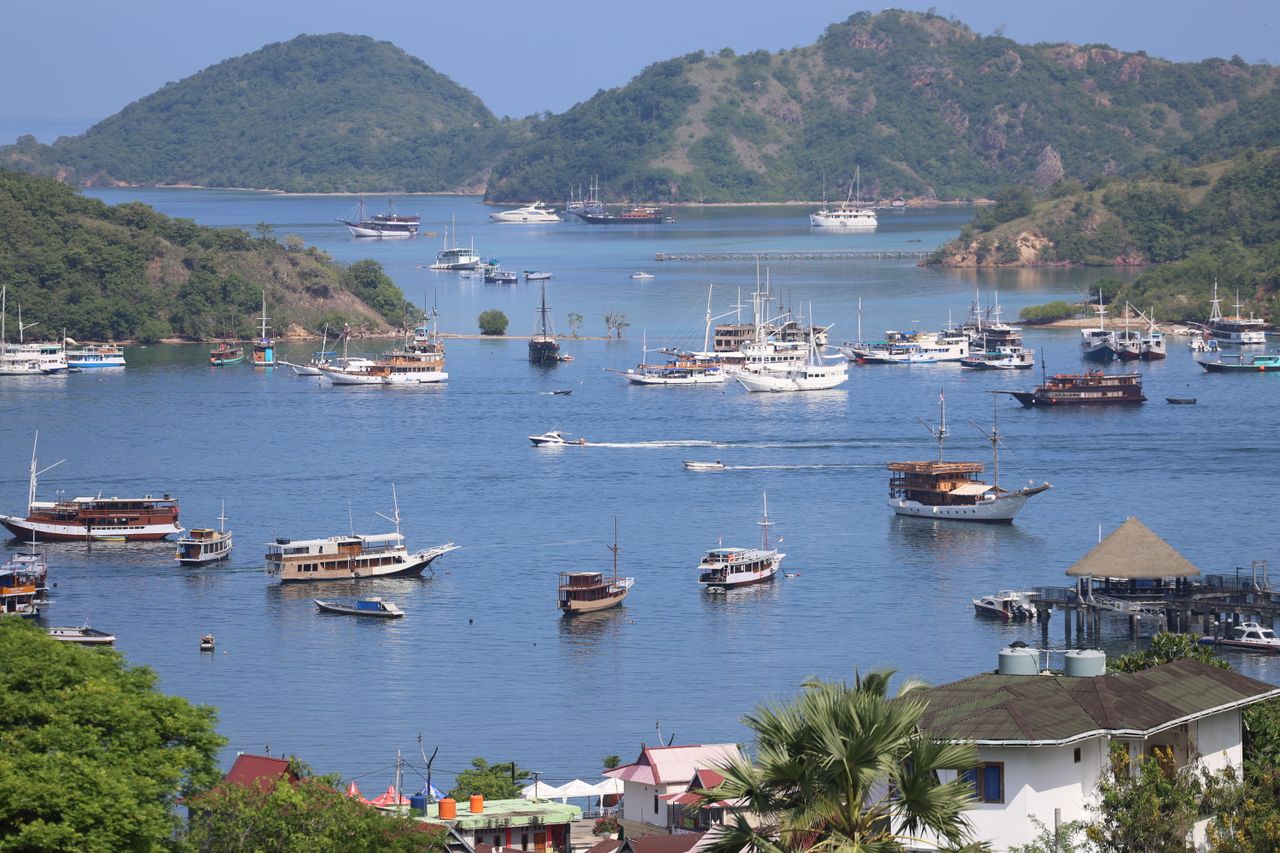
Relacje podróżnych — Labuan Bajo, styczeń
Asked whether January ruins a Komodo trip, regulars say no - the wind comes from the west this month and the boats still go - and their trip reports range from calm water with a couple of brief showers to solid downpours. Our row explains the spread rather than settling it: 390.9mm across 28.4 days, so rain falls on nearly every day of the month, but a tropical day that rains is not a day of rain. Heat is unbroken, 27.9C reading as 34C at 88 percent humidity over 24.8C nights, with a 28.1C sea. The operator matters more than the month here; the same thread is full of advice to pick carefully. The record: 9.1 hours of sun and AQI 53.
Inne miesiące — Labuan Bajo
Regulars are specific this counts as early dry season here, some green still lingering from the rains but the landscape visibly starting to dry out, timing that also lands just before the June-to-September peak season with its thicker crowds. Our row backs that hot, genuinely wet read, 29C reading as a scorching 35C, over 25.3C nights feeling 30C, with a substantial 95.3mm of rain across 12.1 days and humidity at 80 percent. Regulars are consistent clear water and normally clear skies are the typical experience this month, dry conditions and fewer crowds the two real advantages over the following peak stretch. This remains one of the better windows for the Komodo boat trips before high season fills up the harbor. The sea sits at a bath-warm 29.6C. The record: 10.6 hours of sun, a 10 kph wind and AQI 37.
Regulars call this deep dry season, offering the same flat seas, clear skies and 25-30 metre dive visibility as the more crowded August just before, but with noticeably fewer boats and lower prices. Our row backs the dry read, 74.7mm of rain across 9.4 days, alongside real heat, 29.2C reading as a hot 35C at 76.6 percent humidity, over 24.5C nights. Regulars note late in the month afternoon clouds start to build as the season turns, though meaningful rain rarely arrives before mid-October, so this stays a safe dry-season bet through its full length. The sea holds a warm 28.1C. The record: 11.3 hours of sun, a 9.7 kph wind and AQI 77.
June opens the stretch regulars call the best weather here - June to August, not too hot, with cool air coming up off the Australian winter - and our row is easier than July's: 28.5C, 68.5mm across 7.7 precipitation days, a 29C sea and almost no wind. On the mantas at Manta Point they do not agree with each other. Some put the reliable months at December to March; others say the rays thin out from about July and are back around October. What both versions imply is the same thing: June is the better half of the dry season for seeing them, and July is when the odds start dropping. Dive shops in town arrange the trip. The record: 24.7C nights reading as 29C, humidity 79 percent, 10.4 hours of sun and AQI 50.
July is the dry season and our row shows it plainly: 33.9mm across 4.8 precipitation days, a 28.8C sea and barely any wind. It is also, by the rangers' own account, the hardest stretch for the two things people come for. June to August is the Komodo dragons' breeding season, so you may see few or none, and the mantas are mainly around from December to March. Plenty of July visitors still report dragons and rays; the point is that neither is a given now the way the weather is. The other warning regulars repeat concerns boats rather than animals - photographs in a tour listing often do not match the vessel that turns up, so check the operator. Heat is real at 28.3C over 24C, reading as 33C. The record: humidity 76 percent, 10.6 hours of sun and AQI 35.
Dodaj własną notatkę z karty miejsca na mapie — Labuan Bajo.
Normy klimatyczne — Labuan Bajo, styczeń
Średnie miesięczne z reanalizy ERA5. AQI to średni amerykański indeks jakości powietrza w tym miesiącu.
Labuan Bajo, styczeń: tłumy
Jak tłoczno jest w samym miejscu — wakacje szkolne i święta masowe, miesiące oznaczone przez redakcję oraz to, jak bardzo pogoda podbija popyt. Nigdy nie wchodzi do wyniku komfortu.
Szczyt sezonuChristmas and New Year peak, Year-end break (Indonezja), ferie szkolne na 6 rynkach, które je zapełniają(szacunkowo)
Szczyt sezonuTłocznoSezon przejściowySpokojnie
Labuan Bajo — najlepsze miesiące pod względem pogody
Ranking według własnego wyniku komfortu klimatycznego tego kierunku w skali roku — to co innego niż natężenie ruchu (zob. Tłumy powyżej).
Najtrudniejsza pogodaLabuan Bajo: szczyt pogody przypada na okres czerwiec–sierpień.
Najlepsza pogodaZnośna pogodaNajtrudniejsza pogoda
Co się dzieje — Labuan Bajo, styczeń
Powtarzalne wydarzenia sezonowe, spektakle natury, zamknięcia i święta — wybrane i ze źródłami.
- Natura
Manta season
1 lis – 30 kwi · zwykleSezon nurkowyPlankton in the channel brings reef mantas onto the cleaning stations at Karang Makassar and, further south, Manta Alley. January and February are the densest of it, and the quietest months on the boats.
- Sezon
Wet season, rougher crossings
1 gru – 15 mar · zwykleMonsunRyzykoRain in heavy bursts and a swell that makes the run south to Padar and Komodo uncomfortable, occasionally cancelled. Prices are at their lowest and the hills are green rather than gold.
- Święto
Christmas and New Year peak
18 gru – 5 styBoże Narodzenie i Nowy RokTłocznoRezerwuj wcześnieThe one fortnight of the wet season that sells out, with liveaboards running new-year itineraries. Weather can still cancel the southern sites at short notice. Źródło ↗
- Sezon
Wet season
MonsunRyzyko28 rainy days and about 391 mm in the month — the real kind of rainy season, not afternoon showers.
z norm klimatycznych
Gdzie leży Labuan Bajo?
Labuan Bajo, styczeń — FAQ
- Labuan Bajo: czy styczeń to dobry moment na wyjazd?
- Labuan Bajo, styczeń: upalnie, ulewnie, do tego parne powietrze — loteria: 28 deszczowych dni. Na skali komfortu SeasonMap Labuan Bajo zajmuje 12. miejsce z 12 miesięcy (60/100).
- Labuan Bajo, styczeń: jaka jest pogoda?
- styczeń: Labuan Bajo ma średnią temperaturę maksymalną 27.9°C i minimalną 24.8°C, przy około 390.9 mm deszczu w ciągu mniej więcej 28.4 deszczowych dni.
- Labuan Bajo, styczeń: jaka jest jakość powietrza?
- styczeń: Labuan Bajo ma średni amerykański indeks jakości powietrza na poziomie około 53.