Været i Siem Reap (Angkor) måned for måned
Den beste reisetiden til Siem Reap (Angkor) er desember til februar — 80/100 i januar, 32°C og 2 regndager. Den beste sesongen er tørrsesongen, november til april (71/100 i snitt).
Den svakeste måneden er september med 49/100 — trykkende hett, gjennomvått, ren luft. Se september →
Oppdatert september 2026 · klimanormaler fra ERA5-reanalysen
Planlegger du en større tur? Beste reisetid til Cambodia →
Beste sesong: november til april (71/100 i snitt) · svakest i september (49/100)
- Dager
- 32°C
- Netter
- 21°C
- Våte dager
- 2
- Sol
- 10.2 h
- Luftfuktighet
- 63%
- Dagslys
- 11 h
Siem Reap, måned for måned
Komfortscore av 100 for den typen tur Siem Reap egner seg best til, snittemperatur på dagen, regndager og soltimer per dag fra klimanormalene, og hvor travelt det pleier å være.
Hva som skjer i Siem Reap gjennom året
Festivaler, naturfenomener, helligdager og sesongene du bør passe deg for — kuratert og kildebelagt. Månedssidene har detaljene.
Trengsel i Siem Reap i januar
Hvor travelt selve stedet er — skoleferier og fellesferier, månedene en redaktør har merket, og hvor ettertraktet været gjør dem. Aldri en del av komfortscoren.
TraveltDry season, skoleferie i 6 av markedene som fyller stedet(anslag)
ToppsesongTraveltSkuldersesongRolig
Verdt å vite før du drar til Siem Reap
Ekte erfaringer fra reisendes egne tekster, sitert med lenke til originalen.
Visum og innreise
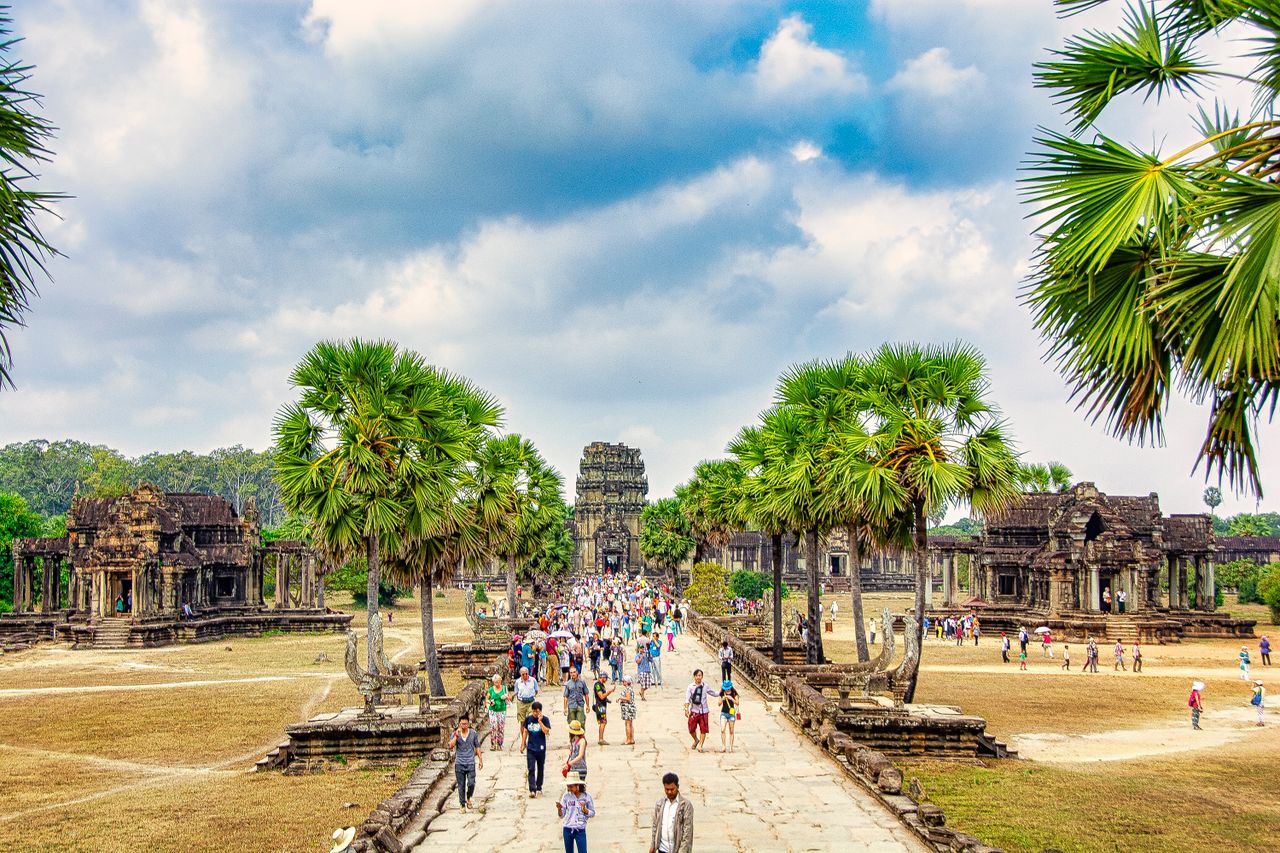
A traveler describes the main reflecting-pond viewpoint for Angkor Wat sunrise as genuinely overwhelming - over 300 people packed in shoulder to shoulder, hundreds of tuk-tuks converging on the access roads before dawn, and a noisy, far-from-peaceful atmosphere that undercut the moment for her despite the sunrise itself being beautiful. Her specific fix, echoed by multiple other travelers: skip the crowded pond entirely and instead walk the temple grounds during the actual sunrise window, where she unexpectedly came across Buddhist monks praying in a quiet corner, a far more personal moment than the packed main viewpoint offered. Other posters are consistent that going independently rather than on a group tour gives meaningfully more control over timing and location once inside, and that arriving right after sunrise, around 7am, lets you explore the temples themselves before the bulk of the crowd catches up and while the heat is still manageable. Posters generally rate a self-guided, flexible sunrise visit as worth the extra planning effort over a fixed group tour, specifically to have the option of walking away from the crowded pond viewpoint.
Reisendes notater om Siem Reap
Hva folk som har vært der, sier om stedet — notatene som gjelder hele året først, så måned for måned.
Siem Reap's forum rates January as one of the best months to visit Cambodia — hot by day, 28-32°C, but noticeably less humid than the wetter months. Regulars say a light wrap only really earns its keep for a pre-dawn tuk-tuk ride to catch sunrise at Angkor Wat, or on an over-air-conditioned bus — otherwise it's shorts-and-sunscreen weather with strong UV even on an overcast day.
February is the last comfortable month at Angkor. It is firmly inside the dry season - our row gives 15.5mm across 2.9 days - and the mornings are still among the year's coolest, which matters when the plan is a sunrise at the temples. What regulars warn about is the dust, because months without rain leave the roads and the causeways powdery, and about the direction of travel: February is where the temperature begins its climb towards 39 or 40C by April. Tonle Sap still has enough water for the boat trips in this month, which stops being true later. It is high season, so the temples are busy. The record: 32.8C days that feel like 36C, 21.9C nights, humidity 61 percent and 10.6 hours of sun.
Regulars are direct that temperatures here are essentially guaranteed to top 35C this month, though generally less humid than the peak of July, with the standard workaround being an early start, a midday retreat to a pool and air conditioning, then heading back out again late in the afternoon. Our row backs that hot, genuinely dry read, 35C reading as a scorching 40C, over 24.3C nights feeling 28C, with rain light at 36.9mm across 6.4 days and humidity at 65 percent. Regulars are consistent some visitors do manage this month and even April despite the intensity, while others avoid it deliberately, the temples themselves offering little shade regardless of timing. Sun protection and a genuinely early start remain the standard advice throughout. The record: 11 hours of sun, a 13.1 kph wind and AQI 78.
Siem Reap-forum threads asking if April is simply too hot don't sugarcoat it - one thread calls the month stinking hot, brain-bakingly hot, everything parched, brown and dusty, with daytime temperatures well into the 40s Celsius on the worst days. Regulars offer the same standing advice: start sightseeing at first light, retreat for a long midday siesta somewhere air-conditioned with a pool, then go back out in the late afternoon once the worst heat breaks. A tuk tuk ride is recommended over an enclosed car, since the breeze dries off sweat rather than trapping heat the way air conditioning does when you step back out. Khmer New Year lands in April too, and mango season is in full swing. The midday temples empty out fast as visitors retreat indoors. The record: a scorching 35.3C by day feeling like a punishing 41C, 25.4C nights, 74mm across 10 days, 67 percent humidity, an unhealthy 77 AQI and 11 hours of sun.
Forum posters describe July as hot, very humid and squarely inside the rainy season, with afternoon storms brewing most days - typically arriving early-to-mid afternoon as a hard, heavy, fast downpour rather than a lingering drizzle. Rain rarely falls all day, and posters note much of the heaviest rain actually comes overnight as temperatures cool, leaving daytime touring more workable than the 'rainy season' label suggests. The standard strategy posters recommend: get an early start at Angkor before the storms build, then shift to relaxation, shopping or indoor activities in the afternoon. Practical advice repeated often: carry a folding umbrella and a plastic bag for cameras, and duck into a temple or tuk-tuk if a storm catches you out on the grounds.
Siem Reap-forum threads on November weather call it the downhill side of the wet season - locals treat November through January as their cold season, bundling up for the mornings until around 9:30 or 10am even though visitors mostly find it warm rather than cold. The standard itinerary follows that same schedule: Angkor tours start around 8am while it's still cool, wrapping up by midday once it gets too warm to keep walking. The monsoon is winding down but still unpredictable enough that a poncho is standard advice, with any downpour usually arriving in a concentrated morning or evening window rather than spread through the day. Posters call the November-to-mid-January stretch one of the best climate windows of the year, which is exactly why it's also peak season. The record: 31.5C days feeling like a sticky 37C, 23.6C nights, 98mm across 12.9 days, 79 percent humidity and 9.4 hours of sun.
December and January are the cool, settled months and the best of the Angkor year - mornings can drop to the low 20s C and the Christmas and New Year stretch is reliably clear - which is also why it is high season. The forum's crowd advice is specific and contrarian: sunrise at Angkor Wat means hundreds of people in place by 5am and is described as horrible if you dislike a crowd, while starting at about 7am puts you ahead of most of the day's traffic, and sunset is the genuinely quiet slot because everyone has gone elsewhere. Working the temple order with your driver matters more than the date. The record: 31.2C days that feel like 34C, 21.6C nights, 4.4 precipitation days, 9.6 hours of sun and AQI 38.
Legg til ditt eget notat fra kortet til Siem Reap på kartet.