Meteo Wellington mese per mese
Il periodo migliore per visitare Wellington è da gennaio a marzo: 91/100 in gennaio, 22°C e 9 giorni di pioggia. Stagione migliore: estate, da dicembre a febbraio (89/100 in media).
Il mese peggiore è luglio, con 66/100: fresco, piovoso, aria pulita. Vedi luglio →
Aggiornato: settembre 2026 · medie climatiche dalla rianalisi ERA5
Stai organizzando un viaggio più ampio? Quando visitare Nuova Zelanda →
Stagione migliore: da dicembre a febbraio (89/100 in media) · il peggiore è luglio (66/100)
- Giorno
- 22°C
- Notte
- 15°C
- Giorni di pioggia
- 9
- Sole
- 11.9 h
- Umidità
- 80%
- Ore di luce
- 15 h
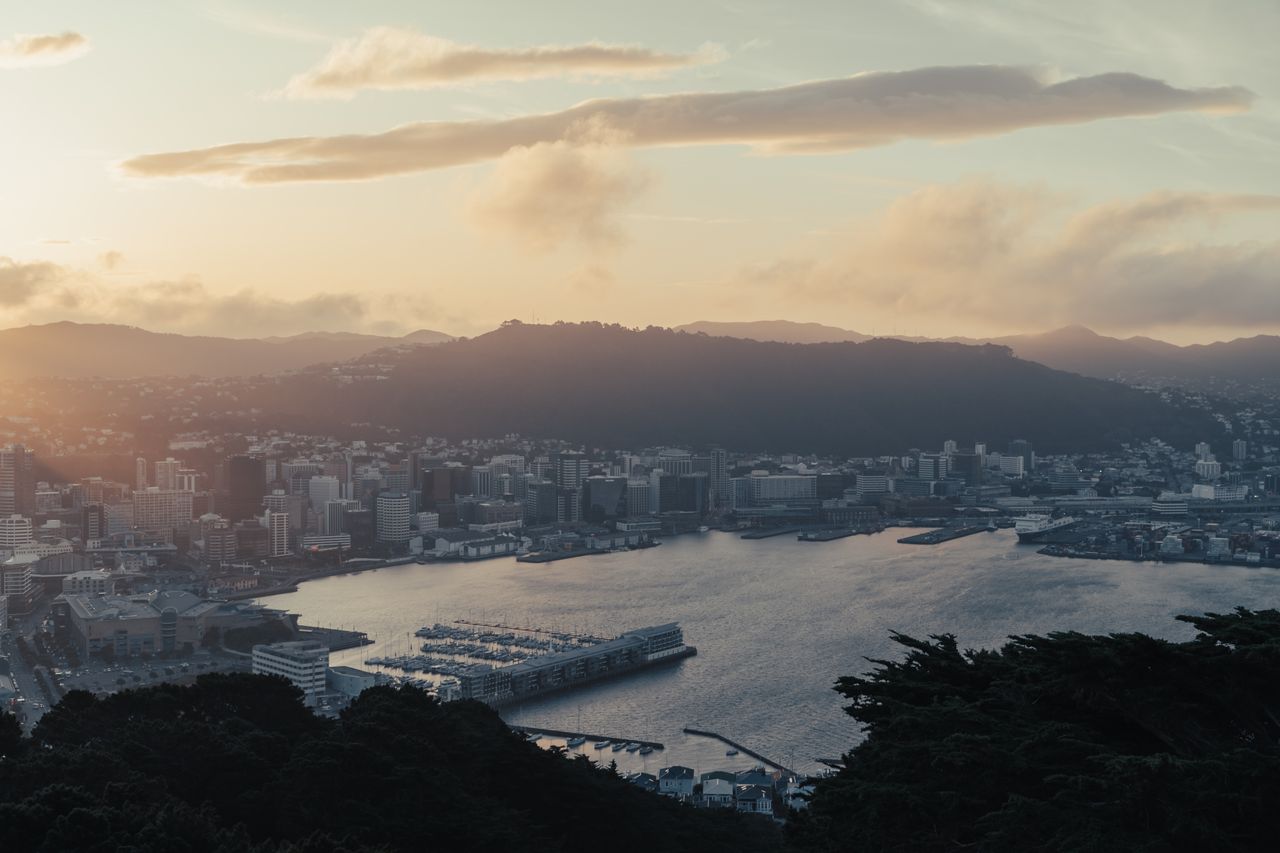
Wellington, mese per mese
Punteggio di comfort su 100 per il tipo di viaggio più adatto a Wellington, la massima media, i giorni di pioggia e le ore di sole al giorno dalle medie climatiche, e quanta folla c'è di solito.
Cosa c'è in programma a Wellington durante l'anno
Festival, spettacoli naturali, festività e le stagioni a cui fare attenzione: selezionati e con fonte. I dettagli sono nelle pagine dei mesi.
- marzo
- CubaDupa14 mar – 5 apr (di solito)Festival
- Easter long weekend3–6 aprFestività
- aprile
- Anzac Day25–27 aprFestività
- giugno
- Matariki20 giu – 15 lug (di solito)Festività
- agosto
- Wellington On a Plate1–31 agoFestival
- settembre
- World of WearableArt17 set – 4 ottFestival
- Spring gales through the strait1 set – 15 dic (di solito)Stagione
- dicembre
- New Zealand summer holidays20 dic – 1 feb (di solito)Festività
- Christmas Day closures25–26 dicFestività
Tutto quello che c'è in programma a Wellington durante l'anno →
Folla a Wellington in gennaio
Quanto è affollato il luogo in sé: vacanze scolastiche e ferie di massa, i mesi segnalati dalla redazione e quanto il clima li rende ambiti. Mai incluso nel punteggio di comfort.
Folla al massimoNew Zealand summer holidays, Summer holidays in Nuova Zelanda, vacanze scolastiche in 3 dei paesi da cui arrivano i visitatori(stima)
Folla al massimoAffollatoMedia stagioneTranquillo
Da sapere prima di andare a Wellington
Esperienze vere dai racconti dei viaggiatori, citate con il link all'originale.
Visti e ingresso
A guide to Wellington's famous wind makes clear it's not just a nickname: gales are a near-constant feature of the city, most intense through spring (September-November), and even a still, warm summer morning can turn into a full nor'wester blast by afternoon. The practical upshot for visitors is to always carry a proper windbreaker rather than relying on layers alone, and to have a backup plan of indoor museums and cafes ready for whichever day turns out too gusty for the waterfront walk.
Note dei viaggiatori su Wellington
Cosa dice chi c'è stato: prima le note valide tutto l'anno, poi mese per mese.
Wellington's forum pushes back on the city's rainy-and-windy reputation — January, in New Zealand's summer, is genuinely pleasant, though the wind itself never really lets up regardless of how sunny the day gets. Regulars note the temperature drops noticeably once the sun goes down, so a light layer for the evening is worth having even in midsummer.
Wellington forum threads describe February as generally the country's most settled, warmest month, with posters consistently rating it more stable weather-wise than January. That said, posters were direct that Wellington's famous wind is a year-round constant that undercuts even the warmest, most settled February day - one poster specifically noted that an hour's drive out into the Wairarapa region can be hot and still on a day when the city itself stays breezy and cooler. The standard New Zealand-wide advice held for Wellington too: pack for genuine variability, with real wet-weather gear alongside summer clothing, since posters were consistent that a single day here can still swing through more than one kind of weather even in the country's best month.
March in Wellington is normally pretty good - sunny and warm, 18 to 25C, with the start of the month the better half and a few cool nights arriving towards the end. Our row gives 19.9C over 13.3C. The packing advice locals repeat is the useful part and it is all about the wind: an umbrella is often useless here, so bring a raincoat, below the knee if you can. Our row's 25.9 kph is the reason the city's nickname sticks even in a settled month. What locals themselves wear in March is long trousers and a T-shirt with a long-sleeved shirt, and a jersey for the evenings. The record: 60.8mm across 9 precipitation days, humidity 79 percent, an 18C sea and AQI 23, among the cleanest air in this dataset.
Forum consensus is blunt: July is mid-winter, cold and windy, with daytime highs typically 6-11C and wind chill that posters say "can cut you in half." It's generally not rated a great time to visit for outdoor sightseeing, though people who came anyway report still enjoying themselves with the right gear - waterproof, windproof layers plus thermals are treated as non-negotiable rather than optional, since most of the region's signature activities are outdoors.
Regulars are direct that spring here specifically brings the strong winds the city's own nickname, Windy Wellington, is built on, this stretch after the equinox naming the real high point for both wind and rain within the year. Our row backs that cool, genuinely blustery read, 16.4C over 9.8C nights feeling 6C, with 70.6mm of rain across 12.5 days and a real 30.1 kph wind. Regulars are consistent that sunny, fine days do arrive within the same week as a windy, wet one, so the standard advice is layers plus a proper wind-and-waterproof outer shell rather than counting on either extreme. The sea still sits at a cool 13.6C this early in spring. The record: humidity 79 percent, 10.5 hours of sun and one of the cleanest air readings in this project, AQI 28.
Regulars push back on this city's reputation while confirming the one part that is true: the equinoxial spring winds are the worst of the year, one poster joking it might blow your socks off, though most evenings the wind sits at nothing like that. Our row backs the real figure, a genuine 29.3 kph average, alongside 18.3C reading as 17C over 11.9C nights and 80.6mm of rain across 11.7 days. November through April is the board's named good-weather window, and mid-November specifically gets called out as warm enough while still ahead of the summer crowds. Snow can still sit on distant mountain tops even this late in spring. The sea is a cool 15.1C. The record: humidity 80 percent, 11.2 hours of sun and AQI 27.
December is the first month of summer and regulars will not promise you one: the range they quote is enormous, the phrase they use is four seasons in a day, and the settled weather is generally held to start at the end of January rather than here. What they do promise about this city is wind, and our column agrees at 28.8 kph as a monthly average - it is the wind, not the temperature, that people remember. Days reach 20.3C but read as 19C for that reason, and nights hold 13.3C. Rain is 82.1mm across 12.4 days, so a proper rain jacket rather than a token one. Book early: from mid-December the country is full. The record: humidity 81 percent, 11.7 hours of sun, a 17.1C sea and AQI 25.
Aggiungi la tua nota dalla scheda di Wellington sulla mappa.