Meteo Parco nazionale di Redwood mese per mese
Il periodo migliore per visitare Parco nazionale di Redwood è da giugno a agosto: 96/100 in luglio, 21°C e 1 giorno di pioggia. Stagione migliore: estate, da giugno a agosto (94/100 in media).
Il mese peggiore è gennaio, con 55/100: freddo, fradicio, aria pulita. Vedi gennaio →
Aggiornato: settembre 2026 · medie climatiche dalla rianalisi ERA5
Stai organizzando un viaggio più ampio? Quando visitare Stati Uniti d'America →
Stagione migliore: da giugno a agosto (94/100 in media) · il peggiore è gennaio (55/100)
- Giorno
- 21°C
- Notte
- 13°C
- Giorni di pioggia
- 1
- Sole
- 13.4 h
- Umidità
- 75%
- Ore di luce
- 15 h
Parco nazionale di Redwood, mese per mese
Punteggio di comfort su 100 per il tipo di viaggio più adatto a Parco nazionale di Redwood, la massima media, i giorni di pioggia e le ore di sole al giorno dalle medie climatiche, e quanta folla c'è di solito.
Cosa c'è in programma a Parco nazionale di Redwood durante l'anno
Festival, spettacoli naturali, festività e le stagioni a cui fare attenzione: selezionati e con fonte. I dettagli sono nelle pagine dei mesi.
- marzo
- Grey whales northbound1 mar – 30 apr (di solito)Natura
- maggio
- Rhododendron bloom1 mag – 20 giu (di solito)Natura
- giugno
- Summer fog1 giu – 31 agoStagione
- settembre
- Roosevelt elk rut1 set – 31 ott (di solito)Natura
- novembre
- Grey whale migration1 nov – 31 dic (di solito)Natura
Tutto quello che c'è in programma a Parco nazionale di Redwood durante l'anno →
Folla a Parco nazionale di Redwood in luglio
Quanto è affollato il luogo in sé: vacanze scolastiche e ferie di massa, i mesi segnalati dalla redazione e quanto il clima li rende ambiti. Mai incluso nel punteggio di comfort.
AffollatoSummer break in Stati Uniti d'America, vacanze scolastiche in 2 dei paesi da cui arrivano i visitatori(stima)
Folla al massimoAffollatoMedia stagioneTranquillo
Note dei viaggiatori su Parco nazionale di Redwood
Cosa dice chi c'è stato: prima le note valide tutto l'anno, poi mese per mese.
Forum posters are direct that January is one of the rainiest months for the redwood coast, with rainfall increasing the further north you travel, and trails becoming muddy, washed-out and largely empty of other visitors. Posters describe real travel disruptions as possible: road closures from landslides, flooding, and sometimes dense fog causing more trouble than the rain itself. Posters note conditions can be hit or miss enough that parks may partially or fully close for safety on a bad day, and recommend bundling up since it won't be warm regardless. Despite the challenges, posters describe a genuine silver lining - many find nothing more beautiful than the redwoods shrouded in winter rain and fog. Posters generally rate January as wet, muddy and occasionally disrupted but visually rewarding for Redwood National Park, with real trail and road caution warranted.
Redwood-forum threads on a February visit describe windy rain storms as genuinely possible, posters naming sunny days as equally realistic within the same week. Regulars call temperatures genuinely mild, several posters naming the low fifties Fahrenheit as standard alongside a real chance of rain on any given day. Posters call rainfall genuinely variable by location, several regulars naming Crescent City's sixty-five to seventy inches of winter rain as considerably more than Eureka's roughly forty-five. Regulars call snow genuinely rare here, several threads naming it light and brief whenever it does happen. Posters recommend real waterproof layers regardless of which part of the park you visit, several regulars calling this standard given how much rainfall varies even within a short drive. The record: 10.8C days, 4.5C nights, an extraordinarily high 215.7mm across 13 days and 81 percent humidity.
Redwood National Park-forum threads on a March trip from San Francisco describe conditions as genuinely unsettled this time of year, posters calling fog and a real chance of wind along the coast standard for the month. Regulars call real mud likely on most trails regardless of route chosen, a higher-clearance vehicle recommended for anyone planning to explore beyond the main paved roads. Posters recommend pushing as far north as Crescent City rather than stopping at the Avenue of the Giants, several regulars calling the northern sections genuinely the most scenic part of the park. Regulars call Trinidad a solid base for anyone wanting a coastal town rather than staying directly in the park. Posters recommend real waterproof layers regardless of how the morning looks, coastal conditions here shifting fast and often. The record: 11.4C days feeling like 10C, 4.8C nights, an extraordinarily high 246.8mm across over 16 days and 79 percent humidity.
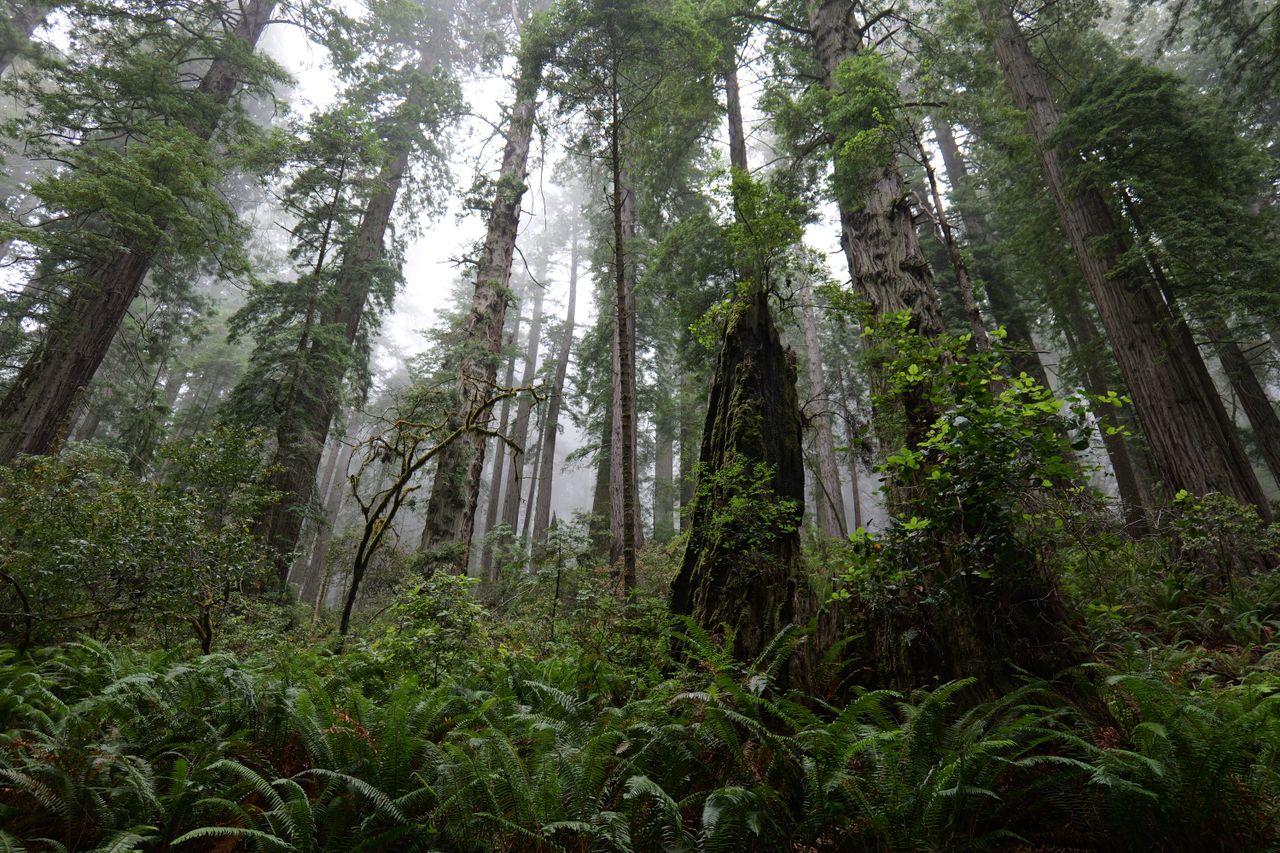
July here shows 0.8 rain-days, which sounds like guaranteed sun and is not: the forum's advice is to bet on fog, with one poster counting a single clear 4th of July in six or seven years. The coastal average high is only about 21°C and visitors are commonly in jackets and long trousers, while inland — out of the fog belt — the same day can be in the 30s. Regulars are relaxed about it: the redwoods look as good in fog as in sun, and the ancient groves are deep shade either way. July 4th is the busy date, though busy here is nothing like other national parks.
Redwood-forum threads on planning an August trip are consistent the coast itself stays genuinely cool even at the height of summer, early mornings on the beach capable of feeling raw once fog and wind combine regardless of the calendar. Posters describe daytime highs near the ocean as staying modest, a real contrast to how warm inland spots just a few miles away can run the same afternoon. Regulars recommend real layers, a waterproof shell plus a lightly insulated jacket covering most conditions a visitor is likely to hit across a single day here. Posters call the marine layer a defining feature of summer specifically, often burning off by afternoon inland while the immediate coast stays shrouded longer. Regulars recommend checking which grove is coastal versus inland before dressing for the day. Posters call the ancient trees worth the trip regardless of a gray start. The record: 21.5C days feeling like 20C, 13.3C nights, a low 74 percent humidity and 12.6 hours of sun.
Redwood-forum threads on September visits call this genuinely one of the best-balanced months, lingering summer warmth paired with thinning crowds and a noticeably lighter coastal fog pattern than the deep marine layer that can blanket the coast through midsummer mornings. Posters describe September fog, when it does roll in, as considerably less dense than a typical winter system, adding real atmosphere to forest photos rather than obscuring the trees outright. Regulars call conditions generally mild and comfortable for extended hiking, cooler along the immediate coast and noticeably warmer once inland among the tallest groves. Posters recommend planning coastal viewpoints and beach walks for whenever the fog happens to lift, since the pattern can shift within the same morning. Regulars call September a genuine sweet spot for anyone wanting both good light and manageable crowds. The record: 20.5C days feeling like 19C, 12.5C nights, a 14.9C sea and 74 percent humidity.
Redwood-forum threads on mid-October weather describe a genuinely favorable stretch, the heaviest winter rains still weeks away and frosts still rare, though posters are consistent morning fog and drizzle are a regular fixture that usually clears by mid-morning. A typical day is described as cool and misty at dawn under the canopy, then noticeably warmer once out in an open grove or coastal clearing, before cooling again as the sun drops. By month's end conditions turn a touch cooler and greyer, so posters recommend early-to-mid October over the final week for the best odds of a dry hiking day. Regulars call layers essential regardless of the exact date, since temperature under the redwood canopy can run several degrees cooler than in open, sunlit sections of the same trail. The record: 17.4C days feeling like 16C, 9.9C nights, 107mm across 7.2 days, a 12.4C sea and 77 percent humidity.
Redwood-forum threads on a November visit describe the park as staying open year-round, posters calling real fog and rain the standing conditions this time of year. Regulars call daytime highs typically mid-fifties Fahrenheit with nights dropping into the low forties, considerably milder than the interior despite the coastal damp. Regulars describe Crescent City as seeing rain across roughly thirteen days in a typical November, several inches of real accumulation over the month. Posters call usable daylight genuinely limited this late in the year, the sun's low angle leaving only a few hours of good light on a clear day. Regulars call the fog curling among the ancient trees a genuinely unforgettable sight for anyone willing to embrace the dampness. Posters recommend real waterproof layers regardless of forecast, crowds here a fraction of the summer peak. The record: 13.5C days feeling like 11C, 7C nights, an extraordinarily high 215.3mm across nearly 13 days and 81 percent humidity.
Aggiungi la tua nota dalla scheda di Parco nazionale di Redwood sulla mappa.