Meteo Denver mese per mese
Il periodo migliore per visitare Denver è maggio, giugno e settembre: 90/100 in settembre, 29°C e 3 giorni di pioggia. Stagione migliore: estate, da giugno a agosto (84/100 in media).
Il mese peggiore è gennaio, con 63/100: freddo, asciutto, aria pulita. Vedi gennaio →
Aggiornato: settembre 2026 · medie climatiche dalla rianalisi ERA5
Stai organizzando un viaggio più ampio? Quando visitare Stati Uniti d'America →
Stagione migliore: da giugno a agosto (84/100 in media) · il peggiore è gennaio (63/100)
- Giorno
- 29°C
- Notte
- 11°C
- Giorni di pioggia
- 3
- Sole
- 10.9 h
- Umidità
- 46%
- Ore di luce
- 12 h
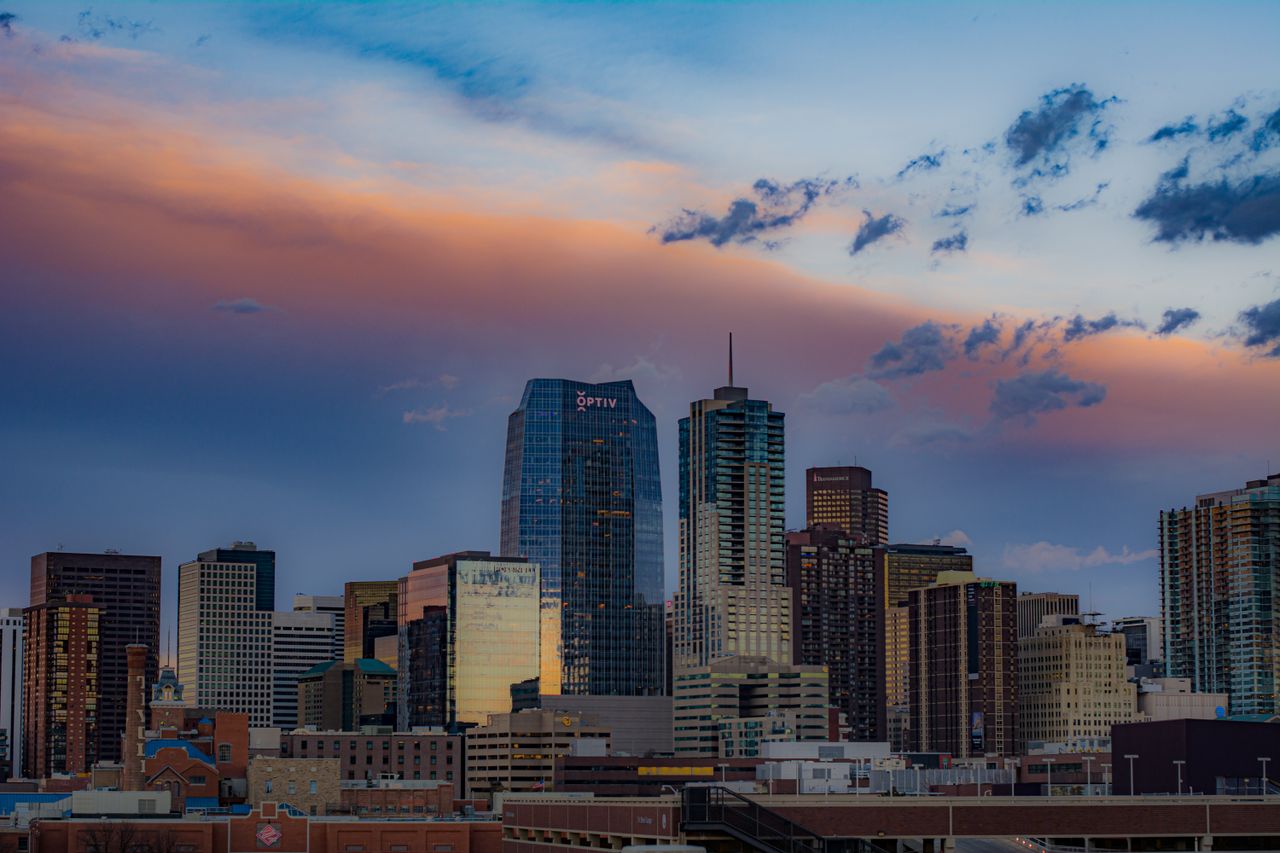
Denver, mese per mese
Punteggio di comfort su 100 per il tipo di viaggio più adatto a Denver, la massima media, i giorni di pioggia e le ore di sole al giorno dalle medie climatiche, e quanta folla c'è di solito.
Cosa c'è in programma a Denver durante l'anno
Festival, spettacoli naturali, festività e le stagioni a cui fare attenzione: selezionati e con fonte. I dettagli sono nelle pagine dei mesi.
- gennaio
- National Western Stock Show5–28 gen (di solito)Festival
- marzo
- Denver March Powwow15–29 mar (di solito)Festival
- aprile
- Red Rocks concert season1 apr – 5 nov (di solito)Apertura
- giugno
- Wildfire smoke and ozone15 giu – 15 set (di solito)Rischio
- luglio
- Independence Day3–5 lugFestività
- Afternoon monsoon storms5 lug – 5 set (di solito)Rischio
- settembre
- Great American Beer Festival10–11 ottFestival
- Aspen colour15 set – 10 ott (di solito)Natura
- ottobre
- Mountain ski season25 ott – 20 apr (di solito)Stagione
- novembre
- Thanksgiving25–29 novFestività
- dicembre
- Christmas and New Year24 dic – 1 genFestività
Folla a Denver in settembre
Quanto è affollato il luogo in sé: vacanze scolastiche e ferie di massa, i mesi segnalati dalla redazione e quanto il clima li rende ambiti. Mai incluso nel punteggio di comfort.
Folla al massimoAspen colour, Summer break in Stati Uniti d'America(stima)
Folla al massimoAffollatoMedia stagioneTranquillo
Da sapere prima di andare a Denver
Esperienze vere dai racconti dei viaggiatori, citate con il link all'originale.
Salute
A traveler combining hiking and craft beer in Denver, sitting at exactly 5,280 feet (the actual 'mile high' elevation), passes along a widely repeated local rule of thumb worth taking seriously: one drink at altitude tends to hit like two would at sea level, since thinner air and lower oxygen levels amplify alcohol's effects faster than most visitors expect. He recommends pacing drinks more conservatively than usual on a first Denver visit specifically to avoid what locals call an altitude hangover, which can set in even after a modest amount if you're drinking at the same pace you would at home. He also notes hiking itself takes more effort here purely because of the thinner air - even a straightforward trail like the 6.5-mile Herman Gulch, with about 1,755 feet of elevation gain, felt tougher than a comparable sea-level hike he'd normally consider easy. Posters generally recommend drinking extra water and genuinely pacing both hiking and drinking slower than usual for the first day or two in Denver, letting the body adjust before pushing hard at either.
Note dei viaggiatori su Denver
Cosa dice chi c'è stato: prima le note valide tutto l'anno, poi mese per mese.
Denver forum threads describe January as genuinely hard to predict, with posters noting plenty of sunny days alongside real possibilities of bitter cold or, on the mild end, weather warm enough to eat lunch outside. Flight disruption concerns were addressed directly by posters, who pointed out Denver International Airport has only closed a couple of days in over a decade despite the city's snowy reputation, since the airport and I-70 corridor toward the ski areas are treated as critical infrastructure. Posters steered visitors away from January road trips given the real risk of sudden bad weather, but were positive about in-city activities, suggesting snowshoeing over hiking as the better-suited winter outdoor option for the month.
The fact that surprises visitors: "we often get more snow in spring than winter. Historically, March averages out to be the snowiest month in Denver, followed by April." What that does not mean is a snowy city — "snow typically doesn't stay on the ground for very long in Denver," and anyone coming to play in it is told plainly, "you will have to go to the mountains for snow activities," where "the snow at the higher elevations doesn't melt until mid-June." So March is a big-snowfall month that mostly melts on contact at 1,600m, and a reliable snow month an hour's drive up. Our record agrees on the totals — 28.8cm in March, more than any other month — alongside 10°C days and 9.8 hours of sun, which is the combination that melts it.
Denver-forum threads on May draw a sharp elevation line: the city itself is warming fast by this point, while the resort towns up in the mountains - Vail, Aspen, Breckenridge - are stuck in what regulars call mud season, the snow melting away without the ground being dry enough yet for summer trails. Anyone chasing actual snow is told to just drive a high mountain pass instead; above roughly 9,500 feet there's still plenty of it through mid-May, less likely after the 22nd as the month wears on. Down in Denver proper the record backs the warming trend: 22.2C days, 7C nights, 74mm of rain across eight days, 11.6 hours of sun, and a late 4.4cm of snowfall still possible early in the month before the city's own spring properly arrives.
June storms are routine here and regulars turn them into a rule rather than a warning: the mornings are sunny and dry, the storms build mid to late afternoon, so hike early and be heading down by noon. Most are scattered and brief, under half an hour, with perhaps one week a summer of something more persistent. At altitude a single spring or early-summer day can hold rain, thunder, freezing drizzle and snow on the high ground, which is why the timing matters more than the forecast. Our row is otherwise a dry, bright month: 30.7C days over 13.4C nights at 51 percent humidity, 45.5mm across 6.2 days and 13 hours of sun. The record: a 15.9 kph wind and AQI 47.
Regulars from humid climates like Atlanta and the Southeast consistently note that even when Denver's temperature matches what they're used to at home, the dry air makes it feel genuinely different, with cooler overnight temperatures providing real relief that a humid climate wouldn't give at the same daytime high. Our row backs the hot, dry read, 32.7C reading as 32C at just 49 percent humidity, over 15.3C nights, with rain minimal at 26.3mm across 5 days. Regulars are specific that afternoon thunderstorms are a real, near-daily possibility this time of year, brief but capable of disrupting an outdoor plan even on an otherwise scorching day. The record: 11.9 hours of sun, a 14.4 kph wind and AQI 46.
Denver's forum rates September among Colorado's most beautiful months — sunny, mild days in the 70s with chillier nights, especially once you head toward the mountains. Regulars flag that an early snow, however brief, isn't unheard of even late in the month, though it typically melts fast.
Regulars are blunt about the spread this month can produce: early October is generally the better bet, still holding some fall color at lower elevations, while late October swings unpredictably between an 80-degree Fahrenheit afternoon and a foot of snow depending on the year. Our row backs a genuinely wide range, 20.6C by day over a real 0C-feeling night, with a modest 18mm of rain across 3.3 days alongside a real 6.4cm of early snowfall. The standard advice from regulars is layering that can come off in full sun and go back on in shade or after dark, since the swing happens within a single day as much as across the month. Dry air keeps humidity down to 50 percent even on a cold day. The record: 9.4 hours of sun, a 14.7 kph wind and AQI 31.
Aggiungi la tua nota dalla scheda di Denver sulla mappa.