Météo à San Pedro de Atacama mois par mois
La meilleure période pour visiter San Pedro de Atacama : janvier à mars — 97/100 en mars, 24 °C et 2 jours de pluie. La meilleure saison, c’est l’été : décembre à février (95/100 en moyenne).
Le pire mois est juin, avec 84/100 — frais, sec, un air pur. Voir juin →
Mise à jour : septembre 2026 · normales climatiques issues de la réanalyse ERA5
Tu prépares un voyage plus large ? Destination Chili : quand partir →
Meilleure saison : décembre à février (95/100 en moyenne) · pire mois : juin (84/100)
- Jour
- 24°C
- Nuit
- 11°C
- Jours de pluie
- 2
- Soleil
- 11.3 h
- Humidité
- 37%
- Durée du jour
- 12 h
San Pedro de Atacama, mois par mois
Le score de confort sur 100 pour le type de voyage qui convient le mieux à San Pedro de Atacama, la maximale moyenne, les jours de pluie et les heures de soleil par jour d’après les normales climatiques, et l’affluence habituelle.
Au programme à San Pedro de Atacama toute l’année
Festivals, spectacles naturels, vacances et saisons à surveiller — sélectionnés et sourcés. Les pages de chaque mois donnent le détail.
- janvier
- Stargazing and the moon1 janv. – 31 déc.Nature
- Southern summer holidays1 janv. – 28 févr.Saison
- Altiplanic winter1 janv. – 15 mars (en général)Saison
- mars
- Semana Santa3–5 avr.Vacances
- avril
- Clear months1 avr. – 15 déc. (en général)Saison
- juin
- Fiesta de San Pedro y San Pablo29 juinFestival
- septembre
- Fiestas Patrias18–19 sept.Vacances
Affluence à San Pedro de Atacama en mars
À quel point le lieu lui-même est fréquenté — vacances scolaires et grands départs, les mois signalés par la rédaction, et l’attrait que la météo leur donne. Jamais pris en compte dans le score de confort.
FréquentéSummer holidays (Chili), vacances scolaires dans 2 des pays d’où viennent ses visiteurs(estimé)
Pic d’affluenceFréquentéIntersaisonCalme
Bon à savoir avant de partir à San Pedro de Atacama
De vraies expériences tirées des récits de voyageurs, citées avec un lien vers l’original.
nature
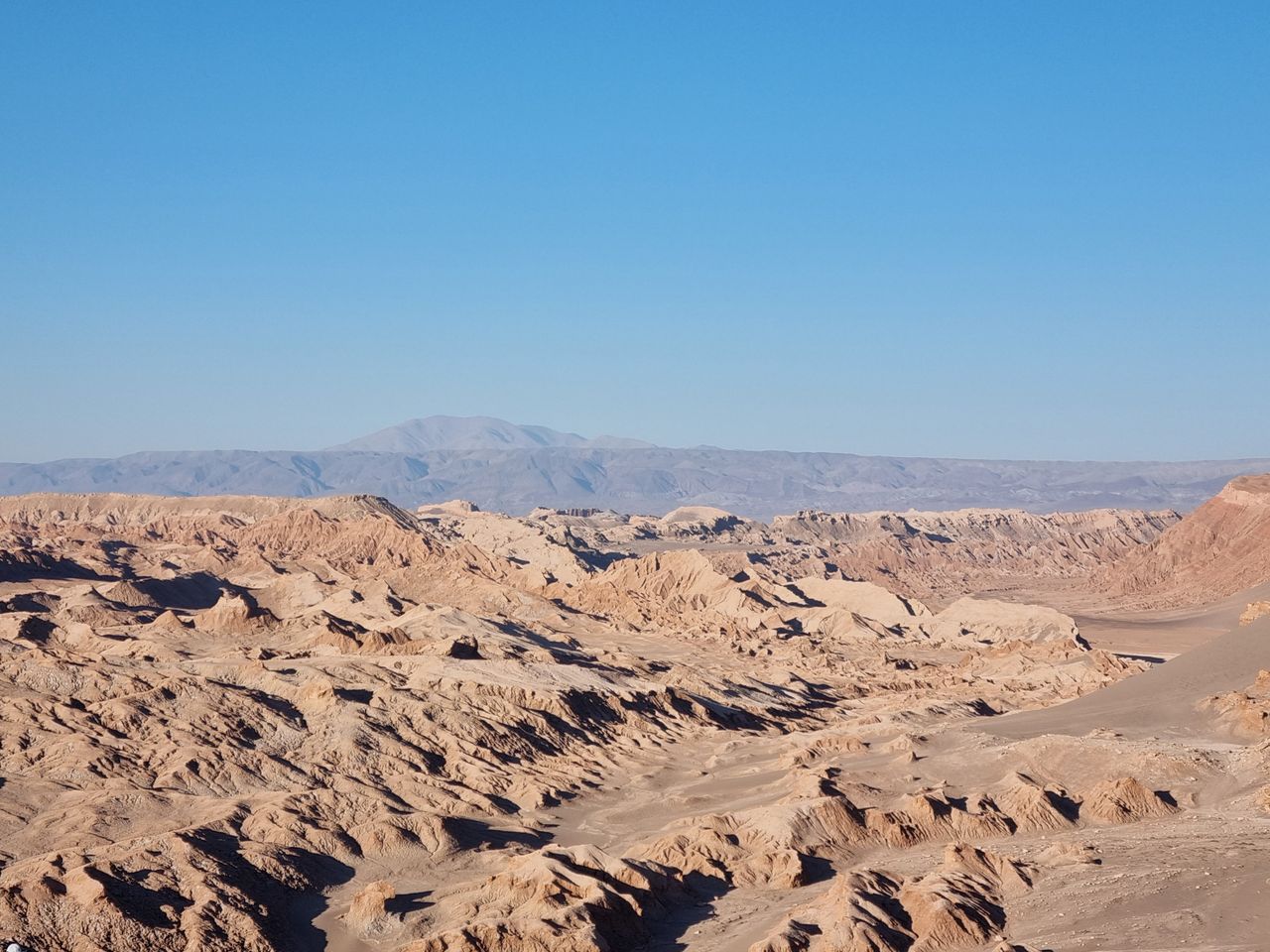
We gave ourselves five days here, which turned out to be exactly enough time to spread tours across the altitude without burning out, since the town itself sits around 2,400 meters. A predawn trip to El Tatio geysers meant standing in sub-zero temperatures watching steam erupt against the sunrise, genuinely worth the early alarm. Floating in the Salar de Atacama's salt-saturated water was stranger than we expected, impossible to sink no matter how hard we tried. With over 300 clear nights a year and essentially no light pollution, our stargazing tour showed us more of the Milky Way in one evening than we'd seen in a lifetime of city living. Valle de la Luna's wind-carved dunes at sunset closed out the trip perfectly.
Notes de voyageurs sur San Pedro de Atacama
Ce qu’en disent celles et ceux qui y sont allés — d’abord les notes valables toute l’année, puis mois par mois.
San Pedro de Atacama's forum calls January hot by day and genuinely cool after dark, with regulars flagging January and February specifically for the "Altiplanic winter" — afternoon thunderstorms that can occasionally roll in over the high-altitude tours and, on rare occasions, close roads. It's also peak holiday season for Chileans, Argentinians and Brazilians, so expect crowds.
San Pedro sits in the driest desert on earth and our February row still carries 34mm across 5.1 precipitation days. Locals have a name for the reason: the invierno boliviano, the Bolivian winter, when humid air off the Amazon crosses Bolivia in the southern summer and falls here as rain, or as snow on the mountains around. Regulars are specific about the consequence - it is the tours rather than the town that suffer. Moon Valley, the geysers and the high altiplano lagoons can all be cancelled, and some crossings to Salta are not run at this time of year at all. June to August has none of it, and May to September is fine. The desert is otherwise itself: 24.2C by day, 12.3C at night, 45 percent humidity. The record: 11.4 hours of sun, a 15 kph wind and AQI 38.
March sits at the end of the altiplanic winter, the January-to-March stretch when rain actually falls on the high ground - and the distinction the forum draws is between the town and the altitude. San Pedro itself is in the driest desert on earth and gets essentially nothing, which our row confirms at 6.6mm across the month; the weather that matters is up on the passes towards Bolivia and Argentina, where the season can close roads and reshape tours. It has an upside photographers chase, too: in early March the salt flats can be partly under water, which is when the mirror appears. Tours run all year regardless. The record: 24.2C days, 10.7C nights that feel like 8C, humidity 37 percent and 11.3 hours of sun.
Forum posters describe July days as feeling genuinely hot in the intense high-desert sun, with some posters citing daytime temperatures in the 30sC - though the real monthly average high here is closer to 19C, with July actually the coolest month of the year in San Pedro (summer highs only reach the mid-20sC). The gap likely comes down to strong solar radiation and very low humidity making direct sun feel far hotter than the air temperature alone,. What's consistent across posters is the huge day-night swing: bitterly cold nights, especially near dawn, with overnight lows commonly dropping below freezing. Posters agree rain is possible but unlikely, with dry, clear conditions the norm, and generally name June, July and August together as a safe, workable window to visit the Atacama. Posters consistently recommend serious layering - light clothes for the intense midday sun, real warmth for the freezing pre-dawn tours to see sunrise over the salt flats and geysers.
Regulars describe late October as warm and pleasant by day but genuinely cold once the sun drops, a swing they attribute to the desert's clear skies letting the day's heat escape fast overnight rather than any incoming weather system. Our row backs the range, 24C over a real 2C-feeling low, with rain essentially absent at 0.4mm across a fifth of a day and humidity down to a desert-dry 16.6 percent. The practical advice that follows is layering rather than picking one outfit - light clothes for the strong midday sun, a proper warm jacket for the evening stargazing tours this region is known for, since the same clear skies that cause the temperature drop are what make the night sky here so good. The record: 11.8 hours of sun, a 16.6 kph wind and AQI 39.
Regulars are specific mornings here can drop close to freezing, some reporting temperatures as low as -2C at sunrise, even as the desert itself turns genuinely hot by midday, a good blanket enough to handle the overnight swing without extra heating. Our row backs that mild, genuinely bone-dry read, 25.2C over 9C nights feeling as low as 5C, with rain essentially absent and humidity down to just 19 percent. Regulars are consistent this counts as full summer season locally despite the cold mornings, the driest desert on earth living up to its reputation with essentially no rain to plan around. Sun protection remains essential given how intense the desert sun gets by midday. The record: 12.4 hours of sun, a 17.4 kph wind and AQI 40.
December is the desert behaving normally, after February's Bolivian winter: 3mm of rain across half a precipitation day, and humidity of 25 percent, the driest figure anywhere in this collection. Regulars explain the temperature swing rather than just reporting it - the sky is so clear that the ground radiates its heat away overnight and the temperature plummets, which is our 25.7C day falling to 11.5C and reading as 9C. Warm layers matter even in mid-December. The same clarity is what the stargazing is built on, with one caveat that has nothing to do with weather: go on a dark night, because a full moon erases the stars, and tours cancel or rebook if cloud comes in. The record: 12.5 hours of sun, a 17.9 kph wind and AQI 45.
Ajoute ta propre note depuis la fiche de San Pedro de Atacama sur la carte.