Météo à Québec mois par mois
La meilleure période pour visiter Québec : juin, août et septembre — 89/100 en juin, 23 °C et 13 jours de pluie. La meilleure saison, c’est l’été : juin à août (86/100 en moyenne).
Le pire mois est janvier, avec 30/100 — glacial, un peu de pluie, un air pur. Voir janvier →
Mise à jour : septembre 2026 · normales climatiques issues de la réanalyse ERA5
Tu prépares un voyage plus large ? Destination Canada : quand partir →
Meilleure saison : juin à août (86/100 en moyenne) · pire mois : janvier (30/100)
- Jour
- 23°C
- Nuit
- 12°C
- Jours de pluie
- 13
- Soleil
- 10.9 h
- Humidité
- 72%
- Durée du jour
- 16 h
Québec, mois par mois
Le score de confort sur 100 pour le type de voyage qui convient le mieux à Québec, la maximale moyenne, les jours de pluie et les heures de soleil par jour d’après les normales climatiques, et l’affluence habituelle.
Au programme à Québec toute l’année
Festivals, spectacles naturels, vacances et saisons à surveiller — sélectionnés et sourcés. Les pages de chaque mois donnent le détail.
- février
- Carnaval de Quebec1–15 févr. (en général)Festival
- mars
- Maple sugar season5 mars – 20 avr. (en général)Saison
- juin
- Saint-Jean-Baptiste23–24 juinVacances
- juillet
- Festival d'ete de Quebec5–18 juil. (en général)Festival
- août
- Grands Feux Loto-Quebec4–22 aoûtFestival
- New France Festival5–9 août (en général)Festival
- septembre
- Grand Prix Cycliste de Quebec11 sept.Festival
- Fall colour25 sept. – 20 oct. (en général)Nature
- novembre
- German Christmas market20 nov. – 23 déc. (en général)Festival
Affluence à Québec en juin
À quel point le lieu lui-même est fréquenté — vacances scolaires et grands départs, les mois signalés par la rédaction, et l’attrait que la météo leur donne. Jamais pris en compte dans le score de confort.
Pic d’affluenceSaint-Jean-Baptiste, Summer break (Canada), vacances scolaires dans 2 des pays d’où viennent ses visiteurs(estimé)
Pic d’affluenceFréquentéIntersaisonCalme
Bon à savoir avant de partir à Québec
De vraies expériences tirées des récits de voyageurs, citées avec un lien vers l’original.
Visas et formalités
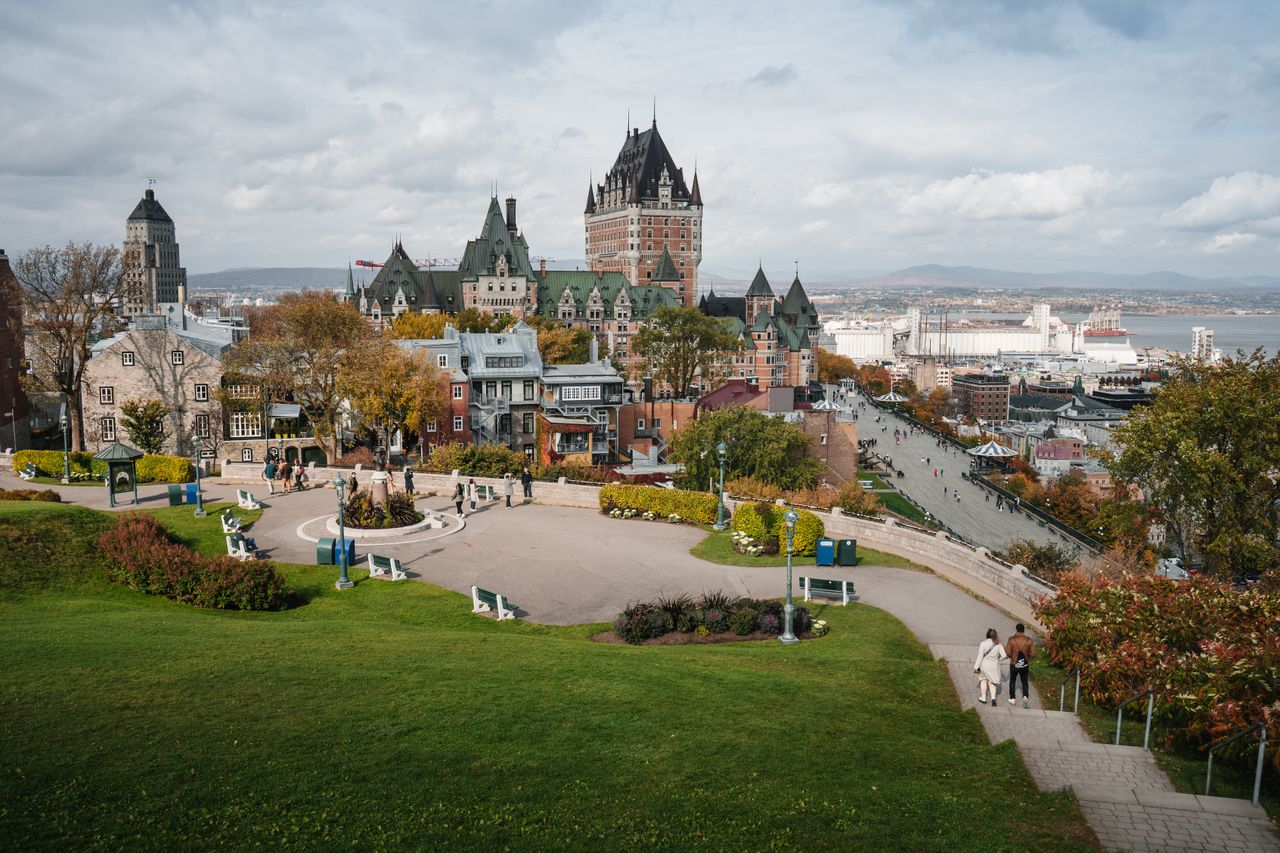
We joined the free walking tour on our first morning specifically to get oriented before wandering on our own, and it paid off since Old Quebec splits cleanly into Upper and Lower Town connected by either a funicular or the aptly named Breakneck Stairs. Three days on foot covered the whole old walled city comfortably, the only one of its kind still standing north of Mexico. Road signs and menus are in French, which caught us off guard at first, but the moment a server heard us struggling they switched to English without missing a beat. We felt safe walking back to our hotel after dark every single night, no hesitation at all.
Notes de voyageurs sur Québec
Ce qu’en disent celles et ceux qui y sont allés — d’abord les notes valables toute l’année, puis mois par mois.
Quebec City forum threads describe January as genuinely cold, with typical highs and lows cited around -5 to -13C, though posters noted a historical extreme as low as -31C shows just how far the range can stretch. Wind chill was flagged as often the bigger factor than the raw temperature, with posters consistent that a windy -10C day can feel considerably worse than a still one at the same reading. Real snow was called highly likely, with posters noting the city typically sees snow by Christmas and conditions build from there through January. On the upside, posters specifically recommended late January for the start of Quebec's Winter Carnival, a genuine highlight with family-friendly activities built around embracing the cold rather than avoiding it. The consistent packing advice was proper base layers, a mid-weight insulating layer, and a windproof or insulated outer shell, plus a hat, scarf, gloves and real winter boots.
Regulars describe a real split within the month - early on, the ground itself is still cold from winter, with only a week or two typically passed since the last snow, while the back half genuinely warms up and settles. Our row backs that mild-overall read sitting between those halves, 17.9C over 6.9C nights feeling 4C, with 86.3mm of rain across 12.1 days and a trace of very late snow, 0.7cm, matching regulars' accounts of a light snowfall on record even in mid-May some years. Regulars are consistent the standard packing list for early in the month runs surprisingly heavy - windbreaker, umbrella, gloves, hat and scarf - even though the same trip two weeks later might need none of it. The record: humidity 66 percent, 10 hours of sun, a 16.7 kph wind and AQI 41.
Quebec City's forum calls June warm but not humid, with temperatures often in the 25-30°C range and more attractions open than in the shoulder months. Regulars rate June as better than May and note July and August get even warmer and more humid — a light packable windbreaker covers the gap, and mosquitoes are worth being ready for.
Regulars are direct that this month can turn genuinely hot and humid by day, cooling off much more at night, and specifically recommend booking accommodation with air conditioning rather than assuming a northern city won't need it. Our row backs the summer heat, 26.2C reading as a real 27C, over 15.9C nights, with a substantial 119.9mm of rain across 12.1 days. A recent trip report from regulars describes the month as genuinely variable within itself - a couple of glorious, mostly blue-sky days alongside a more intermittent, rain-prone stretch - rather than one settled pattern holding the whole visit. The record: humidity 76 percent, 11.5 hours of sun, a 15.3 kph wind and AQI 53.
August in Quebec City is more moderate and less humid than July, and regulars draw the comparison with Montreal deliberately: the city does not get the thermal inversion that makes Montreal muggy, so the season feels closer to normal here even when a heat wave arrives. Our row gives 24.9C days over 14.9C nights at 77 percent humidity. The calendar matters as much as the weather. The Festival d'Ete runs in July, so August is the quieter festival month - the fireworks finish on the second weekend and the film festival starts on the last - and the second half of August is one of the two sweet spots they name for summer weather with thinner crowds. The record: 12.8 precipitation days carrying 128.7mm and 10.4 hours of sun.
Regulars put the turn on about the 15th: after that it cools markedly and the nights, they say, head towards freezing - our monthly low averages 10.6C, so that is the end of the month rather than its middle - and the cooling is precisely what starts the colour. The leaves run from the third week of September into the second week of October, with the first week of October usually the best, so mid-September is early for anyone coming to see them. Dress autumnal - jeans and a light sweater or jacket - and expect to still eat outdoors, though by October the terraces have heaters and blankets. This is shoulder season: prices lower, streets uncrowded. Our row gives 20.9C days over 10.6C nights and 96.4mm across 9.6 days. The record: humidity 77 percent, 8.8 hours of sun and AQI 41.
Locals on the forum warn that December is hard to predict year to year - sometimes mild, sometimes brutally cold - but the working average posters give is about -4C by day and -11C at night, with snow or rain both possible. The Old Port Christmas market runs through December 31st and gets genuinely crowded some evenings; there's also a covered indoor market nearby for a warm break. One recurring line about local gear culture: here "a warm jacket" means one that covers you well below the waist, and "a scarf" means a thick one meant to wrap fully around your face - a hint at just how seriously the cold is taken.
Ajoute ta propre note depuis la fiche de Québec sur la carte.