Météo à Jérusalem mois par mois
La meilleure période pour visiter Jérusalem : avril, mai et octobre — 96/100 en avril, 24 °C et 4 jours de pluie. La meilleure saison, c’est le printemps : mars à mai (91/100 en moyenne).
Le pire mois est janvier, avec 74/100 — frais, un peu de pluie. Voir janvier →
Mise à jour : septembre 2026 · normales climatiques issues de la réanalyse ERA5
Tu prépares un voyage plus large ? Destination Israël : quand partir →
Meilleure saison : mars à mai (91/100 en moyenne) · pire mois : janvier (74/100)
- Jour
- 24°C
- Nuit
- 13°C
- Jours de pluie
- 4
- Soleil
- 11.6 h
- Humidité
- 57%
- Durée du jour
- 13 h
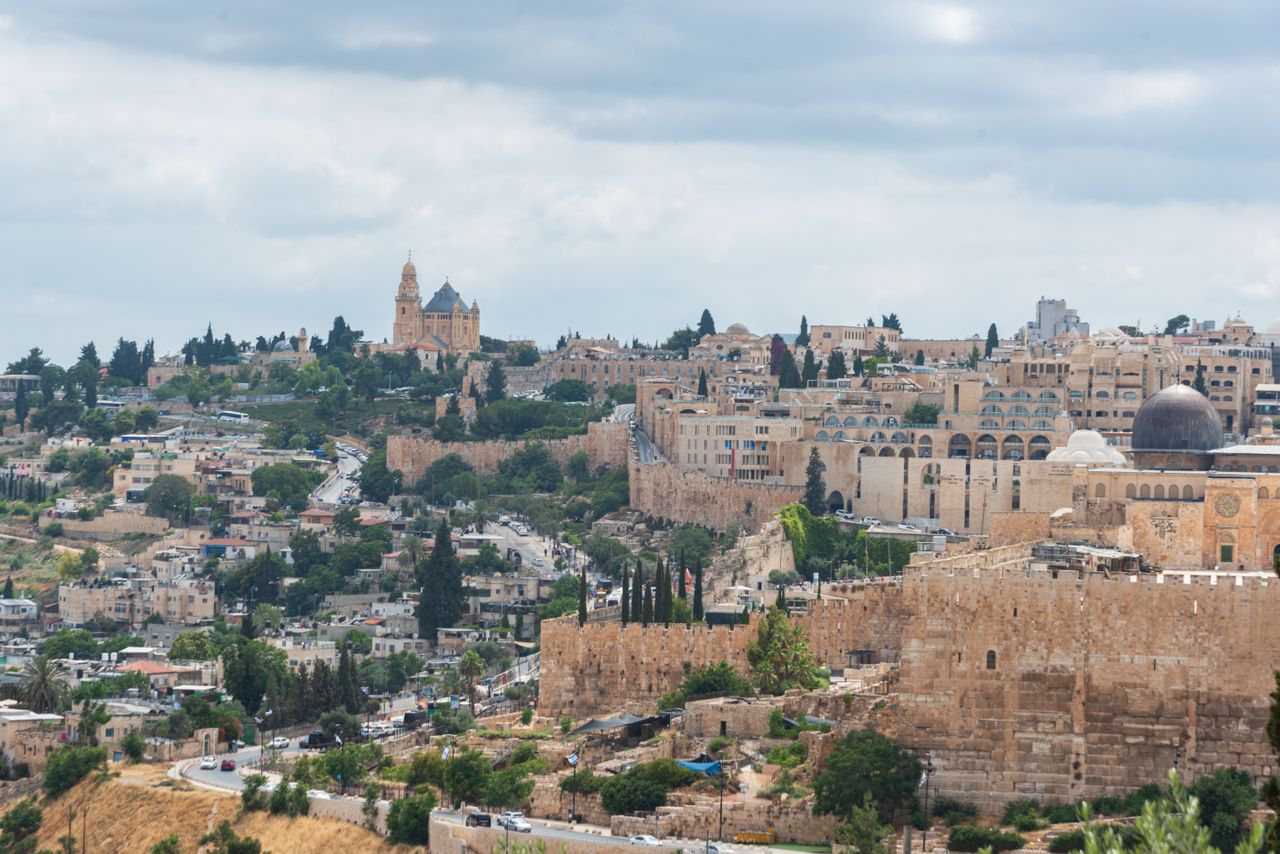
Jérusalem, mois par mois
Le score de confort sur 100 pour le type de voyage qui convient le mieux à Jérusalem, la maximale moyenne, les jours de pluie et les heures de soleil par jour d’après les normales climatiques, et l’affluence habituelle.
Au programme à Jérusalem toute l’année
Festivals, spectacles naturels, vacances et saisons à surveiller — sélectionnés et sourcés. Les pages de chaque mois donnent le détail.
- janvier
- Ramadan in the Old City18 févr. – 19 marsVacances
- mars
- Jerusalem Marathon15 mars – 20 avr. (en général)Festival
- Holy Week and Easter29 mars – 12 avr.Vacances
- Passover1–9 avr.Vacances
- Sharav dust days1 mars – 31 mai (en général)Risque
- avril
- Independence Day14 avr. – 15 mai (en général)Vacances
- mai
- Shavuot15 mai – 15 juin (en général)Vacances
- juin
- Festival of Light1 juin – 5 juil. (en général)Festival
- juillet
- Jerusalem Film Festival15–31 juil. (en général)Festival
- septembre
- Yom Kippur20–21 sept.Vacances
- Sukkot25 sept. – 2 oct.Vacances
- novembre
- Hanukkah28 nov. – 30 déc. (en général)Vacances
- décembre
- Christmas in Bethlehem20 déc. – 8 janv.Vacances
Affluence à Jérusalem en avril
À quel point le lieu lui-même est fréquenté — vacances scolaires et grands départs, les mois signalés par la rédaction, et l’attrait que la météo leur donne. Jamais pris en compte dans le score de confort.
Pic d’affluenceJerusalem Marathon, Holy Week and Easter, vacances scolaires dans 3 des pays d’où viennent ses visiteurs(estimé)
Pic d’affluenceFréquentéIntersaisonCalme
Bon à savoir avant de partir à Jérusalem
De vraies expériences tirées des récits de voyageurs, citées avec un lien vers l’original.
Visas et formalités
A traveler describes being genuinely glad to have been in Jerusalem's Old City during Shabbat, expecting inconvenience but finding something closer to a highlight - Friday evening at the Western Wall felt special and joyful, with families gathering, and children delivering casseroles between homes as Shabbat preparations wrapped up around her. She's specific about the practical reality: everything in the Jewish Quarter and the Temple Mount/Al-Aqsa area closes for Shabbat, and public buses and trains stop running entirely across Jerusalem, while the rest of the Old City (Christian and Muslim Quarters) continues operating close to normal. The Western Wall itself stays open 24/7 even through Shabbat, though photography and phone use there are not permitted during that window. Posters generally recommend treating a Shabbat visit as an opportunity rather than an obstacle - the city runs noticeably quieter and more peaceful, with almost no traffic, making it one of the more atmospheric times to walk the Old City on foot.
Notes de voyageurs sur Jérusalem
Ce qu’en disent celles et ceux qui y sont allés — d’abord les notes valables toute l’année, puis mois par mois.
Located near the eastern edge of the Mediterranean Sea, Jerusalem has a Mediterranean climate with hot, dry summers and cool, wet winters. Due to its relatively high elevation (600 m-800 m above sea level) Jerusalem's air is less humid and more pleasant than in most other parts of Israel. Winters are often wet, with nearly all of Jerusalem's annual 590 mm (23 in) of precipitation occurring between October and April. However, in between the rainy days there are numerous clear and sunny days. The coldest month is January, with an average high of 12 °C (53 °F) and an average low of 4 °C (39 °F). Sub-freezing temperatures are rare, but do happen, and the city will get occasional snowfall during the winter, though it usually only lasts a matter of hours rather than days. Once every few years, the city will experience significant accumulating snow. Summers are hot and dry as a bone with virtually no rainfall between the months of May and September.…
Jerusalem forum threads describe January as genuine winter here, with typical highs around 10-15C and real potential for heavier rain spells, though posters were consistent that any given wet stretch rarely lasts more than a couple of days before clearing. Snow is a real possibility given Jerusalem's elevation but stays rare in practice - maybe once every couple of years rather than an annual event. The consistent packing advice: layers you can add and remove through the day, since a sunny moment can feel genuinely warm while stepping into shade brings a noticeably cold breeze - the swing between sun and shade was repeatedly flagged as more dramatic here than visitors expect.
Jerusalem forum regulars describe April as the reward for skipping winter and beating summer: warm but not very hot, with rain unlikely, mornings “probably in the 50s” and days “probably 69s-72” — evenings cool enough that a light jacket or sweater stays useful even on a warm day. The one wrinkle to plan around isn't weather at all: Passover crowds mean tourist sites get busy and hotels pricier for that week, with regulars recommending arrival after the holiday rather than during it. Our record backs the mild, dry read: 22.5°C days, 10°C nights and just 3.4 rain days for the whole month.
A Jerusalem-forum thread on May evenings gets specific about the city's one weather quirk: the elevation. Days run warm and reliably sunny with precipitation 'very unlikely' by this point in spring, but posters are consistent that evenings cool off more than visitors expect, enough that a jacket or sweater earns its space in the bag even after a warm afternoon. The record confirms both halves: 27.5C days feeling like 28C, 16.8C nights, just 2.2 precipitation days and 12.6 hours of sun - one of the driest, sunniest stretches on the calendar, with humidity a low 50 percent that keeps the heat from feeling heavier than it is.
At 800 metres the heat here is dry rather than oppressive, and regulars call June bearable compared with what August brings. Our row backs the dryness precisely - 29.8C reading as 31C at 52.8 percent humidity, roughly half the humidity a coastal city would carry at the same temperature - and the evening cool they describe: one visitor put on long sleeves for dinner after finding the evening surprisingly cool for what had been a hot day. Our night reads 19.1C, warmer than their impression, though the swing from a 30C afternoon still catches people out. Rain has essentially stopped, 2mm across less than a day. The record: a dew point of 10.3C, 13 hours of sun, a 16.9 kph wind and AQI 65.
Regulars describe near-perfect weather most days this month, hot but the city's 800-metre elevation keeps the dry-climate heat from feeling as oppressive as the temperature alone might suggest, with rain essentially a non-issue. Our row backs both halves, 30.2C reading as a hot 31C, over 20.1C nights, with rain nearly absent, 1.7mm across under a day, and humidity down to 61 percent. Regulars are honest this still runs genuinely hot for anyone with lower heat tolerance, but the long, warm days and reliably dry skies are called a real draw rather than a compromise. The record: 11.2 hours of sun, a 14.8 kph wind and AQI 54.
Jerusalem's October threads describe warm days and genuinely cool evenings — highs near 27°C dropping to about 16 overnight — and the forum is insistent that Jerusalem gets far chillier after dark than Tel Aviv, so a sweater or fleece belongs in the bag even in a warm month. Rain is possible but unlikely: a day or two at most across the month. The real complication isn't the weather but the calendar — Rosh Hashanah, Yom Kippur and Sukkot often fall in October, bringing premium pricing and crowds, and Yom Kippur shuts the country down entirely.
Regulars set expectations for a week here rather than a month: perhaps one properly wet day, a few showers, and three or four dry ones - far more sun than rain, and never for long when it comes. Our 39.5mm across 6.9 days is that arithmetic scaled up, a little over one wet day a week. On temperature they warn that this city is in the hills and cools sharply after dark; our row reads 20.7C by day and 13.5C at night, feeling 19C and 12C. Layering is their word for it - more in the morning, less by noon, more again in the evening - with a light rain jacket rather than a winter coat. The record: humidity 64 percent, 9 hours of sun and AQI 62.
Ajoute ta propre note depuis la fiche de Jérusalem sur la carte.