Météo à Carthagène des Indes mois par mois
La meilleure période pour visiter Carthagène des Indes : janvier à mars — 91/100 en janvier, 32 °C et 3 jours de pluie. La meilleure saison, c’est la saison sèche : décembre à avril (89/100 en moyenne).
Le pire mois est octobre, avec 66/100 — étouffant, détrempé, un air pur. Voir octobre →
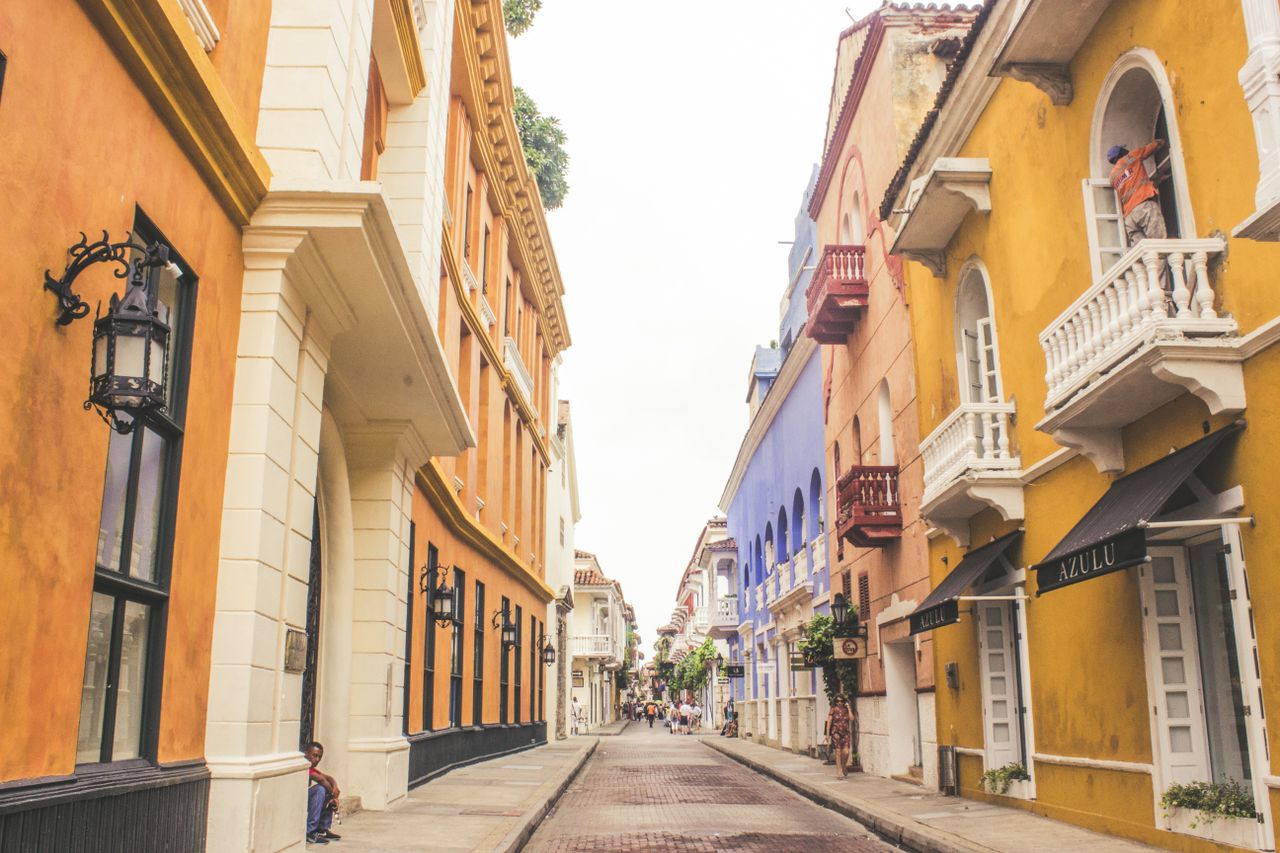
A walled Caribbean port of balconies and bougainvillea, hot and humid all year, with a dry windy season that makes all the difference.
Mise à jour : septembre 2026 · normales climatiques issues de la réanalyse ERA5
Tu prépares un voyage plus large ? Destination Colombie : quand partir →
Meilleure saison : décembre à avril (89/100 en moyenne) · pire mois : octobre (66/100)
- Jour
- 32°C
- Nuit
- 24°C
- Jours de pluie
- 3
- Soleil
- 10.6 h
- Humidité
- 76%
- Durée du jour
- 12 h
Carthagène des Indes, mois par mois
Le score de confort sur 100 pour le type de voyage qui convient le mieux à Carthagène des Indes, la maximale moyenne, les jours de pluie et les heures de soleil par jour d’après les normales climatiques, et l’affluence habituelle.
À quoi ressemble chaque mois à Carthagène des Indes
Écrit par la rédaction de SeasonMap d’après ce qui se passe vraiment sur place — pas d’après les moyennes.
- janvier
The dry, windy season: hot and bright, with a steady trade wind that makes the heat bearable and the sea choppy.
peak
- février
The driest and windiest month, and the busiest. The wind holds the humidity down and the old town is at its best.
peak
- mars
Still dry, with the wind easing towards the end of the month and the sea flattening for the islands offshore.
peak
- avril
The transition month: less wind, more humidity, and the first rains at the very end.
shoulder
- mai
The rains begin, with short heavy afternoon storms, high humidity and prices falling.
monsoonshoulder
- juin
Wet and hot, though the mid-year veranillo brings a drier spell; storms come and go quickly.
monsoonlow season
- juillet
One of the drier months inside the wet season, still humid, with calm water for the Rosario islands.
shoulder
- août
Hot and humid, with the rain building again towards the end of the month.
monsoonlow season
- septembre
Wet, humid and quiet: low season proper, with heavy but usually short storms.
monsoonlow season
- octobre
The wettest month of the year, with water standing in the low streets of the old city and very few visitors.
monsoonlow season
- novembre
Still wet, easing at the end, with the independence celebrations in the middle of the month filling the streets.
festivalshoulder
- décembre
The dry season returns and the wind picks up, with the busiest fortnight of the year at the end of the month.
peak
Au programme à Carthagène des Indes toute l’année
Festivals, spectacles naturels, vacances et saisons à surveiller — sélectionnés et sourcés. Les pages de chaque mois donnent le détail.
- janvier
- Cartagena Music Festival5–15 janv. (en général)Festival
- Hay Festival Cartagena29 janv. – 1 févr.Festival
- mars
- Cartagena film festival5–20 mars (en général)Festival
- Semana Santa20 mars – 25 avr. (en général)Vacances
- juin
- Veranillo dry spell20 juin – 31 juil. (en général)Saison
- août
- Rains and street flooding15 août – 15 nov. (en général)Saison
- novembre
- Fiestas de Independencia11–16 nov.Festival
- Cruise season1 nov. – 15 avr. (en général)Saison
- décembre
- Christmas and New Year peak18 déc. – 5 janv.Vacances
- Trade wind season15 déc. – 15 avr. (en général)Saison
Affluence à Carthagène des Indes en janvier
À quel point le lieu lui-même est fréquenté — vacances scolaires et grands départs, les mois signalés par la rédaction, et l’attrait que la météo leur donne. Jamais pris en compte dans le score de confort.
Pic d’affluencele mois de pointe selon la rédaction, Hay Festival Cartagena, Cruise season
Pic d’affluenceFréquentéIntersaisonCalme
Bon à savoir avant de partir à Carthagène des Indes
De vraies expériences tirées des récits de voyageurs, citées avec un lien vers l’original.
Arnaques à connaître
A solo traveler in Cartagena describes the classic "free gift" street scam: a friendly vendor ties a woven bracelet onto your wrist, or hands over a hat or a slice of fruit, insisting it's a gift, and only once it's already on you or in your hand does the demand for payment and the small guilt-tripping scene begin. Her advice is to firmly decline anything handed to you unprompted in the walled city before it physically touches you, since removing a bracelet already tied on feels far more awkward than waving someone off in the first place.
Notes de voyageurs sur Carthagène des Indes
Ce qu’en disent celles et ceux qui y sont allés — d’abord les notes valables toute l’année, puis mois par mois.
Cartagena's forum calls January reliably dry and hot, with one regular's specific note that overcast, hazy mornings are normal and usually burn off into full sun by midday, not a sign of bad weather to come. It's high season throughout the Old Town, so expect it busy regardless.
The Cartagena forum has one famous line about its own weather - pleasantly hot as long as the stiff breeze holds, uncomfortably so the moment it stops - and February is the month that breeze is most reliable. Mornings are already warm, the wind gets up around midday and does the rest. February sits inside the December-to-April dry season but outside the crush: high season runs November through mid-January, so early February is the pick for weather and space at once. Temperatures are put at 85 to 95F every day of the year, with February among the more comfortable of them. The record: 32.1C days that feel like 36C, 24C nights, 1.2 precipitation days, a 27.7C sea and a 27.5 kph wind.
The Cartagena forum has a standing answer to every weather question, which is that the city is hot and humid all year - 85 to 95F every day, and enough sun even inside the rainy season. March is the good version of that: the end of the December-to-April dry season, which our row gives as 12.8mm across 3.5 days. The detail worth planning the day around is the breeze. Mornings are very warm and still; by around noon the wind comes up off the sea and gives real relief, which our row carries as 26.1 kph. Until then, shade. The record: 32.1C days that feel like 37C, 24.7C nights, humidity 73 percent, 11.2 hours of sun and a 27.7C sea.
Cartagena-forum threads on May weather confirm the wet season is properly underway, hot, muggy days broken up by frequent, often heavy showers that posters consistently describe as short bursts rather than an all-day soak, sun and high humidity typically returning within an hour or two of a storm passing. Regulars are clear this isn't a reason to avoid the month - the old walled city and its rooftop bars stay fully in swing regardless, and a passing downpour is treated as routine rather than trip-altering. Santa Marta up the coast is repeatedly named a notably less wet alternative for anyone wanting more guaranteed beach time on the same trip. The standing local advice is light, breathable clothing over rain gear, since the heat makes anything heavier miserable between showers. The record: 32.4C days feeling like a punishing 39C, 26.2C nights, an extraordinarily high 176mm across nearly 25 days, a 29.4C sea and 85 percent humidity.
Forum posters are blunt that Cartagena essentially has two weather modes - hot, or hot and wet - and July leans toward the wetter end without being the year's rainiest or driest stretch. The typical daily rhythm: sun, then a short torrential downpour, then clear skies again within the hour rather than a settled all-day rain. Posters who've spent two weeks in July/August call the trip fine overall, with the real complaint being the heat and humidity itself rather than the rain pattern - and they note fewer tourists and better prices than the December-April dry season, which is otherwise named as the more reliably sunny window.
Cartagena-forum threads on September weather are direct that it's hot and very humid, temperatures reliably above 90 Fahrenheit with humidity to match, part of the region's rainy season. Posters are consistent the pattern is heavy bursts rather than all-day rain, showers typically striking hard in the late afternoon or early evening and clearing after a few hours rather than settling in for the whole day. It doesn't rain every single day even in this wetter stretch, sun still showing up regularly between the downpours. September also marks the low season for tourism here, translating into noticeably cheaper accommodation and thinner crowds at the walled city's main sights. Regulars say the trade-off is entirely reasonable for anyone willing to duck into museums or covered arcades when a shower rolls through. The record: 32.3C days feeling like a punishing 40C, 25.7C nights, a notably high 194mm across 28.1 days, 87 percent humidity, a 30.7C sea and 9.4 hours of sun.
Regulars are specific this marks the start of the region's dry season, hot and sunny weather becoming the norm, though the sea itself tends to turn genuinely rough by afternoon even on an otherwise calm-looking day, calmest early in the morning. Our row backs that hot, still-humid read, 32.1C reading as a brutal 38C, over 24.6C nights, with 31.3mm of rain across 8.3 days and humidity at 82 percent. Regulars are consistent this counts as genuine high season locally, with Colombians themselves traveling for the holidays, driving up prices and traffic noticeably beyond the rest of the year. The sea sits at a warm 29.4C for anyone timing a swim around the calmer morning hours. The record: 10.3 hours of sun, a 20.8 kph wind and AQI 46.
Ajoute ta propre note depuis la fiche de Carthagène des Indes sur la carte.