Météo à Cancún (Riviera Maya) mois par mois
La meilleure période pour visiter Cancún (Riviera Maya) : février à avril — 93/100 en mars, 29 °C et 6 jours de pluie. La meilleure saison, c’est la saison sèche : novembre à mai (89/100 en moyenne).
Le pire mois est juin, avec 77/100 — étouffant, détrempé, un air pur. Voir juin →
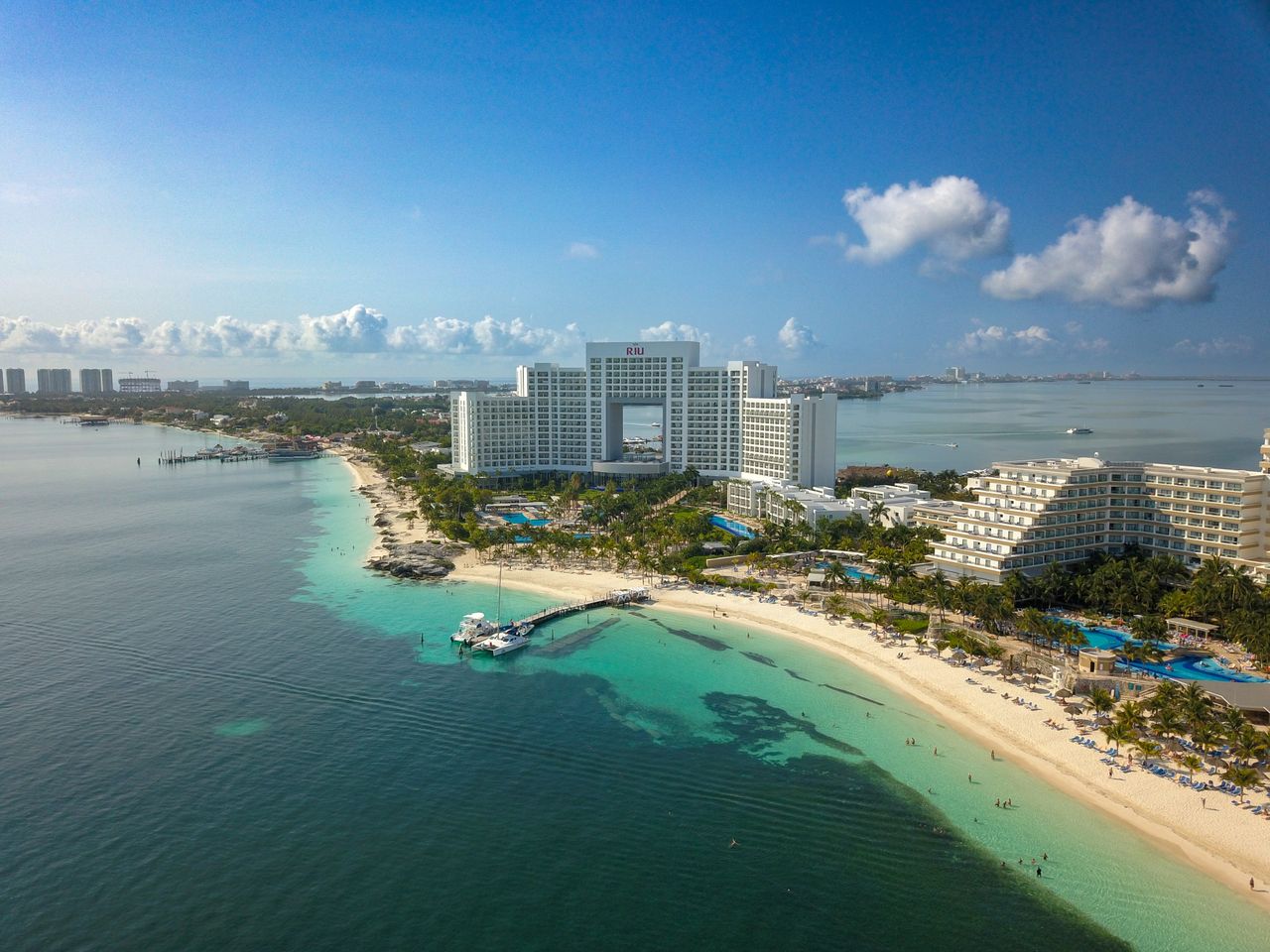
A purpose-built strip of hotels on a Caribbean sandbar, with the Yucatan's cenotes, ruins and quieter coastal towns behind it.
Mise à jour : septembre 2026 · normales climatiques issues de la réanalyse ERA5
Tu prépares un voyage plus large ? Destination Mexique : quand partir →
Meilleure saison : novembre à mai (89/100 en moyenne) · pire mois : juin (77/100)
- Jour
- 29°C
- Nuit
- 23°C
- Jours de pluie
- 6
- Soleil
- 10.9 h
- Humidité
- 72%
- Durée du jour
- 12 h
Cancún, mois par mois
Le score de confort sur 100 pour le type de voyage qui convient le mieux à Cancún, la maximale moyenne, les jours de pluie et les heures de soleil par jour d’après les normales climatiques, et l’affluence habituelle.
À quoi ressemble chaque mois à Cancún
Écrit par la rédaction de SeasonMap d’après ce qui se passe vraiment sur place — pas d’après les moyennes.
- janvier
Peak season: dry, warm, low humidity, and the calmest and clearest water of the year over the reef.
peak
- février
Dry and busy, with the best visibility on the reef and the coolest evenings of the year.
peak
- mars
Warm and dry, with spring break crowds, and the equinox drawing people inland to Chichen Itza for the serpent shadow.
festivalpeak
- avril
Hot and dry, the last of the high season, with the sea warming quickly week by week.
peaksea warm
- mai
The rains begin: hot, humid and much quieter, and the sargassum season usually starts on the east-facing beaches.
monsoonshoulder
- juin
Wet season and the opening of the hurricane season, with short heavy afternoon storms and whale sharks arriving off Isla Mujeres.
typhoonmonsoon
- juillet
Hot, wet and humid, with whale-shark season at its peak and sargassum often heavy along the beaches.
monsoonlow season
- août
One of the wettest months, hot and humid, with a real hurricane risk and the lowest prices of the year.
typhoonlow season
- septembre
The peak of the Atlantic hurricane season and the wettest month, when many small businesses take their own break.
typhoonclosed
- octobre
Still wet and still inside hurricane season, though the storms ease and the humidity drops at the end of the month.
shoulder
- novembre
The dry season returns: warm days, comfortable nights, a calm sea and the season starting to fill.
peak
- décembre
Dry, warm and very busy, with the last fortnight the most crowded of the year.
peak
Au programme à Cancún toute l’année
Festivals, spectacles naturels, vacances et saisons à surveiller — sélectionnés et sourcés. Les pages de chaque mois donnent le détail.
- janvier
- Visitor tax and park fees1 janv. – 31 déc.Règle
- février
- US spring break25 févr. – 5 avr. (en général)Vacances
- mars
- Equinox at Chichén Itzá20–21 marsNature
- Semana Santa and Pascua29 mars – 12 avr.Vacances
- avril
- Sargassum season1 avr. – 30 sept. (en général)Saison
- mai
- Sea turtle nesting1 mai – 31 oct. (en général)Nature
- juin
- Whale sharks off Isla Mujeres15 juin – 15 sept.Nature
- Hurricane season1 juin – 30 nov.Risque
- juillet
- Mexican summer holidays15 juil. – 31 août (en général)Vacances
- octobre
- Hanal Pixán31 oct. – 2 nov.Festival
- novembre
- The nortes1 nov. – 28 févr. (en général)Saison
- Dry season15 nov. – 30 avr. (en général)Saison
- décembre
- Christmas and New Year peak18 déc. – 5 janv.Vacances
Affluence à Cancún en mars
À quel point le lieu lui-même est fréquenté — vacances scolaires et grands départs, les mois signalés par la rédaction, et l’attrait que la météo leur donne. Jamais pris en compte dans le score de confort.
Pic d’affluencele mois de pointe selon la rédaction, US spring break, Semana Santa and Pascua
Pic d’affluenceFréquentéIntersaisonCalme
Bon à savoir avant de partir à Cancún
De vraies expériences tirées des récits de voyageurs, citées avec un lien vers l’original.
Rythme local
A traveler recounts a night at Coco Bongo, Cancún's signature nightclub-and-show venue, describing it as unlike any regular club experience - acrobats, celebrity impersonators and full Broadway-style stage productions running continuously through the night alongside confetti, soap bubbles and projected visuals, with an open bar included in the ticket price. She's specific that the doors open around 9pm but the real show doesn't properly get going until later, with lines building fast on weekends and during peak spring-break weeks - arriving right at opening, rather than fashionably late, meaningfully improved her spot and view once the main performances started. She notes the whole experience runs until close to dawn, so pacing drinks across the full night rather than front-loading them matters if you want to actually stay for the later acts. Posters generally rate Coco Bongo as worth the hype specifically for the scale of the production, distinct enough from a normal nightclub that it's worth budgeting as its own separate night rather than one stop among several bars.
Notes de voyageurs sur Cancún
Ce qu’en disent celles et ceux qui y sont allés — d’abord les notes valables toute l’année, puis mois par mois.
The climate in Cancún is tropical, with consistent hot and humid weather throughout the year, and very warm sea temperatures. You can expect a gentle breeze from the ocean to keep you comfortable. Temperatures reach their peak around May, and you may notice the extreme heat as you travel inland. Prepare for trips to archeological sites: wear light clothing, stay cool, and rest often. During the "rainy season" you will typically get clouds rolling in, then showers for 10 minutes, then the clouds roll out and you have beautiful sunshine the rest of the day. Rarely does Cancún have rainstorms that last long. Peak season in Cancún tends to run from December to April. Airfare and hotel prices increase dramatically during these times, while dropping in the (northern hemisphere) summer and early autumn months. Late June is especially hot, so come prepared or just come in the peak season. Hurricanes can be a major threat in late (northern hemisphere) summer and in the autumn.
Regulars are consistent this month can turn sunny and hot for a stretch, then briefly cloudy and cool when a cold front passes through, before swinging back to sunny and hot again within a day or two. Our row backs that warm, still-showery read, 27.7C reading as a hot 30C, over 21.5C nights, with 30.1mm of rain across 7.4 days and humidity at 73 percent. Regulars are specific that tropical showers here tend to last only 5-10 minutes rather than settling in, and that packing a light sweater for cooler evenings is worth it even on an otherwise warm trip. The sea sits at a warm, swimmable 26.8C regardless of which version of the day arrives. The record: 9.8 hours of sun, a 20.4 kph wind and AQI 47.
March on the Cancun forum comes down to three variables. Weather is the easy one: sunny, 85 to 89F, very little falling from the sky. Wind is the one people underrate - late March starts the surada, the run of strong southerlies that peaks across March, April and May, and a windy week changes the beach more than the forecast does. Sargassum season opens late February or early March, but March amounts are usually light to moderate and not every day; April to June is when it arrives in quantity. Spring break lands the weeks of about 23 and 30 March, and regulars say it spreads thin and stays in its own places. The record: 28.5C days feeling like 31C, 22.6C nights, 6 precipitation days, a 26.6C sea, a 21 kph wind.
April in Cancun is dry, hot and squarely inside the worst of the sargassum. Regulars put the peak at April through June, arriving daily and in quantity, varying by the day and by the stretch of beach; their mitigation is geography - it thins going north towards Costa Mujeres, the western shore of Isla Mujeres sees less, and many hotels rake their frontage each morning. Lent can also be very windy here, which our row's 20.9 kph reflects. The other April question is spring break: most American school breaks fall in the last two weeks of March, and the consensus is that Cancun is big enough to dilute them. The record: 29.5C days that feel like 33C, 23.7C nights, 5.7 precipitation days carrying 31.7mm and a 27.2C sea.
Forum posters describe a typical June day as sunny, hot and humid - technically the start of hurricane season (which runs June through November), but posters are consistent that actual hurricane probability in June itself is very low, with tropical activity generally not picking up until later in the season. Even though it's also the start of the wetter stretch, regulars say forecasts predicting daily rain don't match reality on the ground - when rain does fall it's typically overnight or a brief afternoon shower, not an all-day event, with one repeat visitor reporting just one rainy day out of a 4-5 day stay. The one real caveat: if an actual tropical depression moves through, that pattern breaks down fast and multi-day heavy rain becomes possible, so trip reports do vary noticeably year to year.
Cancun-forum threads asking about August hurricane season are consistent the odds of an actual storm hitting are low through most of the month, ticking up only toward the very end as the wider season builds toward its September-October peak. A typical day is described as sunny, hot and humid, with forecasts often calling for rain that doesn't necessarily show up - and when it does arrive, it's usually overnight or a brief afternoon burst rather than an all-day washout. Posters call the ocean warm enough to feel almost bath-like, a genuine plus for anyone prioritizing swimming and snorkeling over cooler water. Regulars are consistent that most August trips proceed entirely normally, and recommend simply keeping half an eye on the tropical outlook rather than avoiding the month outright. The record: 31.8C days feeling like a punishing 37C, 25.2C nights, a 28.5C sea and 80 percent humidity.
Cancun-forum threads on September weather confirm it's sunny and hot with high humidity most days, a typical afternoon high around 32C that feels considerably warmer given the moisture in the air. September sits squarely in hurricane season and is one of the two busiest months for tropical activity, but posters are consistent that forecasts calling for rain and storms every day rarely match the actual experience - genuine all-day washouts are called rare, with rain more typically landing overnight or as a brief afternoon burst. Regulars recommend travel insurance covering storms as a sensible precaution, even though the odds of a direct hit on any specific week are described as slim. The clear upside: noticeably lower rates and thinner crowds than the winter high season. The record: 31.3C days feeling like a punishing 37C, 24.8C nights, 175mm across 23.3 days, 82 percent humidity, a 29.9C sea and 10.5 hours of sun.
December is the forum's answer to the sargassum question: seaweed season runs roughly late February to September or October, and from November through February there is little to none — making December one of the cleanest-beach months of the year. Conditions sit around 27°C by day and 24 overnight, with the sea near 27°C too. Rain does show up in the averages, but regulars describe it as overnight or a brief afternoon shower rather than all-day, with the occasional run of two or three drizzly days. The one December-specific pattern: a cold front every ten to fourteen days drops temperatures a few degrees for a couple of days, enough to want long sleeves after dark.
Ajoute ta propre note depuis la fiche de Cancún sur la carte.