Clima en Parque nacional de las Cascadas del Norte mes a mes
La mejor época para visitar Parque nacional de las Cascadas del Norte es de julio a septiembre — 93/100 en agosto, 15°C y 7 días de lluvia. La mejor temporada es el verano, de junio a agosto (87/100 de media).
El peor mes es diciembre, con 26/100 — gélido, muy lluvioso, aire limpio. Ver diciembre →
Actualizado: septiembre de 2026 · normales climáticas del reanálisis ERA5
¿Planeas un viaje más amplio? Mejor época para visitar Estados Unidos →
Mejor temporada: de junio a agosto (87/100 de media) · peor mes: diciembre (26/100)
- Días
- 15°C
- Noches
- 4°C
- Días de lluvia
- 7
- Sol
- 11.4 h
- Humedad
- 67%
- Horas de luz
- 14 h
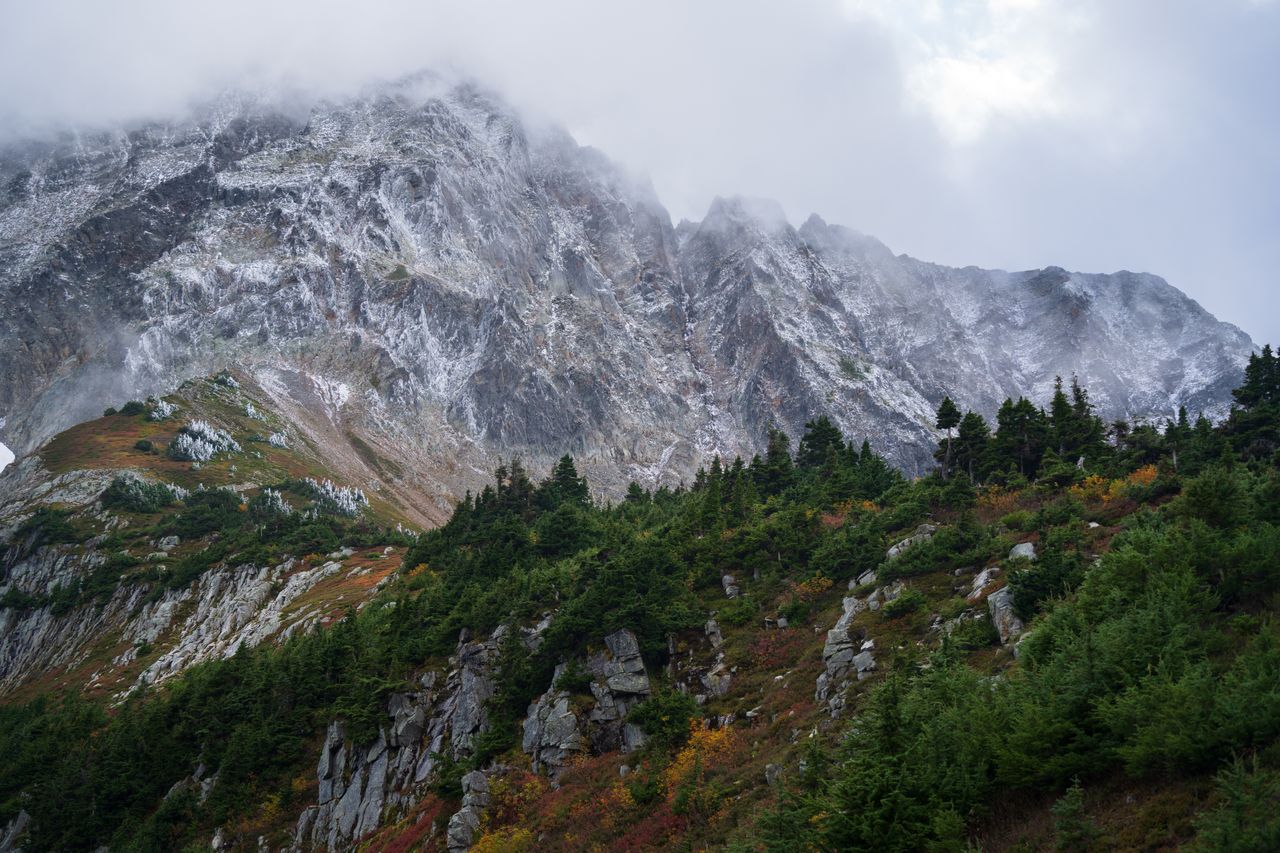
Parque nacional de las Cascadas del Norte, mes a mes
Puntuación de confort sobre 100 para el tipo de viaje que mejor le va a Parque nacional de las Cascadas del Norte; la máxima media, los días de lluvia y las horas de sol diarias según las normales climáticas, y cuánta gente suele haber.
Qué hay en Parque nacional de las Cascadas del Norte a lo largo del año
Festivales, espectáculos naturales, festivos y las temporadas que conviene vigilar, seleccionados y con fuente. Las páginas de cada mes tienen el detalle.
- julio
- Wildfire smoke25 Jul – 20 Sep (normalmente)Riesgo
- Alpine trail season10 Jul – 5 Oct (normalmente)Temporada
- septiembre
- Golden larch season25 Sep – 15 Oct (normalmente)Naturaleza
- noviembre
- North Cascades Highway shut15 Nov – 30 Abr (normalmente)Cierre
Afluencia en Parque nacional de las Cascadas del Norte en agosto
Cuánta gente hay en el propio lugar: vacaciones escolares y masivas, los meses que marcó el editor y cuánto atrae su clima. Nunca cuenta en la puntuación de confort.
ConcurridoSummer break en Estados Unidos, vacaciones escolares en 2 de los mercados que lo llenan(estimado)
Máxima afluenciaConcurridoTemporada mediaTranquilo
Notas de viajeros sobre Parque nacional de las Cascadas del Norte
Lo que cuenta la gente que ha estado allí: primero las notas válidas todo el año y después, mes a mes.
North Cascades forum threads are blunt about February access: Highway 20 through the park closes for winter and typically doesn't reopen until mid-May depending on snowpack, so the main scenic corridor and areas like Maple Pass are simply unreachable this time of year. Forum regulars actively steer February visitors away from attempting the park with a standard rental car and instead point toward lower-elevation valleys or Puget Sound lowlands, or organized snowshoe trips at nearby resorts like Crystal Mountain or Snoqualmie Pass. The clear consensus: treat winter as off-season here and plan an entirely different kind of trip rather than trying to see the park's signature scenery.
North Cascades National Park-forum threads on a May visit describe the highway drive as beautiful this month, posters calling the surrounding peaks still capped and waterfalls running full with spring melt. Regulars call alpine trails largely inaccessible in May, real access limited to lower routes around Ross and Diablo lakes until later in the season. Posters recommend Sauk Mountain as a higher option depending on how the year's melt is going, conditions worth checking beforehand. Regulars call the loop drive worth the trip even without a hike, regularly described as one of the most scenic roads in the state. Posters recommend real layers and waterproof gear regardless of a clear morning forecast, mountain weather here shifting fast. Regulars recommend checking current road and trail status before finalizing a trip, conditions varying by year. The record: 5.2C days feeling like 3C, -3.5C nights, an extraordinarily high 84.4mm across nearly 15 days and 80 percent humidity.
North Cascades-forum threads on June conditions are direct this month can genuinely deliver anything, warm one day, overcast and properly chilly the next, one visitor reporting a drizzly, low-forties Fahrenheit stretch during a supposedly early-summer trip. Posters call higher trails still largely inaccessible this early, most routes not melting out until mid-July given how much accumulation lingers. Regulars describe highway pullouts as generally cleared by June even while surrounding banks stay genuinely deep, a striking visual for anyone driving through. Posters recommend real layers and tempered expectations for alpine access, a scenic drive still worthwhile even if higher trails stay closed. Posters recommend flexible plans given how genuinely unpredictable June conditions run here. The record: 8.3C days feeling like 6C, -0.1C nights, an extraordinarily high 81mm across nearly 13 days, a notably high 1.5cm of fresh accumulation and 75 percent humidity.
North Cascades-forum threads on July hiking timing are consistent that early July still carries real risk of lingering snowpack on higher, more popular trails like Cascade Pass, with conditions generally clearing enough for comfortable hiking by mid-to-late month. Posters name Heather-Maple Loop and Blue Lake as routes that tend to open up earlier than the higher passes. Regulars describe a genuine split by elevation and aspect - a trail can be bone dry on a south-facing slope while a shaded, north-facing stretch nearby still holds a real obstacle underfoot, so checking recent trip reports before committing to a specific trail is standing advice. Layered clothing is called essential regardless of exact dates, mornings cool enough for a real jacket even as afternoons warm up considerably in open, sunny stretches. Bugs and crowds both pick up noticeably by mid-July. The record: 14.3C days feeling like 13C, 3.3C nights, 68 percent humidity and 12.7 hours of sun.
Forum posters describe a real east-west split here in August: the west side, with its stronger ocean-breeze influence, commonly sees highs in the upper-60sF, while the east side of the range runs noticeably hotter, typically 85-95F. Posters generally call August dependably dry and sunny overall, but flag two real risks worth planning around: mountain thunderstorms can pop up even on an otherwise clear day, and late August is wildfire season, with a real chance of smoke degrading air quality on the worst days. Posters also mention bugs tend to peak in August, easing up some by September for anyone with flexible timing.
North Cascades-forum threads on mid-September are consistent this is one of the strongest windows of the year, trails clear of any lingering accumulation, crowds noticeably thinner, conditions generally settled. Posters flag the very first week of the month, especially around Labor Day weekend, as reliably the weaker stretch, often cool and overcast compared to the second half of September which regulars call considerably better. Layers are standing advice regardless of the exact date, mornings running genuinely chilly even on an otherwise clear day at this elevation. Wildfire smoke is a real possibility depending on the year and worth checking before committing to a trip, a factor that has grown more common in recent Septembers. Posters call the reduced bug pressure compared to August a genuine bonus for anyone sensitive to insects on longer hikes. The record: 10.6C days feeling like 8C, 1C nights, an extraordinarily high 87mm across nearly 10 days and 75 percent humidity.
North Cascades-forum threads on an October visit describe early October as genuinely rewarding on the eastern side, posters calling conditions there often still clear while the wider region can turn unsettled with little warning. Regulars call late September and early October the busiest window for golden larch color, several posters specifically timing trips around the eastern slope for this reason. Posters recommend checking wta.org and WSDOT before any mid-October hike, several regulars noting a trail can run clear one week and be covered the next. Regulars call this a genuine wilderness park regardless of month, no paved roads, no lodging and no visitor center reaching the interior. Posters recommend real caution around fire activity carried over from September, several threads noting conditions generally calm by October. The record: 2.9C days feeling like 0C, -4.4C nights, an extraordinarily high 187.1mm across nearly 16 days and 82 percent humidity.
Añade tu propia nota desde la ficha de Parque nacional de las Cascadas del Norte en el mapa.