Clima en Lisboa mes a mes
La mejor época para visitar Lisboa es de abril a junio — 95/100 en mayo, 24°C y 5 días de lluvia. La mejor temporada es la primavera, de marzo a mayo (89/100 de media).
El peor mes es diciembre, con 75/100 — fresco, algo lluvioso, aire limpio. Ver diciembre →
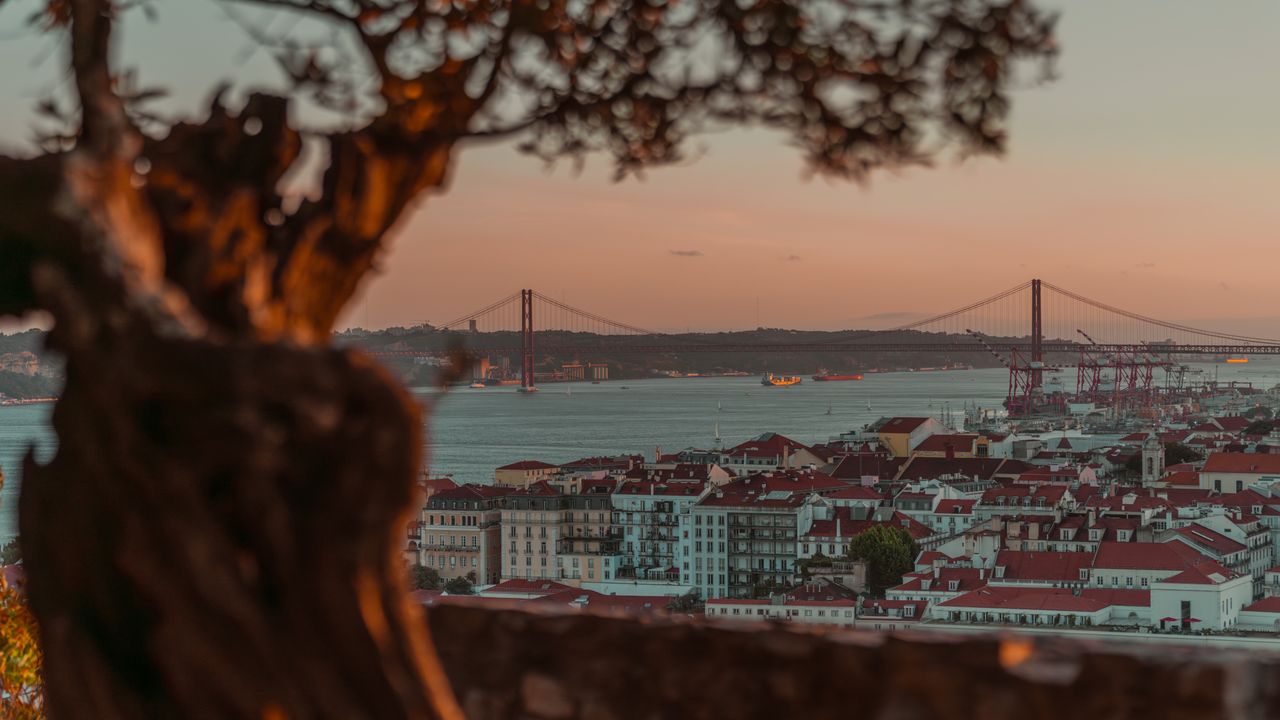
A low city of tiled façades on seven hills above the Tagus, where the light comes off the water and life is lived on the street from March to November.
Actualizado: septiembre de 2026 · normales climáticas del reanálisis ERA5
¿Planeas un viaje más amplio? Mejor época para visitar Portugal →
Mejor temporada: de marzo a mayo (89/100 de media) · peor mes: diciembre (75/100)
- Días
- 24°C
- Noches
- 15°C
- Días de lluvia
- 5
- Sol
- 12.4 h
- Humedad
- 73%
- Horas de luz
- 14 h
Lisboa, mes a mes
Puntuación de confort sobre 100 para el tipo de viaje que mejor le va a Lisboa; la máxima media, los días de lluvia y las horas de sol diarias según las normales climáticas, y cuánta gente suele haber.
Cómo es cada mes en Lisboa
Escrito por el equipo editorial de SeasonMap a partir de lo que pasa de verdad sobre el terreno, no de las medias.
- enero
The city belongs to itself again. Atlantic fronts come through in sequence, the miradouros are empty and the tiled façades go grey and glassy between showers.
quietlow season
- febrero
Carnival (movable, February or early March) is a long weekend here rather than a spectacle, and the almond blossom is already out down in the Algarve.
festivalshoulder
- marzo
Spring is early here. The first outdoor tables of the year appear, the hills go green, and the Atlantic is still far too cold to swim in.
shoulder
- abril
Easter (movable, March or April) empties the city for a week as families go to the villages; the light lengthens and the terraces stay full into the evening.
shoulderholiday
- mayo
Jacaranda blossom usually turns the avenues purple in the second half of the month, and grilled sardines start appearing before the June festivals.
blossom
- junio
The Santos Populares run all month and peak on the night of 12-13 June for Santo Antonio: charcoal sardines, paper garlands and street parties through Alfama and Graca.
festivalpeak
- julio
High summer. The afternoon nortada blows in off the Atlantic, the city works early, and the beach trains along the Linha are full every weekend.
peak
- agosto
Lisbon takes its holidays: family restaurants close for a fortnight and residents leave, while visitor numbers are at their highest of the year.
closedpeak
- septiembre
The month locals keep for themselves. The sea holds its summer warmth, the crowds thin after the first week and the harvest begins up the Tagus.
sea warmshoulderharvest
- octubre
Warm days and long low light, with the first Atlantic fronts arriving late in the month and roast chestnut stalls appearing on the corners.
shoulderharvest
- noviembre
The wettest stretch of the year. Sao Martinho on 11 November brings roast chestnuts and the year's new wine, and nobody is queueing for the tram.
harvestlow season
- diciembre
Mild, dark and lit up along Rua Augusta. The city eats salt cod on Christmas Eve and much of the centre shuts down between the holidays.
closedlow season
Qué hay en Lisboa a lo largo del año
Festivales, espectáculos naturales, festivos y las temporadas que conviene vigilar, seleccionados y con fuente. Las páginas de cada mes tienen el detalle.
- febrero
- Carnival14–17 FebFestival
- marzo
- Easter week29 Mar – 5 AbrFestivo
- mayo
- Jacaranda bloom15 May – 20 Jun (normalmente)Naturaleza
- junio
- Santos Populares1–30 JunFestival
- The nortada15 Jun – 15 Sep (normalmente)Temporada
- agosto
- Residents' holiday month1–31 AgoTemporada
- Sea at its warmest15 Ago – 10 Oct (normalmente)Temporada
- septiembre
- Grape harvest1 Sep – 15 Oct (normalmente)Naturaleza
- noviembre
- Web Summit9–12 NovFestival
- Sao Martinho11 NovFestival
- diciembre
- Christmas and New Year24 Dic – 1 EneFestivo
Afluencia en Lisboa en mayo
Cuánta gente hay en el propio lugar: vacaciones escolares y masivas, los meses que marcó el editor y cuánto atrae su clima. Nunca cuenta en la puntuación de confort.
Concurridovacaciones escolares en 4 de los mercados que lo llenan, uno de sus mejores meses por clima(estimado)
Máxima afluenciaConcurridoTemporada mediaTranquilo
Conviene saber antes de ir a Lisboa
Experiencias reales de los propios relatos de viajeros, citadas con un enlace al original.
Timos habituales
Multiple riders describe being pickpocketed on Lisbon's famously scenic (and famously crowded) Tram 28: one traveler wearing a waist bag had it opened and 50 euros taken during the tram's jostling, bumpy route while she was distracted looking at the sights, with the thieves reportedly working in pairs. Another account describes a wallet taken from a front hip pocket during a deliberate jostle by one person, who then passed it off to a second person who got off at the very next stop. Riders who've been targeted consistently recommend boarding early at Martim Moniz to actually get a seat rather than standing in the crush, keeping valuables in a concealed, zipped front pocket rather than a bag, and avoiding the 10am-2pm peak crowd window - while still rating the tram ride itself as genuinely worth doing.
Notas de viajeros sobre Lisboa
Lo que cuenta la gente que ha estado allí: primero las notas válidas todo el año y después, mes a mes.
Lisbon enjoys a Subtropical-Mediterranean climate, with mild winters and very warm summers. Strongly influenced by the Gulf Stream it is one of the mildest climates in Europe. Among all the metropolises in Europe, here are amongst the warmest winters on the continent, with average temperatures above 15.2°C (59.4°F) during the day and 8.9°C (48.0°F) at night in the period from December to February. Snow and frost are nearly unknown. The typical summer's season lasts about 6 months, from May to October, with an average temperature of 25°C (77°F) during the day and 16.2°C (61.2°F) at night, although also in November, March and April sometimes there are temperature above 20°C (68.0°F) with an average temperature of 18.5°C (65°F) during the day and 11.2°C (52.2°F) at night. Rain occurs mainly in winter, the summer is very dry.…
Lisbon forum regulars are consistent that February is genuinely winter, if a mild one: cool and cloudy, with a chance of rain, typical daytime readings “15 to 18 degrees” and nights “5 and 10.” Days can go either way — grey, rainy and cold or sunny, blue and cold — with wind and rain the two things visitors dislike most and either (or both) fairly common. None of it reads as harsh by the forum's own comparison: “the weather here is never too cold,” a light rain coat is called sufficient, and visitors come year-round including the first week of February without much complaint. Our record: 15.6°C days, 10.2°C nights, 5 rain days and a 13.5°C sea — mild and comparatively dry, backing the “cool but never harsh” framing over the “grey and cold” half of the split.
Regulars are direct with anyone hoping to swim this month: air temperatures reaching the high teens or 20C don't mean the Atlantic has warmed to match, and expecting a comfortable swim based on a sunny afternoon is called out as a common, avoidable disappointment. Our row backs the mismatch, 20C reading as 19C over 12.3C nights, against a sea still at a cool 16.9C. Rain is described as short, sharp showers rather than sustained rain, matching our 58.5mm across 10.5 days, and regulars note a real 23.4 kph wind that can make an already-cool sea feel colder still on a breezy day. Layering is the standard advice, since a warm-looking afternoon can still carry a genuine chill in the wind. The record: humidity 76 percent, 11 hours of sun and AQI 43.
May is the one I keep coming back for. Mid-20s by day, cool enough at night for a jacket on the Alfama miradouros, and the jacarandas go purple around Praça do Príncipe Real toward the end of the month. Tourist crowds are already real but the Atlantic hasn't warmed up yet — swimming is for August.
The sardinhas run all June - bunting across the streets, trestle tables and charcoal braziers set out by restaurants and households - but regulars are clear the month has a single night. The 12th, with the parade and the Alfama crush, is a bigger occasion here than New Year and runs until morning, with parties across Santos, Graca and Bica as well. Around it the weather is the easy part: hot without July's heat, 25.6C by day and 16.9C at night, 9.7mm of rain across 3.1 days, and 12.9 hours of sun. The Atlantic keeps the sea at 19.8C and the breeze at 24.4 kph. The record: humidity 73 percent and AQI 42.
August reads fine on paper and is fine — the nortada wind off the Atlantic keeps it from feeling like Seville. What the score can't tell you is that half the city is shut for holidays and every restaurant that stays open is booked. Go for the beach at Costa da Caparica, not the food.
Regulars are specific that mid-September is a genuine turning point for crowds rather than weather: Portuguese and Spanish schools go back around then, so visitor numbers drop noticeably even as the weather itself stays warm and sunny through the month. Our row backs the pleasant, still-summery read, 27.2C reading as a real 27C, over 18.1C nights, with rain minimal at 23.9mm across 3.2 days. Regulars are consistent nights cool down enough that AC isn't really needed, a genuine comfort upside over the peak summer months. The sea sits at 19.1C, on the cool side but manageable. The record: humidity 73 percent, 10.8 hours of sun, a 22.2 kph wind and AQI 38.
Lisbon forum regulars describe November as unpredictable but rarely a washout: “a nice day in the sun around 15-18°C and cold rainy days around 10-12°C,” with rain typically arriving in short bursts — “20 minutes of pouring rain then 4 hours without rain, then another 20 minutes...then 2 hours of sun.” A visit might see rain roughly 5 days across two weeks, but “always in short rain showers,” with locals simply ducking into a café to wait it out rather than treating it as a lost day. The one packing note beyond a warm layer: the calçada portuguesa paving gets genuinely slippery when wet, so proper shoes matter. November is billed as off-season, though regulars note it can still feel busy at the main sights. Our record: 17.4°C days, 13.3°C nights, 10 rain days and a 22.5kph wind — mild with real, frequent rain, matching the “short bursts, not a washout” read.
Añade tu propia nota desde la ficha de Lisboa en el mapa.