Clima en Honolulu (Oahu) mes a mes
La mejor época para visitar Honolulu (Oahu) es de junio a agosto — 93/100 en junio, 30°C y 5 días de lluvia. Está bien todo el año: todos los meses quedan a pocos puntos del mejor.
El peor mes es diciembre, con 85/100 — caluroso, lluvioso, aire limpio. Ver diciembre →
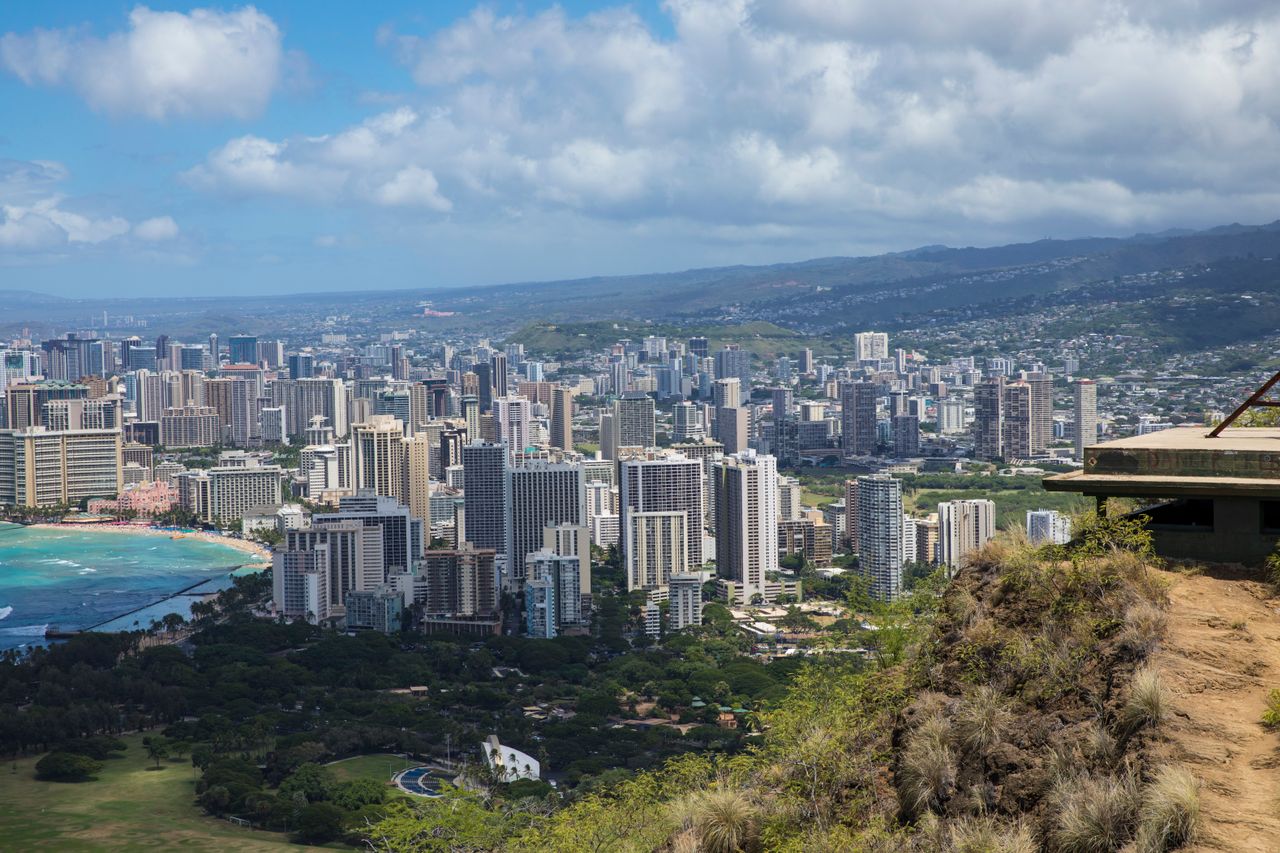
A dense city on Oahu's south shore with a beach at the end of it, in a climate that varies far less through the year than the surf does.
Actualizado: septiembre de 2026 · normales climáticas del reanálisis ERA5
¿Planeas un viaje más amplio? Mejor época para visitar Estados Unidos →
Bien todo el año · peor mes: diciembre (85/100)
- Días
- 30°C
- Noches
- 23°C
- Días de lluvia
- 5
- Sol
- 12.4 h
- Humedad
- 72%
- Horas de luz
- 13 h
Honolulu, mes a mes
Puntuación de confort sobre 100 para el tipo de viaje que mejor le va a Honolulu; la máxima media, los días de lluvia y las horas de sol diarias según las normales climáticas, y cuánta gente suele haber.
Cómo es cada mes en Honolulu
Escrito por el equipo editorial de SeasonMap a partir de lo que pasa de verdad sobre el terreno, no de las medias.
- enero
The wet season and the big-wave season: heavy surf on the north shore, occasional Kona storms, and whales arriving off the leeward coast.
peak
- febrero
Still the cooler, wetter half of the year, with humpback whales at their peak numbers around the islands.
peak
- marzo
Wet and windy in bursts, the whales still around and the trade winds returning. A quieter, cheaper month.
shoulder
- abril
The rain eases and the trades settle in: one of the best months, and before the summer crowds arrive.
shoulder
- mayo
Dry, warm and settled, with the surf switching round to the south shore and Lei Day on 1 May.
festivalshoulder
- junio
Dry and reliably trade-blown. The south-shore surf is working and the visitor season starts to build.
peak
- julio
Hot, dry and busy, with the calmest north shore of the year and good snorkelling all round the island.
peaksea warm
- agosto
The hottest month, humid whenever the trades drop, and the peak of the Pacific hurricane season for the islands.
typhoonpeak
- septiembre
The warmest sea of the year, still inside hurricane season, and the quietest weeks before the autumn.
sea warmshoulder
- octubre
Warm and mostly dry, with the north-shore swell beginning to return at the end of the month.
shoulder
- noviembre
The wet season begins and the big north-shore surf contests get under way. Humid and warm.
festivalshoulder
- diciembre
Wet, warm and very busy over the holidays, with the largest waves of the year on the north shore.
peak
Qué hay en Honolulu a lo largo del año
Festivales, espectáculos naturales, festivos y las temporadas que conviene vigilar, seleccionados y con fuente. Las páginas de cada mes tienen el detalle.
- enero
- Box jellyfish influx1 Ene – 31 Dic (normalmente)Riesgo
- abril
- Japanese Golden Week27 Abr – 7 May (normalmente)Festivo
- South shore surf season15 Abr – 30 Sep (normalmente)Temporada
- mayo
- Lei Day1 MayFestival
- Lantern Floating Hawaii24–31 May (normalmente)Festival
- junio
- King Kamehameha Day8–14 Jun (normalmente)Festivo
- Central Pacific hurricane season1 Jun – 30 NovRiesgo
- julio
- Independence Day3–5 JulFestivo
- septiembre
- Aloha Festivals1–30 Sep (normalmente)Festival
- octubre
- Vog on southerly winds1 Oct – 30 Abr (normalmente)Riesgo
- noviembre
- Triple Crown of Surfing12 Nov – 20 Dic (normalmente)Festival
- Humpback whale season15 Nov – 15 May (normalmente)Naturaleza
- Thanksgiving25–29 NovFestivo
- North Shore big-wave season1 Nov – 28 Feb (normalmente)Temporada
- diciembre
- Honolulu Marathon13 DicFestival
- Christmas and New Year24 Dic – 1 EneFestivo
Afluencia en Honolulu en junio
Cuánta gente hay en el propio lugar: vacaciones escolares y masivas, los meses que marcó el editor y cuánto atrae su clima. Nunca cuenta en la puntuación de confort.
Máxima afluenciael mes de más afluencia según el editor, King Kamehameha Day, Summer break en Estados Unidos
Máxima afluenciaConcurridoTemporada mediaTranquilo
Conviene saber antes de ir a Honolulu
Experiencias reales de los propios relatos de viajeros, citadas con un enlace al original.
Costumbres y etiqueta
A Hawaii-focused travel guide lays out specific, commonly violated etiquette at Waikiki and other Oahu beaches: loud Bluetooth speakers are technically legal but draw real sideways looks from everyone within about fifty feet, and leaving chairs, umbrellas or boogie boards unattended for extended periods while you go eat lunch is a real problem - gear left more than about 30 minutes risks being moved by hotel security or by other beachgoers who need the space. The guide is specific about environmental etiquette too: packing out everything you brought in is expected, and picking up a few pieces of other people's litter on your way out is treated as a genuine local norm rather than an optional extra. For crowd management specifically at Waikiki, other visitors recommend walking or swimming at sunrise for a noticeably calmer experience, then returning for sunset once the midday heat and crowds have thinned, with Queen's Surf near Diamond Head and the Fort DeRussy stretch cited as quieter alternative spots within the same general area. Posters generally rate genuine beach-space awareness and litter etiquette as the two most repeated 'don't be that tourist' points for Honolulu specifically.
Notas de viajeros sobre Honolulu
Lo que cuenta la gente que ha estado allí: primero las notas válidas todo el año y después, mes a mes.
Honolulu has a moderate warm to hot climate, with very little change of temperature throughout the year — the average high is 80-90°F (27-32°C) and the average low is 65-75°F (19-24°C) any time of the year. The summer months do see some humidity alongside the heat, with typical heat indices in the late summer averaging around during the day and at night. Heat indices seldom rise above , though there are a few nights where heat indices don't go below in the late summer. Water temperature averages 82°F (27°C) in the summer months and 77°F (25°C) in the winter months. Daylight hours also do not see any significant variation either, with sunrises and sunsets occurring at 5:50AM and 7:15PM in the summer months, and 7:10AM and 5:50PM in the winter months. The only noticeable variation in seasons is in terms of rainfall.…
Honolulu forum threads describe January as genuinely pleasant, with a typical high around 81F and posters citing a comfortable range of roughly 78-85F. Rain does happen - one poster's data put the monthly average around 2.9 to 3.5 inches - but it wasn't described as the rainiest month, and posters were consistent that showers tend to pass quickly rather than settling in for the day. A real geographic detail flagged repeatedly: Waikiki and Honolulu sit on the drier southern shore of Oahu, while the North Shore sees noticeably more rain this time of year. Posters described the typical pattern as stretches of two to three weeks of sun occasionally interrupted by a passing winter storm bringing a few rainier days.
February is dry-ish season and the trade winds are steady, which is what makes 27°C pleasant rather than heavy. It's also peak north-shore swell — great to watch, not to swim. Whale season, which no climate score will tell you.
Regulars call this one of the island's best all-round weather months, sunny and warm without the summer's added heat, and are specific that a steady trade wind is a genuinely good sign here rather than something to worry about - it's what keeps the heat and humidity in check. Our row backs the pleasant read, 27.9C reading as a real 30C, over 21.6C nights, with 51.6mm of rain across 6.9 days. Regulars note the odd rough-wave day can still turn up on the North Shore even in an otherwise settled month, and a light sweater is worth packing for restaurants running strong air conditioning or a cooler evening. The sea sits at a warm 25.1C. The record: humidity 73 percent, 11.3 hours of sun, a 21.3 kph wind and AQI 38.
Regulars name a specific, checkable reason this month stays quieter than peak season: kids are still in school and there's no spring break landing in May, so crowds thin out well before the Memorial Day rush arrives. Our row backs the warm, dry-season read, 28.7C reading as a hot 31C, over 22.3C nights, with rain modest at 44.9mm across 5.8 days. Regulars are consistent this counts as the start of the dry season proper, sunny most days with a steady breeze off the water, and specifically call out flowers coming into bloom island-wide this time of year as a seasonal bonus. The sea sits at a warm, swimmable 24.8C. The record: humidity 73 percent, 12 hours of sun, a 20.9 kph wind and AQI 38.
June in Honolulu is sun, mid-80s Fahrenheit and trade winds, and the forum's point is that the wind is doing more work than the temperature. The trades blow their strongest in the summer months, and what they carry away is the vog - the volcanic haze that drifts up from the Big Island and only becomes a problem on Oahu when the north-easterlies are too weak to push it offshore. June is usually the good case for that, with the honest caveat that nobody can predict a volcano. The same wind is why the humidity feels lower than the figure: our row gives 72 percent with a 22 kph breeze. The record: 29.7C days that feel like 32C, 23.2C nights, 4.8 precipitation days carrying 32.2mm and a 25.7C sea.
July is the driest month here and regulars say that is also why it is the least humid - less rain, less moisture. Our row gives 23.7mm across 7 days at 73 percent. The month's real mechanism is the trade wind, which is steadiest now, at or above its yearly average about nineteen days in twenty. It does three jobs at once: it makes 30.4C bearable, it keeps the vog away - twenty miles an hour pushes it well offshore - and on the rare July day it fails, regulars remember the discomfort. Our wind reads 23.7 kph. Crowds are the cost, with July and August the peak and Waikiki much busier than the rest of the island. The record: 24.2C nights, 12.3 hours of sun and a 26.4C sea.
Honolulu forum regulars call August genuinely hot and dry rather than a mild tropical warmth: “high temperatures average in the low 90s°F,” with August the least likely month to get rain, the tradewinds doing most of the work keeping it bearable. The exception regulars flag: “trade showers on the windward side or closer to the mountains” can still catch a visitor even on an otherwise dry-forecast day. Ocean water runs “high 70's, maybe even 80's” — genuinely warm swimming. The honest trade-off regulars name: great for a pure beach trip, but if you want to do any sightseeing or hiking, winter is better, since August heat makes exertion genuinely uncomfortable. Our record: 28.4°C days, 6 rain days and a 26.7°C sea — hot and dry with a warm, swimmable sea, matching the “beach month, not a hiking month” read.
Añade tu propia nota desde la ficha de Honolulu en el mapa.