Clima en Atenas mes a mes
La mejor época para visitar Atenas es abril, mayo y octubre — 94/100 en octubre, 24°C y 3 días de lluvia. La mejor temporada es la primavera, de marzo a mayo (90/100 de media).
El peor mes es enero, con 72/100 — fresco, algo lluvioso, aire limpio. Ver enero →
A hot, low-rise capital spread around a marble hill, at its best in the shoulder months when the ferries still run and the pavement tables are usable.
Actualizado: septiembre de 2026 · normales climáticas del reanálisis ERA5
¿Planeas un viaje más amplio? Mejor época para visitar Grecia →
Mejor temporada: de marzo a mayo (90/100 de media) · peor mes: enero (72/100)
- Días
- 24°C
- Noches
- 16°C
- Días de lluvia
- 3
- Sol
- 9.4 h
- Humedad
- 70%
- Horas de luz
- 11 h
Atenas, mes a mes
Puntuación de confort sobre 100 para el tipo de viaje que mejor le va a Atenas; la máxima media, los días de lluvia y las horas de sol diarias según las normales climáticas, y cuánta gente suele haber.
Cómo es cada mes en Atenas
Escrito por el equipo editorial de SeasonMap a partir de lo que pasa de verdad sobre el terreno, no de las medias.
- enero
Quiet and often bright between fronts. The archaeological sites are nearly empty and the island ferry timetable is at its thinnest.
quietlow season
- febrero
Carnival (Apokries, movable, February or March) ends on Clean Monday, when families take kites up onto the hills above the city.
festivallow season
- marzo
Independence Day on 25 March brings a military parade; the hills go green and the first warm afternoons make the terraces work again.
shoulderfestival
- abril
Orthodox Easter (movable, usually April) empties Athens for a week as the city goes back to the villages, and the centre feels abandoned.
holidayshoulder
- mayo
The best walking month. Sites are open long, the sea at the coastal suburbs is swimmable and the heat has not settled in yet.
shouldersea warm
- junio
The summer festival season opens at the Odeon of Herodes Atticus, the meltemi starts to blow and evenings move to the roof terraces.
festival
- julio
A city run on shade and late hours. The open-air cinemas are the whole point of an Athenian evening in July.
peak
- agosto
Athenians leave, especially around 15 August: neighbourhood shops shut, and what is left in the centre is heat and visitors.
closedpeak
- septiembre
The city refills. The sea is at its warmest of the year and the evening walk down through Monastiraki is a pleasure again.
sea warmshoulder
- octubre
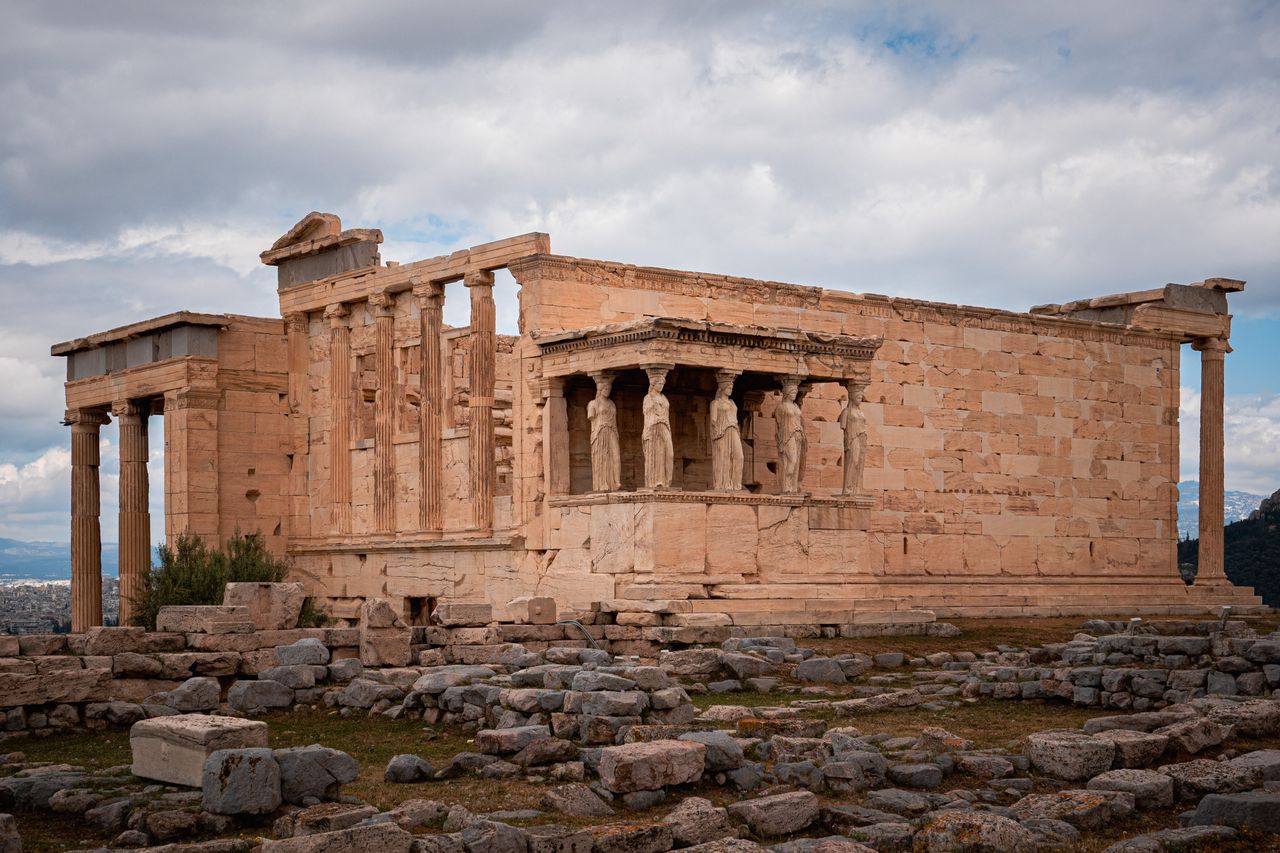
The pick of the autumn: clear light on the Acropolis, warm water at the coast, and the first rain washing the dust out of the air.
shouldersea warm
- noviembre
Wet, grey and entirely local. The tavernas move indoors and the ferries drop to winter frequency.
low season
- diciembre
Mild, dark and quiet, with lights on Syntagma; the sites close early and the mountains behind the city take their first snow.
low season
Qué hay en Atenas a lo largo del año
Festivales, espectáculos naturales, festivos y las temporadas que conviene vigilar, seleccionados y con fuente. Las páginas de cada mes tienen el detalle.
- enero
- Acropolis timed entry1 Ene – 31 DicNorma
- febrero
- Carnival and Clean Monday23 FebFestival
- marzo
- Independence Day parade25 MarFestival
- Orthodox Easter10–13 AbrFestivo
- junio
- Athens Epidaurus Festival1 Jun – 29 AgoFestival
- Midday closures in the heat15 Jun – 31 Ago (normalmente)Riesgo
- Sea warm enough to swim1 Jun – 31 Oct (normalmente)Temporada
- agosto
- The 15 August exodus8–25 Ago (normalmente)Festivo
- octubre
- Ohi Day28 OctFestivo
- noviembre
- Athens Marathon8 NovFestival
- Winter hours at the ancient sites1 Nov – 31 MarNorma
Afluencia en Atenas en octubre
Cuánta gente hay en el propio lugar: vacaciones escolares y masivas, los meses que marcó el editor y cuánto atrae su clima. Nunca cuenta en la puntuación de confort.
Concurridoentre los picos, Ohi Day, vacaciones escolares en 4 de los mercados que lo llenan
Máxima afluenciaConcurridoTemporada mediaTranquilo
Conviene saber antes de ir a Atenas
Experiencias reales de los propios relatos de viajeros, citadas con un enlace al original.
Seguridad
Travelers discussing a real Athens heatwave describe the Acropolis being closed by official directive from roughly midday to 5pm on the hottest days - not a suggestion, an enforced closure - after tourists were reported fainting in the entry queue and Red Cross volunteers had to hand out water. Posters note marble surfaces on the site can exceed 50C in full sun with essentially no shade available, making the early-2023-onward closure policy a genuine safety measure rather than bureaucratic caution. Posters who've adapted their plans around this describe visiting right at the 8am opening or after 5:30pm as the practical fix, building in water breaks and treating a flexible afternoon as non-negotiable during a heatwave rather than something to push through. Posters generally rate a summer Acropolis visit as fully worthwhile but only with an early or late time slot deliberately planned in.
Notas de viajeros sobre Atenas
Lo que cuenta la gente que ha estado allí: primero las notas válidas todo el año y después, mes a mes.
Spring and late autumn are the best times to visit Athens. Summer can be extremely hot and dry during heatwaves, but this rarely happens. Winter is definitely low season, with the occasional rainy or snowy day, but also an ideal time to save money while enjoying the city without countless other tourists. Whilst peak traffic hour can be a bit smoggy on the main roads, on most sunny days the skies are azure blue. The main reason attributed for the pollution of Athens is because the city is enclosed by mountains in a basin which does not allow the smog to leave. The government's ban on diesel vehicles within Athens and the early 1990s initiatives to improve car emissions have greatly contributed to better atmospheric conditions in the basin.
Athens forum threads describe January as generally mild for a European winter, typically 6-12C with around 6-7 rainy days over the month and snow described as rare, though posters noted a run of recent years bringing more snow to Athens than usual. A frequently mentioned local phenomenon, the 'halcyon days,' are stretches of unexpectedly mild, almost spring-like weather - sometimes reaching 20C for a few hours - that break up the cold spells and make January far less predictable than the averages alone suggest. The standard advice across threads was genuine layering: a t-shirt under a sweater or fleece plus a jacket, since conditions can shift enough within a single day to need adding or removing a layer more than once.
Regulars are genuinely split on this month, and both accounts are real rather than one being an outlier - one visitor's mid-March trip saw four sunny days out of five, warm enough for T-shirts in the sun; another's saw heavy rain every single day for the first week. Regulars add that Greece sees a freak winter cold snap in March fairly regularly, not every year, but common enough to plan around. Our row backs the mild average sitting between those extremes, 17.6C over 8.4C nights feeling 6C, with 39mm of rain across 6.6 days and a trace of possible late snow, 0.1cm. The standard advice is packing both winter and spring clothes rather than committing to one, since nights can turn genuinely chilly even on a warm day. The sea sits at a cool 15.5C. The record: humidity 72 percent, 9.8 hours of sun, a 15.9 kph wind and AQI 46.
Athens forum regulars call April a genuine shoulder-season sweet spot, if a variable one: late April typically runs “20-25°C in the day and about 13-14 at night,” though early April can still get the final blast of winter on a bad week, and a good one can hit hot sunny days up to about 30 degrees. Rain is real but manageable — “showers rather than prolonged downpours.” One thing April doesn't deliver despite the warm days: swimming weather. “Greeks don't usually start going to the beaches until late May,” with sea temperatures not properly warm until June. Our record: 19.7°C days, 10.4°C nights, 5.4 rain days and a 16.8°C sea — mild with real day-to-day swing, and a sea that backs the “not beach weather yet” read exactly.
May is the month regulars hand to first-time visitors: warm without the summer's weight, almost no rain, and the Acropolis still walkable rather than shuffling. Our row gives 26.2C by day at 59 percent humidity, so the feels-like stays at 26C, over 15.9C nights, with 23.1mm across 5.3 days and 12.3 hours of sun. Their practical instruction has not changed in years - the site is on timed tickets and the first slot at eight or nine is the cool one, or take the last of the day. On the beach question they are honest: the sea reaches 18.8C by the end of the month, which British visitors swim in happily and few others will. The record: a 15 kph wind inside 14.2 hours of daylight, and AQI 52.
Athens-forum threads about summer heat converge on tactics: be at the Acropolis for the 8am opening, because the site is "bare and hot up there", tour groups clog the climb early, and in heatwaves the archaeological sites have closed between 1pm and 5pm. Posters rate 8am over 5pm for both crowds and temperature, and steer visitors toward the quieter Ancient Agora and Kerameikos instead of a second hot climb. July's record explains the planning: 34.4C days feeling like 36C, 23.7C nights, humidity a low 47 percent, 13.1 hours of sun, a 27.5C sea - and barely one and a half precipitation days for the whole month.
Regulars split the month cleanly in two: the first half still runs genuinely hot, well short of July and August's peak but firmly summer, while the back half turns more transitional and harder to predict, occasionally bringing a cloudy or wet day. Our row backs the early-month heat, 29.5C reading as a real 30C, over 19.8C nights, with rain still a minor presence overall at 15.6mm across 2.4 days - consistent with most of that falling in the less predictable second half. Regulars' packing list reflects the split directly: swimwear and sunscreen for the early stretch, a light sweater for cooler evenings and an umbrella kept handy for whichever day turns showery. The sea stays warm at 25.4C throughout. The record: humidity 60 percent, 10.9 hours of sun and AQI 49.
October is when Athens becomes a city rather than an oven: mid-20s, the Acropolis at 8am without queueing, and tavernas still outside. First real rains usually arrive late in the month and the streets flood fast.
Añade tu propia nota desde la ficha de Atenas en el mapa.