Wetter in Seoul nach Monat
Die beste Reisezeit für Seoul ist April, Mai und Oktober – 90/100 im Mai, 24°C und 8 Regentage. Beste Jahreszeit: Frühling – März bis Mai (83/100 im Schnitt).
Der schwächste Monat ist der Januar mit 47/100 – eisig, trocken. Januar ansehen →
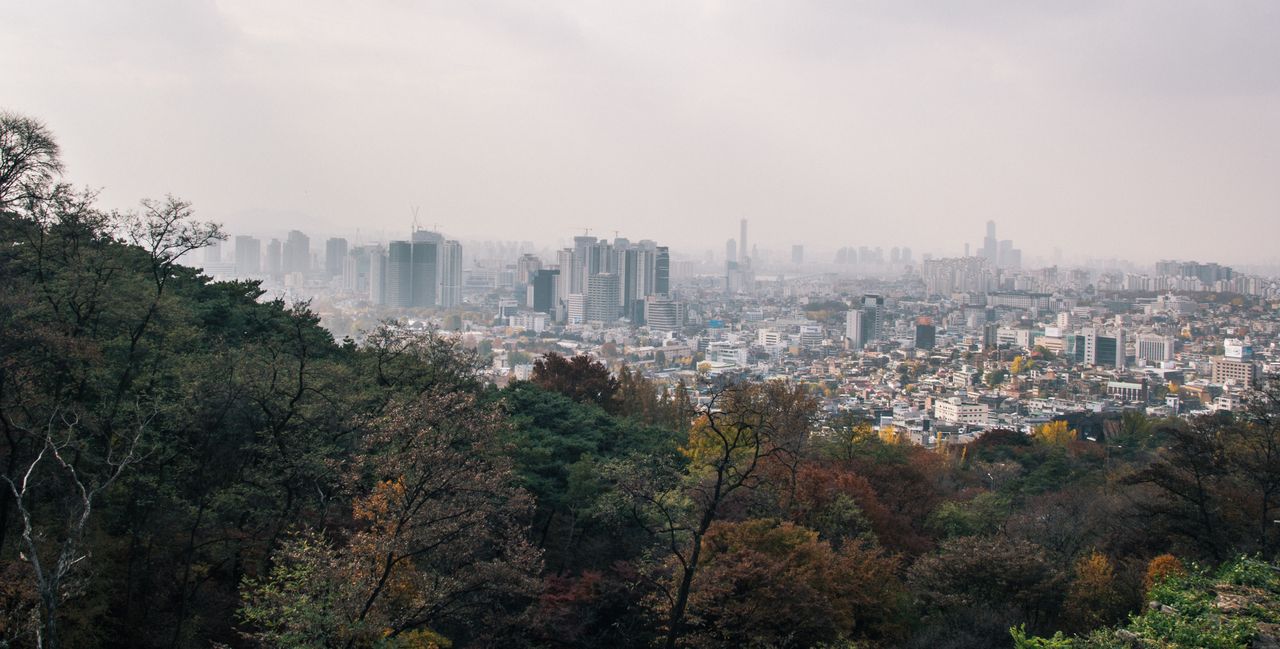
A mountain-ringed capital of glass towers, palaces and all-night street food, with a hard continental climate and four unmistakable seasons.
Aktualisiert: September 2026 · Klimanormalwerte aus der ERA5-Reanalyse
Planst du eine größere Reise? Beste Reisezeit Südkorea →
Beste Jahreszeit: März bis Mai (83/100 im Schnitt) · am schwächsten im Januar (47/100)
- Tagsüber
- 24°C
- Nachts
- 14°C
- Regentage
- 8
- Sonne
- 10 h
- Luftfeuchte
- 71%
- Tageslicht
- 14 h
Seoul, Monat für Monat
Komfort-Score von 100 für die Art Reise, für die Seoul am besten passt, dazu der durchschnittliche Tageshöchstwert, Regentage und Sonnenstunden pro Tag aus den Klimanormalwerten – und wie voll es meist ist.
So ist jeder Monat in Seoul
Geschrieben von der SeasonMap-Redaktion – nach dem, was vor Ort wirklich passiert, nicht nach Durchschnittswerten.
- Januar
The coldest month, dry and bright, running on the three-cold-four-warm cycle. Palaces are empty and the ski resorts are an hour out.
snowlow season
- Februar
Still cold, and Seollal (movable, late January or February) closes shops for several days as the country travels home.
holidayclosed
- März
The thaw. Forsythia and magnolia first, and the first fine-dust warnings blowing in from the west.
dustshoulder
- April
Cherry blossom usually peaks in the first half of the month, along the Han and at Yeouido, and the whole city walks it at night.
blossompeak
- Mai
The best month: warm, dry and green, with Buddha's Birthday (movable) hanging lanterns through the temple courtyards.
festivalpeak
- Juni
Warm and increasingly humid before the rains, with the mountain trails above the city still comfortable early in the day.
shoulder
- Juli
Jangma, the monsoon front, brings the wettest weeks of the year and sudden, very heavy rain.
monsoonlow season
- August
The hottest and most humid month, with typhoon risk late. The city lives in air conditioning and on the riverbanks after dark.
typhoonlow season
- September
The heat breaks, and Chuseok (movable, September or October) closes the city as families travel to their ancestral homes.
holidayclosedharvest
- Oktober
The best of the autumn: dry, cool and clear, with colour arriving on the mountains around the city.
harvestpeak
- November
Cold and clear, with the last of the colour and the kimjang kimchi-making season in the second half of the month.
harvestshoulder
- Dezember
Cold and dry with hard winds. Markets and underground arcades are the warm places, and the first snow usually falls.
snowlow season
Was ist los in Seoul übers Jahr
Festivals, Naturschauspiele, Feiertage und die Saisons, auf die du achten solltest – kuratiert und mit Quelle. Die Details stehen auf den Monatsseiten.
- Januar
- Seollal16.–18. Feb.Feiertag
- März
- Cherry blossom28. März – 15. Apr. (meist)Natur
- Fine dust season1. März – 15. Mai (meist)Risiko
- April
- Yeouido Spring Flower Festival8.–12. Apr.Festival
- Lotus Lantern Festival25. Apr. – 25. Mai (meist)Festival
- Juni
- Jangma, the rain front25. Juni – 31. Juli (meist)Saison
- August
- Typhoon risk1. Aug. – 30. Sep. (meist)Risiko
- September
- Chuseok24.–26. Sep.Feiertag
- Oktober
- Autumn colour20. Okt. – 10. Nov. (meist)Natur
- November
- Gimjang, kimchi-making15. Nov. – 10. Dez. (meist)Festival
- Dezember
- Ski season an hour out10. Dez. – 5. März (meist)Saison
Andrang in Seoul im Mai
Wie voll der Ort selbst ist – Schul- und Massenferien, die Monate, die die Redaktion markiert hat, und wie begehrt das Wetter sie macht. Fließt nie in den Komfort-Score ein.
Hochbetrieblaut Redaktion der vollste Monat, Lotus Lantern Festival, Schulferien in 2 der Herkunftsländer, aus denen die Gäste kommen
HochbetriebViel losZwischensaisonRuhig
Gut zu wissen, bevor du nach Seoul reist
Echte Erfahrungen aus Reiseberichten, zitiert mit Link zum Original.
Sitten & Etikette
A traveler who'd long been curious about jjimjilbangs (Korean public bathhouses) after seeing them in K-dramas describes finally trying one during a Seoul visit, and being surprised the experience splits into two very distinct zones: a same-sex, fully unclothed bathing area with hot tubs and showers, and a separate, mixed-gender clothed sauna area where guests wear the same orange uniform she'd recognized from television. She found the naked bathing section intimidating to enter at first, but describes the actual atmosphere as functional and unselfconscious rather than awkward once inside, with an optional scrub-down service from an ahjumma (an older Korean woman attendant) as a genuinely worthwhile add-on. Her practical note for first-timers: jjimjilbangs run 24/7 and can double as a legitimately cheap place to spend the night, not just a spa visit.
Notizen von Reisenden zu Seoul
Was Leute sagen, die dort waren – zuerst die ganzjährigen Notizen, dann Monat für Monat.
Seoul lies between the subtropical and a humid continental climate zones, meaning it has both freezing winters and sweltering summers. Summer starts with a monsoon season that brings heavy rains in June and July, often leading the Han River to flood. Humidity is very high: the thermometer may read 30°C during the day and 24°C at night, but it can feel much hotter. Due to the proximity of Siberia, winters in Seoul can be very cold, colder than you would expect at these latitudes, with temperatures at times dropping below -10°C in January and February, and wind-chill can make it feel even colder. There are an average of 28 days of snow each year. Bring proper winter clothing and dress in layers. Daylight in the summer runs from 05:15 to 19:45, and in the winter it is from 07:45 to 17:15.
Seoul forum threads describe January as the coldest month of the year, typically ranging from about -6C to 3C but with posters warning that cold Siberian winds can push it down toward -20C on the harshest days, and that it can feel bitterly cold even under clear sun. Snow is a real possibility through the month, though whether a given trip sees actual snowfall was described as largely down to luck. The consistent advice across threads was serious winter gear - a proper coat, thick scarf, gloves and warm footwear - after which posters were clear that sightseeing stays fully doable, helped along by Seoul's extensive indoor museums and shopping options for the coldest stretches.
Seoul forum regulars describe April as warm and genuinely spring-like, with a real range across the month: early April “about 3 to 17°C,” by late April highs reaching “the upper 60s°F” though nights stay chilly — a swing regulars quantify at roughly “10 degrees(celcius) difference between daytime and nighttime.” Rain shows up as brief but genuine downpours — “that 'April showers' thing is true in Korea, too” — though most days stay clear. Mid-April is cherry blossom season and the busiest picnic weekends of the year, so crowds at parks are part of the plan, not a surprise. Our record: 16.9°C days, 6.5°C nights, 5.8 rain days and 9.6 hours of sun — mild with a real day-night swing, matching the “spring, but pack a light jacket” read.
May in Seoul is the month that changes under you: regulars say the first week still wants a light jacket or a cardigan, and by the last week you rarely need more than a t-shirt. Their figures - highs of 20 to 25C, lows of 13 to 16C - bracket our row's 24.2C and 13.7C. The standing advice is layers, because the drop in the early morning and again in the evening is the part visitors get wrong, and the jacket they recommend is one that will also shed rain. That last point is the one our row sharpens: 105.2mm falls in May across 8.1 days, more than the spring reputation suggests, and it arrives well before the proper summer monsoon. The record: humidity 71 percent, 10 hours of sun and AQI 86.
June here is two months in one and regulars date the join: the first half is hot by day, cooler at night and mostly dry, and around the fourth week the jangma arrives and turns it wet and sticky. Our 115.7mm across 8.9 days is that shape, not an evenly damp month - most of it falls in the last week or so. Before then the numbers are kind: 28.5C reading as 30C at 75 percent humidity, nights at 19.4C, and 14.7 hours of daylight. Anyone with a choice inside the month should take the first fortnight; anyone arriving late should expect heavy showers rather than all-day rain. The record: 10 hours of sun, a 22.6C sea and AQI 86.
August is the hottest month here and regulars measure it in minutes: ten outside and you are sweating. Our row gives 31.2C reading as 36C at 83 percent humidity over 24.2C nights. The jangma has usually finished by the end of July, so this is not everyday rain - but it is the wettest month we hold for the city at 243.6mm across 14.5 days, which means it arrives hard when it comes. Typhoon season overlaps and nobody can schedule one; the board's wry consolation is that a typhoon at least breaks the heat for a day or two. Anything outdoors belongs to early morning or after dark. The record: 8.6 hours of sun, a 28.4C sea and AQI 93.
Regulars describe typhoon risk this month as genuinely random rather than a serious, consistent threat - even when a significant one is forecast, the actual disruption typically runs two to three days rather than derailing a whole trip, and August is named as the more typhoon-prone month by comparison. Our row backs a still-warm, humid read, 27.5C reading as a hot 30C at 79 percent humidity, over 18.7C nights, with a real 148.2mm of rain across 9.1 days. Regulars call the back half of the month into early October one of the best overall windows of the year, pleasant and not too hot. Summer clothes plus a light jacket for cooler evenings or rural areas is the standard advice. The sea sits at 25.8C. The record: 8.2 hours of sun, a 12.6 kph wind and AQI 73.
October is the clear winner: 18°C, dry, and the palace grounds turning colour by the end of the month. Skip July and August — that's monsoon plus 30°C plus humidity, and the score doesn't exaggerate it.
Schreib deine eigene Notiz – direkt auf der Karte, bei Seoul.