Victoria Şelalesi hava durumu: ay ay
Victoria Şelalesi için en iyi zaman Mayıs ile Temmuz arası — Haziran ayında 92/100, 25°C ve 0 yağmurlu gün. En iyi sezon kurak sezon, Nisan ile Ekim arası (ortalama 78/100).
En kötü ay Ekim: 50/100 — bunaltıcı, kuru, temiz hava. Ekim ayına bakın →
Güncellendi: Eylül 2026 · iklim normalleri ERA5 yeniden analizinden
Daha geniş bir rota mı planlıyorsunuz? Zimbabve için en iyi zaman →
En iyi sezon: Nisan ile Ekim arası (ortalama 78/100) · en kötüsü Ekim (50/100)
- Gündüz
- 25°C
- Gece
- 12°C
- Yağmurlu gün
- 0
- Güneş
- 10.1 h
- Nem
- 50%
- Gün ışığı
- 11 h
Victoria Şelalesi, ay ay
Victoria Şelalesi için en uygun seyahat tarzına göre 100 üzerinden konfor puanı; iklim normallerinden ortalama en yüksek sıcaklık, yağmurlu gün sayısı ve günlük güneş saati; bir de ayın ne kadar kalabalık geçtiği.
Yıl boyunca Victoria Şelalesi: neler var
Festivaller, doğa gösterileri, tatiller ve dikkat edilmesi gereken sezonlar — elle derlendi ve kaynağıyla verildi. Ayrıntılar ay sayfalarında.
- Ocak
- Two countries, two park entries1 Oca – 31 AraKural
- Şubat
- Peak flow15 Şub – 31 MayDoğa
- Lunar rainbow nights15 Şub – 15 Tem (genelde)Doğa
- Temmuz
- Dry-season game viewing15 Tem – 31 EkiSezon
- Ağustos
- Low-water rafting season1 Ağu – 31 AraAçılış
- Devil's Pool opens15 Ağu – 15 Oca (genelde)Açılış
- Eylül
- Low water at the falls1 Eyl – 15 AraSezon
- Suicide month20 Eyl – 10 Kas (genelde)Sezon
- Kasım
- Malaria season1 Kas – 31 May (genelde)Risk
- Green season15 Kas – 31 MarSezon
Haziran ayında Victoria Şelalesi kalabalığı
Yerin kendisinin ne kadar yoğun olduğu — okul ve toplu tatiller, bir editörün işaretlediği aylar ve havanın orayı ne kadar rağbet görür kıldığı. Konfor puanına asla dahil edilmez.
Kalabalıkburayı dolduran pazarların 3 tanesinde okul tatili, hava açısından en iyi aylarından biri(tahmini)
Çok kalabalıkKalabalıkAra sezonSakin
Victoria Şelalesi için yola çıkmadan önce bilmekte fayda var
Gezginlerin kendi yazdıklarından gerçek deneyimler; orijinaline bağlantı verilerek alıntılandı.
Güvenlik
A traveler describes standing at Devil's Pool on Livingstone Island, drenched in spray, at the literal edge of a 100-meter drop over Victoria Falls, as one of the most exhilarating and slightly terrifying things she's done while traveling - the roar of the water making normal conversation impossible right at the pool's edge. She explains the actual safety mechanism that makes the swim possible at all: a natural rock 'lip' right at the edge holds swimmers in place against the current, preventing anyone from actually being swept over despite how close it looks and feels. She's specific about timing: this is only bookable during the low-water period, roughly September through January, when the reduced flow makes the pool safe enough to access at all - visiting outside that window means Devil's Pool simply isn't operating regardless of how much you want to do it. Posters generally rate it as a genuine bucket-list activity worth planning a Victoria Falls trip's timing around specifically, rather than assuming it will be available on any visit.
Victoria Şelalesi için gezgin notları
Gidenlerin orası hakkında söyledikleri — önce yıl boyu geçerli notlar, sonra ay ay.
Forum posters describe January as mid-way through the rise: the Zambezi's water level, low back in November, has started climbing with the start of the local rains, so January typically shows a medium rather than a full or empty falls - exact level still varies noticeably year to year depending on how much rain has actually fallen. The general daily pattern is beautiful sunny mornings with a real chance of afternoon thunderstorms. One practical safari caveat specific to the season: heavy storms or muddy, flooded park roads can force cancellations. Posters who've visited multiple Januaries say the views stay worthwhile regardless of water level, and low-water years even open up the option to cross to the Zambia side for activities like Devil's Pool.
Forum posters describe February as squarely in the rainy season - often raining for much of the day with big afternoon thunderstorms, though conditions aren't perfectly predictable and some days stay clear. The falls themselves run very full this time of year (not quite peak, which usually lands in late April), full enough that mist obscures the view entirely in some spots while other viewpoints stay clear. Helicopter flights become a coin flip - low cloud and overcast conditions lead to real cancellation risk. One wildlife trade-off worth knowing: with the rains in full swing, game has dispersed toward summer feeding grounds, so wildlife viewing is noticeably less concentrated than in the dry-season peak around September; mosquitoes are also plentiful enough that malaria precautions in the Zambezi Valley get treated seriously by posters.
Victoria Falls-forum threads on a March visit describe this as genuinely full flood, posters naming February through July as the broader flood window with March and April as the actual peak. Regulars call a raincoat practically mandatory at both the Zimbabwe and Zambia viewpoints, several posters naming spray that soaks visitors within seconds of arriving. Posters call scenic flights genuinely spectacular in February and March specifically, several regulars naming spray visible for miles as the reason this window photographs so well from the air. Regulars call road conditions in the surrounding parks a real factor in March, several threads warning rain can make some routes genuinely difficult to navigate. Posters recommend packing real waterproof gear regardless of how the rest of the trip looks, several regulars calling this standard given how soaked visitors get at the falls themselves. The record: 28.6C days, 19.6C nights, 79.9mm across nearly 12 days and 71 percent humidity.
Victoria Falls-forum threads on April describe this as genuinely peak water season, posters calling the falls at their most dramatic with spray visible from a considerable distance and every viewpoint soaked through. Regulars call photography from the walkways a real challenge this time of year, mist regularly obscuring the view. Posters describe the month as pleasantly transitional temperature-wise, not the punishing heat of summer's build-up nor yet the cooler winter months, a jumper genuinely useful for evenings. Regulars call a poncho or full rain layer standing advice for anyone walking the falls trail, spray alone soaking ordinary clothing fast. Posters recommend a helicopter flight for the clearest full view this time of year, ground-level sightlines often compromised. Regulars call April a genuinely spectacular month despite the reduced visibility up close. The record: 28.1C days feeling like 29C, 17.6C nights, 24.6mm across nearly 5 days and 65 percent humidity.
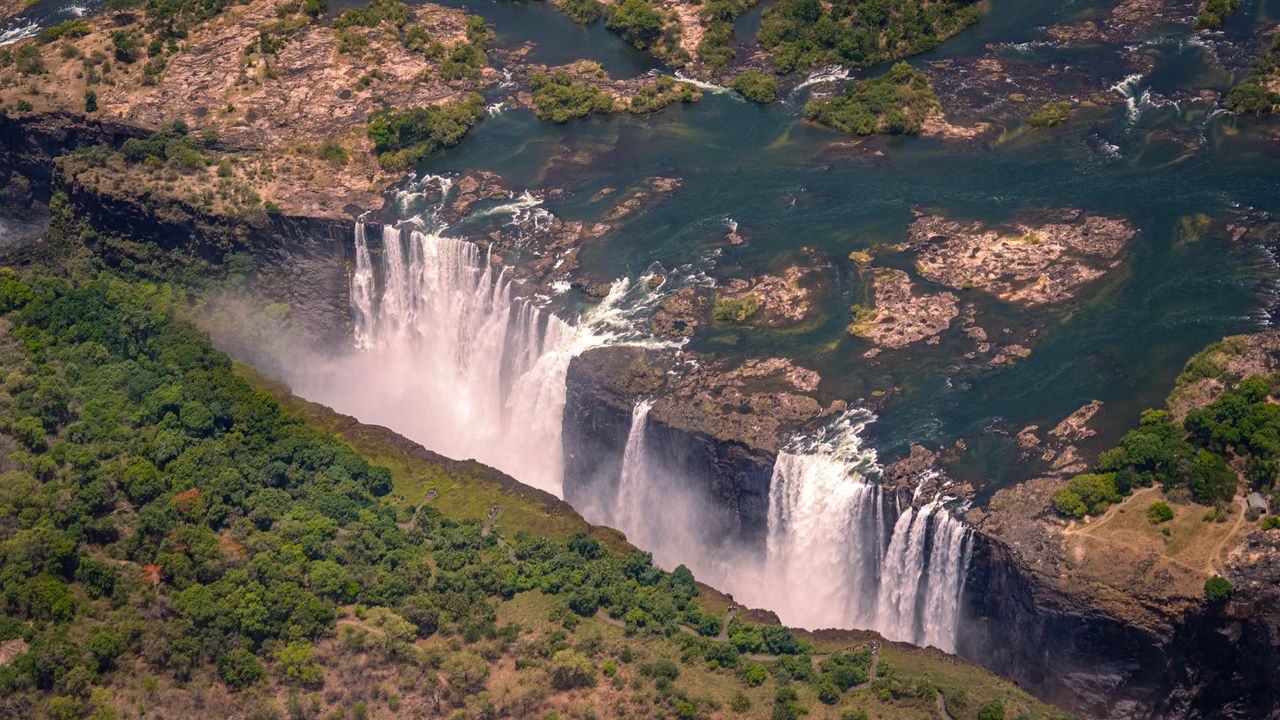
Victoria Falls-forum threads on a June visit describe the falls as genuinely full and impressive this time of year, posters calling spray so heavy that photography can be a real challenge despite the spectacular volume of water. Regulars call Devil's Pool unavailable in June specifically, water levels here simply too high for that particular activity to run. Posters recommend crossing the bridge into Zambia for the walk on that side, several regulars calling this a real addition worth the extra time. Regulars call rafting, canoe trips, helicopter flights and jet boat rides all solid June options beyond the falls themselves. Posters call the town itself genuinely walkable and safe, central hotels within easy reach of bars and restaurants without needing transport. The record: 24.6C days feeling like 25C, 11.7C nights, effectively no measurable precipitation and 44 percent humidity.
Victoria Falls' forum rates July among the best months — dry season clarity, the mist and spray down enough for full panoramic views, and good visibility for the famous lunar rainbow after dark. Regulars still warn that early-morning game drives run properly cold, worth packing for.
Victoria Falls-forum threads on August water temperatures describe the Zambezi as genuinely warm enough for rafting and canoeing in just shorts and a t-shirt, a real plus for anyone planning water activities. Posters call the falls' water level neither too low nor too high by mid-August, a real sweet spot for viewing compared to the lowest levels typically seen around November. Regulars describe August as sitting at the tail end of the cool, dry season, comfortable daytime conditions genuinely favorable for both sightseeing and wildlife viewing. Posters call this a strong window for game activities too, animals concentrating visibly around remaining water sources as the dry stretch continues. Regulars recommend real layers for cooler mornings even during an otherwise comfortably warm stretch. Posters call August through September a genuinely reliable window for a first visit. The record: 29.2C days feeling like 27C, 13.8C nights, a low 36 percent humidity and 10.7 hours of sun.
August is dry season: comfortable 27°C days, cold mornings, and the falls at moderate flow — enough water to be spectacular, little enough spray to actually see it. By November the Zambian side can be nearly dry.
Victoria Falls-forum threads on September visits are consistent this is deep in the dry season, the Zambezi at its lowest point of the year, and posters are candid the Zambian side of the falls can run largely exposed rock by this point while the taller Zimbabwean side keeps more visible flow. Regulars are quick to reframe the low water as a trade rather than a downside - this is exactly when Devil's Pool opens up for swimming right at the lip of the falls, and whitewater rafting below runs its most exciting rapids of the year. Daytime heat builds fast under clear skies, but posters call the near-total absence of cloud and haze a genuine plus for safari game viewing and photography alike. Regulars steer anyone wanting maximum spray and rainbow drama toward March or April instead. The record: 33.2C days feeling like 32C, 17.8C nights, essentially no precipitation, a very dry 29 percent humidity and 11.1 hours of sun.
Haritada Victoria Şelalesi kartından kendi notunuzu ekleyin.