Katmandu hava durumu: ay ay
Katmandu için en iyi zaman Şubat, Mart ve Kasım — Kasım ayında 92/100, 23°C ve 5 yağmurlu gün. En iyi sezon kış, Aralık ile Şubat arası (ortalama 80/100).
En kötü ay Temmuz: 43/100 — bunaltıcı, sırılsıklam, boğucu nem. Temmuz ayına bakın →
A crowded valley city of brick temples and dust at 1,400 metres, used by most people as the way in and out of the Himalaya.
Güncellendi: Eylül 2026 · iklim normalleri ERA5 yeniden analizinden
Daha geniş bir rota mı planlıyorsunuz? Nepal için en iyi zaman →
En iyi sezon: Aralık ile Şubat arası (ortalama 80/100) · en kötüsü Temmuz (43/100)
- Gündüz
- 23°C
- Gece
- 10°C
- Yağmurlu gün
- 5
- Güneş
- 9.7 h
- Nem
- 76%
- Gün ışığı
- 11 h
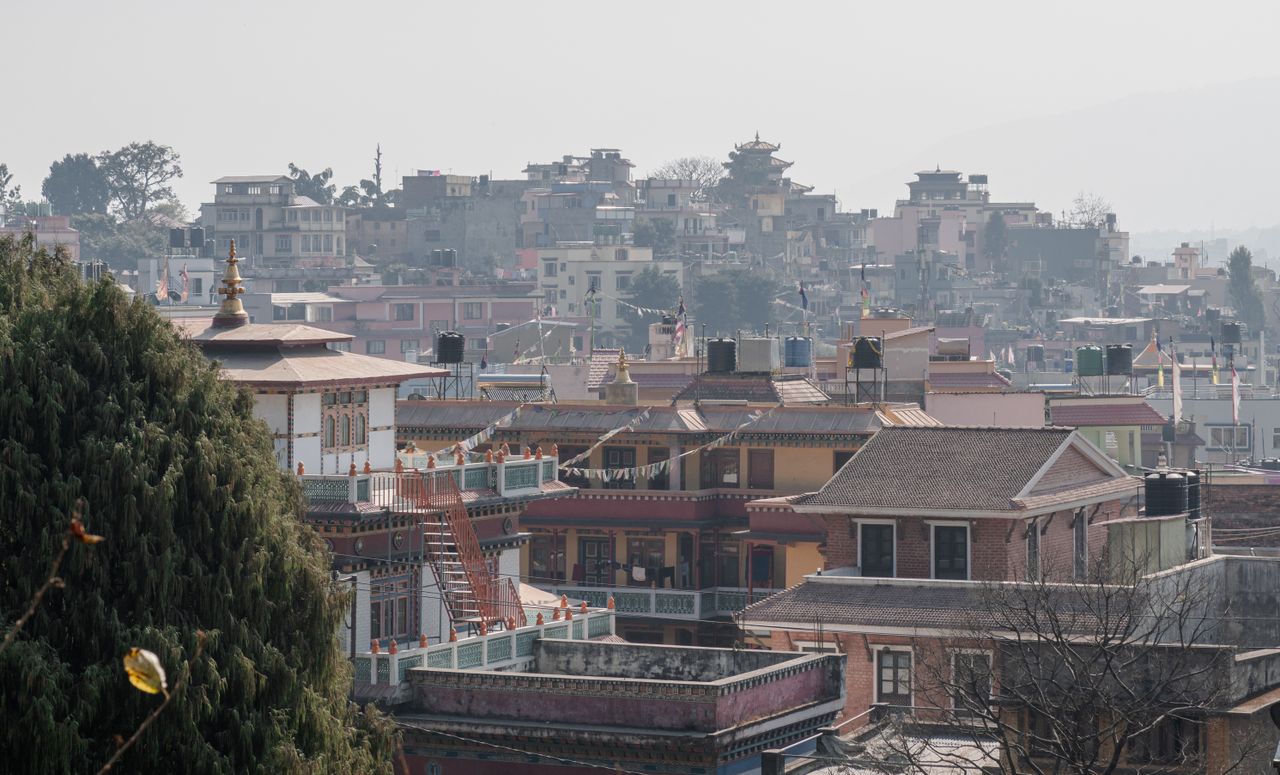
Katmandu, ay ay
Katmandu için en uygun seyahat tarzına göre 100 üzerinden konfor puanı; iklim normallerinden ortalama en yüksek sıcaklık, yağmurlu gün sayısı ve günlük güneş saati; bir de ayın ne kadar kalabalık geçtiği.
Katmandu için her ay nasıl geçer
SeasonMap editörleri tarafından, ortalamalardan değil sahada gerçekten olanlardan yazıldı.
- Ocak
The coldest month: cold mornings, bright days and the clearest mountain views of the year. Unheated rooms are the real problem.
shoulder
- Şubat
Cold and clear, warming through the month, with the trekking season starting to rebuild and the valley dusty.
shoulder
- Mart
Rhododendron in flower in the hills, warm hazy days in the valley, and the spring trekking and climbing season under way.
blossompeak
- Nisan
The busiest trekking month. Warm, increasingly hazy, with pre-monsoon storms building over the valley in the afternoons.
peak
- Mayıs
Hot, dusty and hazy, with poor mountain visibility and the first monsoon cloud arriving at the end of the month.
dustshoulder
- Haziran
The monsoon usually arrives mid-month. Landslides close hill roads and the mountains vanish behind cloud for weeks.
monsoonlow season
- Temmuz
The wettest month: green, humid and quiet, with flight delays and leeches on the trails, and the valley air at its cleanest.
monsoonlow season
- Ağustos
Still monsoon and still no mountain views, but Indra Jatra (movable, August or September) fills Durbar Square with masked dances.
monsoonfestival
- Eylül
The monsoon withdraws in the second half and the air clears; Dashain (movable, September or October) opens the festival season.
festivalshoulder
- Ekim
The best month of the year: clear air, big mountain views and peak trekking season, with Dashain and Tihar emptying the city.
festivalpeak
- Kasım
Clear, dry and cold at night, with excellent visibility and the second half of the trekking season under way.
peak
- Aralık
Cold, dry and clear, with the fewest trekkers and the sharpest views, though the valley air turns dusty and smoky.
dustshoulder
Yıl boyunca Katmandu: neler var
Festivaller, doğa gösterileri, tatiller ve dikkat edilmesi gereken sezonlar — elle derlendi ve kaynağıyla verildi. Ayrıntılar ay sayfalarında.
- Şubat
- Holi3–4 MarFestival
- Mart
- Rhododendron in the hills15 Mar – 30 Nis (genelde)Doğa
- Spring trekking season1 Mar – 15 MaySezon
- Nisan
- Bisket Jatra9–18 Nis (genelde)Festival
- Haziran
- Landslide season on the hill roads15 Haz – 15 Eyl (genelde)Risk
- Ağustos
- Indra Jatra19–27 EylFestival
- Eylül
- Dashain11–25 EkiTatil
- Ekim
- Tihar8–11 KasFestival
- Autumn trekking season1 Eki – 30 KasSezon
- Kasım
- Valley smog season15 Kas – 28 Şub (genelde)Risk
Kasım ayında Katmandu kalabalığı
Yerin kendisinin ne kadar yoğun olduğu — okul ve toplu tatiller, bir editörün işaretlediği aylar ve havanın orayı ne kadar rağbet görür kıldığı. Konfor puanına asla dahil edilmez.
Çok kalabalıkeditörün seçtiği zirve ay, Autumn trekking season
Çok kalabalıkKalabalıkAra sezonSakin
Katmandu için yola çıkmadan önce bilmekte fayda var
Gezginlerin kendi yazdıklarından gerçek deneyimler; orijinaline bağlantı verilerek alıntılandı.
Ulaşım
A visitor's account of Kathmandu traffic describes an initial wave of panic at the lack of traffic lights, lane markings, or crosswalks, with motorbikes, cars, and pedestrians all negotiating the same narrow street at once. What worked, she found, was resisting the instinct to dash: stepping out at a steady, predictable pace and letting the traffic flow around you, or simply crossing alongside a local who was already heading that way.
Katmandu için gezgin notları
Gidenlerin orası hakkında söyledikleri — önce yıl boyu geçerli notlar, sonra ay ay.
Kathmandu Valley is in the Warm Temperate Zone of Nepal (elevation ranging from 1,200–2,300 metres (3,900–7,500 ft)), where the climate is fairly temperate, atypical for the region. This zone is followed by the Cool Temperate Zone with elevation varying between 2,100–3,300 metres (6,900–10,800 ft). Portions of the city with lower elevations have a humid subtropical climate, while portions of the city with higher elevations generally have a subtropical highland climate. In the Kathmandu Valley the average summer temperature varies from 28–30 °C (82–86 °F). The average winter temperature is 10.1 °C (50.2 °F). The city generally has a climate with warm days followed by cool nights and mornings. Unpredictable weather is expected given temperatures can drop to 3 °C (37 °F) during the winter. During a 2013 cold front, the winter temperatures of Kathmandu dropped to −4 °C (25 °F), and the coldest temperature was recorded on January 10, 2013 at −9.2 °C (15.4 °F).…
Kathmandu forum threads describe January as cold at night but often genuinely pleasant by day, with posters citing a typical daily maximum around 18C on a clear, sunny day, though a rare overcast day without sun can stay noticeably colder throughout. Days were described as reliably sunny in the valley, with the real chill setting in once the sun goes down. Real snow in the city itself was called unlikely, with posters clear that accumulating snow is a mountains-only phenomenon - useful context for anyone heading out trekking, since January's dry conditions generally favor trekking even though an occasional trek-impeding dump of snow at altitude is possible. The consistent packing advice was serious layers for the cold evenings: a down jacket, fleece, warm socks and gloves.
Regulars describe February here as three different temperatures depending on where you stand: warm enough for a t-shirt in direct sun, noticeably cool in shadow or indoors, and properly cold once night falls, though it seldom actually freezes. Our row backs the range, 21.6C reading as 20C over 7C nights feeling 6C, with 45.9mm of rain across 7.3 days and a trace of snow, 0.3cm. Mornings often start foggy and clear by mid-morning into a fine day. The pollution question comes up constantly on this board, and the pattern they describe is a daily one rather than seasonal: relatively clear until seven or eight, worsening once traffic builds through the day - our AQI of 109 is the average across that whole cycle. The record: humidity 71 percent, 9.8 hours of sun, a 7.7 kph wind.
Regulars choose March over April for one reason: the haze. Agricultural burn-off across northern India and the Terai begins around late February and worsens steadily towards April, and humidity rises through March as well, so the mountain views soften as the season goes on. One year March was the clearest in memory and April lost the mountains entirely. From the valley floor the views are already scarce; for sharp ones you climb to four or five thousand metres. March is colder than April and slightly drier, and mid-March is the trekking window. Our AQI of 96 is that burn-off measured. The record: 25.7C over 11.1C, 60.4mm across 11.7 days and 10.6 hours of sun.
Kathmandu forum regulars call April one of Nepal's genuinely good months: “pleasant weather in mornings and evenings, with daytime temperatures around 23-25°C,” warm and sunny days as the norm, though a rain jacket is standard advice regardless. Mid-April can bring “fine clear mornings, some cloud in the afternoon, and maybe some rain in the evening” — a predictable daily rhythm more than a washout. The one honest tradeoff versus March: as spring passes, humidity increases as the monsoon approaches, softening mountain visibility, so early March actually beats April for the sharpest Himalayan views even though April's temperatures are milder. Anyone heading up to Nagarkot or Chisopani, both higher than the valley, needs a warm fleece regardless of how mild Kathmandu itself feels. Our record: 24.6°C days, 14°C nights, 15.6 rain days and an AQI of 100 — mild with real, frequent rain, matching the “warm days, predictable afternoon showers” read.
October, post-monsoon, is when the Himalaya actually appears — the air is washed clean and you can see the range from the valley rim. It's also peak trekking season, so teahouses on the Annapurna and Everest routes are full.
November is the month Nepal regulars name first, and the reason is visibility: this is post-monsoon, the driest and least humid of the autumn months, with the least cloud, so the mountain views are clear and sharp and the leeches are gone. Kathmandu itself they describe as pleasant by day and genuinely cold morning and evening - their 12 to 18C days and 5 to 8C mornings sit below our row's 23.3C and 9.8C, so read theirs as the shaded valley in early winter. Thin gloves and a scarf for the ends of the day is their packing note. The cost is company, because this is the busiest trekking season of the year. Our row adds AQI 106, the valley's winter air. The record: 5.4 precipitation days carrying 18.5mm and 9.7 hours of sun.
Regulars are specific that the real discomfort this month comes indoors rather than out - hotel rooms often lack heating, so an extra blanket, hot water bottle or even a sleeping bag liner gets recommended almost as often as warm outdoor layers. Our row backs the cool, dry, sunny read, 19.6C over 5.7C nights feeling 5C, with rain minimal at 17.7mm across 3.5 days and snow in the valley itself called a genuine rarity, just a handful of recorded instances over the past century. Regulars are consistent the days themselves are pleasant and clear, valued as one of the least crowded times to visit, though winter haze and air pollution in the valley are a real and separate concern from the cold. The record: humidity 75 percent, 9.1 hours of sun, a 6.3 kph wind and AQI 123.
Haritada Katmandu kartından kendi notunuzu ekleyin.