Pogoda Singapur — miesiąc po miesiącu
Singapur — najlepszy czas na wyjazd to luty, lipiec i sierpień: 69/100 (luty), 31°C i 17 deszczowych dni. Najlepsza pora to pora sucha, czerwiec–wrzesień (średnio 61/100).
Najgorszy miesiąc: listopad, 46/100 — upalnie, ulewnie, parne powietrze. Zobacz: listopad →
An equatorial city-state where the temperature barely moves all year, so the difference between months is rain, haze and the festival calendar.
Aktualizacja: wrzesień 2026 · normy klimatyczne z reanalizy ERA5
Najlepszy sezon: czerwiec–wrzesień (średnio 61/100) · najgorzej: listopad (46/100)
- Dni
- 31°C
- Noce
- 25°C
- Mokre dni
- 17
- Słońce
- 10 h
- Wilgotność
- 82%
- Długość dnia
- 12 h
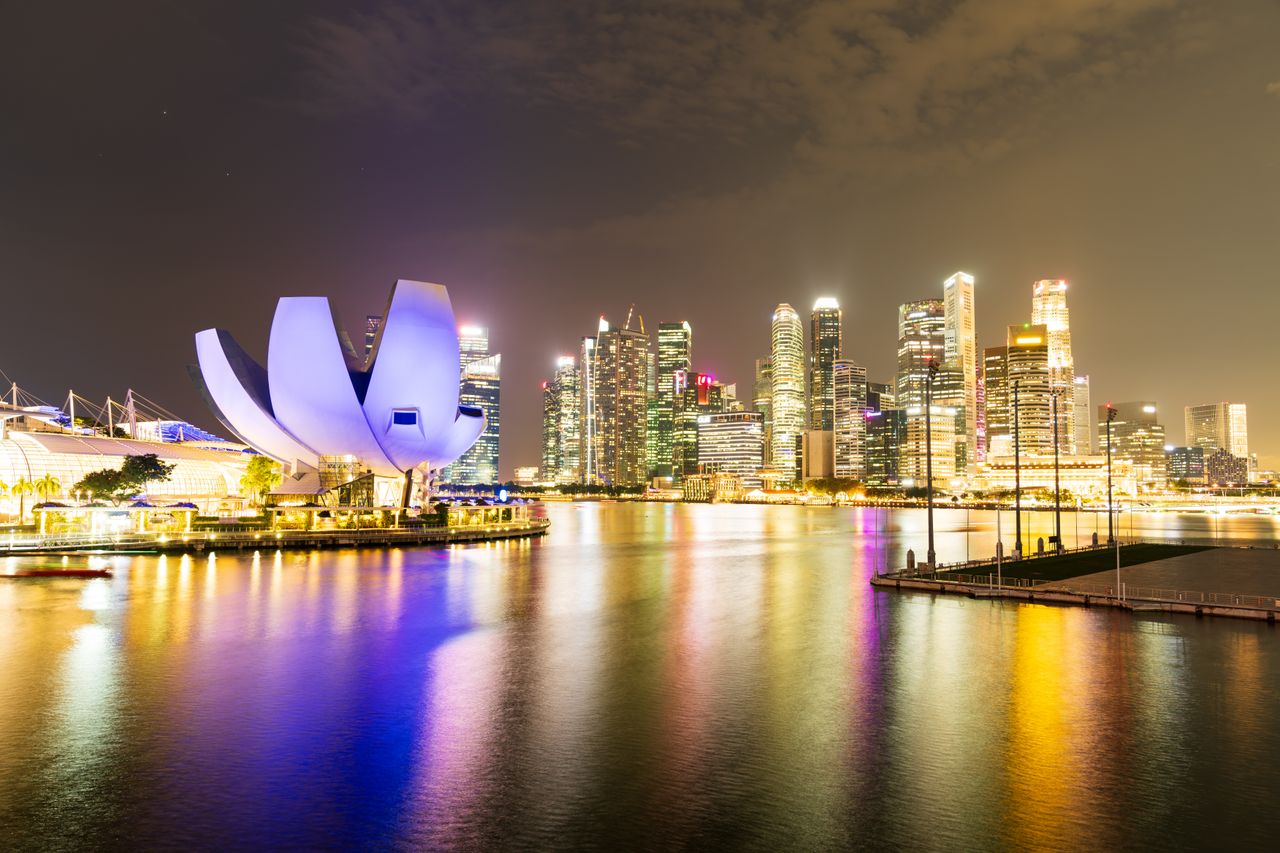
Singapur — miesiąc po miesiącu
Wynik komfortu w skali do 100 dla rodzaju podróży, do którego Singapur nadaje się najlepiej, a do tego średnia maksymalna, deszczowe dni i godziny słońca dziennie z norm klimatycznych oraz to, jak bywa tłoczno.
Jaki jest każdy miesiąc — Singapur
Pisane przez redakcję SeasonMap na podstawie tego, co naprawdę dzieje się na miejscu — nie ze średnich.
- styczeń
The tail of the northeast monsoon, with frequent heavy rain, and Thaipusam (movable) taking a barefoot procession across the city.
monsoonfestival
- luty
Chinese New Year (movable, late January or February) closes shops for two days and fills Chinatown for a fortnight.
festivalclosed
- marzec
The wet monsoon ends and the air turns hotter and stickier, with squalls in the early morning rather than settled afternoon rain.
shoulder
- kwiecień
Hot and humid with afternoon thunderstorms: the least comfortable month to be outdoors, whatever the thermometer says.
monsoon
- maj
Hot, humid and stormy, with Vesak Day (movable, usually May) filling the temples.
festivalmonsoon
- czerwiec
The southwest monsoon starts, and with it the regional haze risk, which depends on fires in Sumatra and varies enormously by year.
smoke
- lipiec
Warm, sticky and one of the drier months. The mid-year school holidays fill Sentosa and the offshore islands at the weekend.
shoulder
- sierpień
National Day on 9 August fills the bay with a parade, and the Hungry Ghost month (movable) brings roadside offerings and street opera to the housing estates.
festivalsmoke
- wrzesień
Usually the driest month, and the haziest. The night motor race and Mid-Autumn lanterns in the Gardens fill the calendar.
festivalsmoke
- październik
The rains return, and Deepavali (movable, October or November) lights Little India for several weeks.
festivalmonsoon
- listopad
The northeast monsoon sets in: the wettest stretch of the year, with rain most afternoons.
monsoonlow season
- grudzień
The wettest month, when the rain settles in for whole afternoons rather than passing through, and Christmas lights run the length of Orchard Road.
monsoonfestival
Co się dzieje przez cały rok — Singapur
Festiwale, spektakle natury, święta i sezony, na które warto uważać — wybrane i ze źródłami. Szczegóły są na stronach poszczególnych miesięcy.
- styczeń
- Thaipusam1 lutFestiwal
- Chinese New Year17–18 lutŚwięto
- marzec
- Hari Raya Puasa (Eid al-Fitr)5–31 mar (zwykle)Święto
- maj
- Vesak Day31 majFestiwal
- Hari Raya Haji (Eid al-Adha)15 maj – 5 cze (zwykle)Święto
- czerwiec
- Regional haze risk1 cze – 15 paź (zwykle)Zagrożenie
- sierpień
- Hungry Ghost month1 sie – 10 wrz (zwykle)Festiwal
- National Day8–10 sieFestiwal
- wrzesień
- Mid-Autumn Festival1 wrz – 5 paź (zwykle)Festiwal
- Singapore Grand Prix9–11 paźFestiwal
- październik
- Deepavali8 lisFestiwal
- listopad
- Christmas on Orchard Road10 lis – 2 styFestiwal
- Northeast monsoon1 lis – 31 sty (zwykle)Sezon
Singapur, luty: tłumy
Jak tłoczno jest w samym miejscu — wakacje szkolne i święta masowe, miesiące oznaczone przez redakcję oraz to, jak bardzo pogoda podbija popyt. Nigdy nie wchodzi do wyniku komfortu.
TłocznoChinese New Year, ferie szkolne na 2 rynkach, które je zapełniają, część miasteczka zamyka się na ten miesiąc(szacunkowo)
Szczyt sezonuTłocznoSezon przejściowySpokojnie
Warto wiedzieć przed wyjazdem — Singapur
Prawdziwe doświadczenia z własnych relacji podróżnych, cytowane z linkiem do oryginału.
Zwyczaje i etykieta
A traveler describes eating kway chap at a hawker centre and, without really thinking about it, stacking the bowls and dropping the tray at the return point on the way out - noting that's exactly how the mandatory tray-return rule (in force since 2021, with fines up to S$300 for repeat offenders) has settled in as just a normal habit rather than something people consciously comply with under threat. Locals writing about the policy describe hawker centres becoming visibly cleaner since enforcement began, with tray-return stations reliably empty because most diners handle it themselves before a warden ever needs to say anything. Posters generally note first-time visitors sometimes forget simply because it's not a habit from home, and the practical fix is just watching what everyone else at the table next to you does and matching it - the social norm does most of the enforcement, not the fine itself.
Relacje podróżnych — Singapur
Co mówią o tym miejscu ci, którzy tam byli — najpierw relacje na cały rok, potem miesiąc po miesiącu.
As Singapore is 1°17' north of the Equator, its tropical weather is usually sunny with little in the way of distinct seasons. Rain falls almost daily throughout the year, usually in sudden, heavy showers that rarely last longer than an hour. However, most rainfall occurs during the northeast monsoon (November to January), occasionally featuring lengthy spells of continuous rain. Spectacular thunderstorms can occur throughout the year, any time during the day, so it's wise to carry an umbrella at all times, both as a shade from the sun and a cover from the rain. Between May and October, forest fires in neighbouring Sumatra can also cause dense haze, although this is unpredictable and comes and goes rapidly: check with the National Environment Agency for up-to-date conditions. The temperature averages around: * 31°C daytime, 24.5°C at night in December and January. * 32.5°C daytime, 25.5°C at night for the rest of the year.…
January is the tail end of the wet phase of the Northeast Monsoon, and the forum's regulars say it often transitions to the dry phase by late month — so the first half is the wetter half. The reassurance they give is about duration, not frequency: rain "normally does not last very long, maybe a few minutes to a few tens of minutes," and the city is built for it — "there are sheltered walkways and corridors almost everywhere. It is not likely that you will get drenched." Carry an umbrella anyway. What nobody sells as seasonal is the humidity: "Singapore is hot and humid all the time," and scattered light rain can arrive any hour of any day, year-round. Our record backs the wet part — 20.6 rain days and 192mm, the year's high — with 28°C days that barely move month to month.
February is marginally the driest month, which is the only lever you have — it's 31°C and humid every day of the year. Plan the outdoors for early morning and treat 2-5pm as indoor time. The rain, when it comes, is a 40-minute event.
Regulars describe rain here as short, sharp showers or thunderstorms, often just once a day and some days not at all, rather than a sustained soak - a genuinely good month overall despite the wet-sounding statistics. Our row backs the real wetness behind that framing, 228.1mm of rain across a striking 23.6 days, alongside intense heat, 31.3C reading as a hot 37C at 82 percent humidity, over 25.4C nights. Regulars specifically flag haze, driven by seasonal burning further south, as the one real health-relevant caveat worth checking before a trip, though this month itself is called a low-risk window for it. The sea holds a warm 27.7C. The record: 10.1 hours of sun, a 12.9 kph wind and AQI 59.
One regular puts the humidity better than any column can: a 31C day here is more uncomfortable than a 42C day in a dry country. Our feels-like agrees, turning 30.7C into 37C at 82 percent humidity. June sits in the south-west monsoon, which they describe as showers and thunderstorms from before dawn to midday and again in the late afternoon, rarely lasting half an hour. That is what our 209.1mm across 26.1 days actually means - rain touches almost every day and stops almost every time. Nights hold 25.7C and the sea is 30.2C. Carry the umbrella, plan the indoor half, and do not trust a gap in the cloud. The record: 9 hours of sun and AQI 58.
Singapore's July threads describe the constant: hot and humid, around 29°C by day and barely cooler at night, with rain on most days that usually arrives as a short burst — half an hour to a few hours — rather than a washout. Attractions run year-round and regulars say July rarely derails a plan. The two things worth knowing are seasonal rather than climatic: July through October is when haze from fires in neighbouring Indonesia can appear, unpredictably since it isn't a weather pattern, and July and August are busy with overseas summer holidays.
Forum answers to “is Singapore unbearably hot” settle on the same shape for August as any other month — there's no cooler stretch to wait for: “it's not so much the heat, but the heat+humidity” that wears visitors down, worsened by “90%+ humidity and the direct heat radiation of the sun at one degree north of the equator.” Rain rarely derails plans — showers “don't last long, and are normally over within an hour,” typically an afternoon thing rather than an all-day washout. Our record for August: 28.5°C days that feel like 34°C, 81.5% humidity and rain on 24 of 31 days — frequent but short, matching the pattern locals describe.
Singapore-forum threads on September flag two separate risks that don't always coincide: the regular short, scattered showers that clear fast, and the haze that can drift in from Indonesian burning between August and October in a bad year - worth checking a live index rather than assuming either. Crowds are called manageable outside the Mid-Autumn lantern weekends. The record backs the shower description: 30.5C days feeling like 36C, humidity above 80 percent, 194mm of rain spread across 25 days, and an AQI of 57 - unremarkable most years, but the one month worth double-checking before you go.
Dodaj własną notatkę z karty miejsca na mapie — Singapur.