Pogoda Santiago — miesiąc po miesiącu
Santiago — najlepszy czas na wyjazd to styczeń, październik i listopad: 92/100 (listopad), 27°C i 2 deszczowe dni. Najlepsza pora to wiosna, wrzesień–listopad (średnio 89/100).
Najgorszy miesiąc: czerwiec, 66/100 — chłodno, deszczowo, kiepska jakość powietrza. Zobacz: czerwiec →
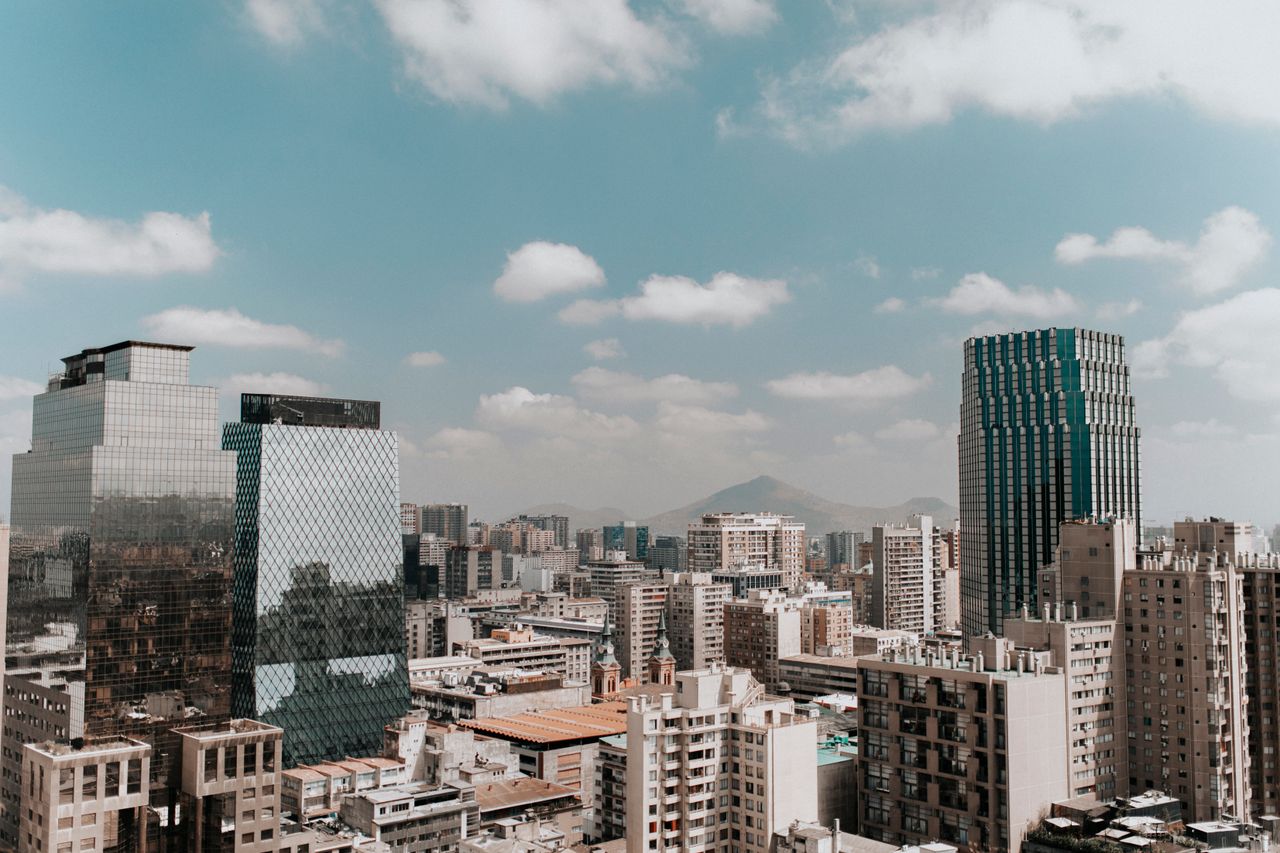
A capital in a valley between the Andes and the coastal range, dry and sunny most of the year, with a winter smog problem and skiing an hour away.
Aktualizacja: wrzesień 2026 · normy klimatyczne z reanalizy ERA5
Planujesz większą podróż? Chile — najlepszy czas na wyjazd →
Najlepszy sezon: wrzesień–listopad (średnio 89/100) · najgorzej: czerwiec (66/100)
- Dni
- 27°C
- Noce
- 9°C
- Mokre dni
- 2
- Słońce
- 12.5 h
- Wilgotność
- 57%
- Długość dnia
- 14 h
Santiago — miesiąc po miesiącu
Wynik komfortu w skali do 100 dla rodzaju podróży, do którego Santiago nadaje się najlepiej, a do tego średnia maksymalna, deszczowe dni i godziny słońca dziennie z norm klimatycznych oraz to, jak bywa tłoczno.
Jaki jest każdy miesiąc — Santiago
Pisane przez redakcję SeasonMap na podstawie tego, co naprawdę dzieje się na miejscu — nie ze średnich.
- styczeń
High summer: hot, dry and half-empty as the city takes its holidays on the coast, with the mountains at their most accessible.
peak
- luty
The hottest and quietest month. Much of the city is closed for holidays and the wine valleys are heading into harvest.
closedpeak
- marzec
The vendimia, the grape harvest, runs through the valleys around the city. Hot days, cold nights, and the city back at work.
harvestshoulder
- kwiecień
Autumn: clear warm days, cold nights and colour in the parks. One of the best months of the year here.
harvestshoulder
- maj
The first rain of the year usually arrives and clears the air, and the first snow falls on the Andes above the city.
shoulder
- czerwiec
Winter: cold mornings and rain between clear spells, with the ski season opening at resorts an hour from the centre.
snowlow season
- lipiec
The coldest and wettest month, and the worst air of the year when the valley traps the smog under an inversion.
smokelow season
- sierpień
Still cold and often smoggy down in the valley, while the ski season above the city is at its best.
smokesnow
- wrzesień
Spring, and the Fiestas Patrias on 18-19 September take the whole country to the fondas for the best part of a week.
festivalshoulder
- październik
Warm, clear and green, with the last of the ski season on the tops and the best weather in the valleys.
shoulder
- listopad
Warm and dry, the wine country in flower and the city at its most comfortable before the summer heat.
blossomshoulder
- grudzień
Hot and dry, with the city starting to empty for the holidays and the high mountain routes opening.
peak
Co się dzieje przez cały rok — Santiago
Festiwale, spektakle natury, święta i sezony, na które warto uważać — wybrane i ze źródłami. Szczegóły są na stronach poszczególnych miesięcy.
- luty
- February holidays1–28 lutŚwięto
- marzec
- Vendimia, the grape harvest1 mar – 15 kwi (zwykle)Natura
- maj
- Winter smog episodes1 maj – 31 sie (zwykle)Zagrożenie
- czerwiec
- Ski season14 cze – 4 paź (zwykle)Sezon
- Andes resorts open14 czeOtwarcie
- wrzesień
- Fiestas Patrias16–21 wrzŚwięto
- październik
- Wine country in flower15 paź – 30 lis (zwykle)Natura
- grudzień
- High Andes routes open1 gru – 31 mar (zwykle)Sezon
Santiago, listopad: tłumy
Jak tłoczno jest w samym miejscu — wakacje szkolne i święta masowe, miesiące oznaczone przez redakcję oraz to, jak bardzo pogoda podbija popyt. Nigdy nie wchodzi do wyniku komfortu.
Sezon przejściowymiędzy szczytami
Szczyt sezonuTłocznoSezon przejściowySpokojnie
Relacje podróżnych — Santiago
Co mówią o tym miejscu ci, którzy tam byli — najpierw relacje na cały rok, potem miesiąc po miesiącu.
January in Santiago is hot and dry - most days high-20s to 30C, our row saying 30.4C at 54 percent humidity with 0.5 precipitation days - and regulars stress that the heat is a dry one that always drops away in the evening, so a light top for after dark is worth carrying. Their practical advice is to put the tours in the morning and look for air conditioning in the hotel. The unexpected bonus is the air: January and February are the Chilean holiday months, the city empties, and the smog that defines Santiago's winter falls to its lowest of the year. Our row's AQI 83 is the annual low rather than a good absolute number. The record: 13.5C nights, 7.3mm of rain and 13 hours of sun.
Regulars are specific this counts as the highest tourist season of the year across the whole country, a real booking-and-pricing concern rather than just a weather note - rooms and flights genuinely scarcer without planning ahead. Our row backs that hot, genuinely dry read, 30.7C reading as a hot 32C, over 13.2C nights, with rain essentially absent, 2.1mm across under a day, and humidity down to 54 percent. Regulars are consistent evenings cool noticeably after a hot day, a light coverup or sweater worth having even mid-summer. Nearby coastal towns are a popular escape from the heat, sea temperatures cool enough to refresh without being warm enough for a long swim. The record: 12.3 hours of sun, a 12.4 kph wind and AQI 102.
March is autumn here and regulars rate it highly - exceptional weather without the summer crowds and without summer prices, still warm, with a wide gap between day and night. Our row is that gap exactly: 28.8C down to 11.1C, at 53 percent humidity and 3.1mm of rain across a single day. On the city's other reputation they are specific rather than dismissive: the smog is not usually bad in the eastern districts, is worst out west towards the airport, gets better on wet days, and turns on the weather rather than the season. Our AQI of 102 is a city-wide average and hides all of that. The record: 11.3 hours of sun and an 11.3 kph wind.
Forum regulars place May firmly in late fall sliding into winter: expect 0-15C, mostly cloudy skies, and a real chance of rain, with cold mornings and evenings needing a proper coat even when the afternoon turns decent. Whether posters rate the month highly depends heavily on personal tolerance for gloom - some call peak summer 'bliss' and winter comparatively flat, preferring the shoulder months of December or March instead. One environmental note that comes up specifically for this time of year: Santiago starts getting winter temperature inversions that trap the city's pollution close to the ground, worth factoring in if air quality is a concern.
The Santiago forum's spring thread is a corrective for anyone reading October as southern-hemisphere summer: it is when the weather is only starting to turn, and the days are not mild yet. November and December are when it settles into warm days that are never too hot, around 80 to 85F, with a light sweater still wanted after dark. The coast is its own case - the Humboldt current keeps it cool once the sun goes down, jacket weather at any time of year. On smog, regulars are clear that it is a winter problem, worst around the airport on the west side and not normally bad in the eastern parts of the city. The record: 23.9C days but 6.9C nights, 5.2 precipitation days, 11.2 hours of sun, AQI 84.
Chile's forum calls November — springtime in the southern hemisphere — genuinely wonderful for Santiago and central Chile, typically low 80s°F by day with very low humidity and cool nights in the low 60s°F. One regular with ten November trips reports rain only once; a light jacket for evenings covers the rest.
December is summer here and the board describes it as one long dry day with a cold end: around 30C in the afternoon, low twenties by ten at night, cooler again before dawn. Our row is that swing written as two numbers, 30C over 11.6C - an eighteen-degree range inside a single date. At 53.6 percent humidity the heat is dry, so a step into the shade cools you immediately, but the sun is strong enough that finding shade is the whole trick. Rain is 6.5mm across not quite one day. Most evenings want a sweater, and hotels are air conditioned where apartments often are not. The smog the board argues about belongs to winter: AQI 75 here against 138 in July. The record: 13.1 hours of sun.
Dodaj własną notatkę z karty miejsca na mapie — Santiago.