Pogoda Puno — miesiąc po miesiącu
Puno — najlepszy czas na wyjazd to czerwiec–sierpień: 83/100 (sierpień), 16°C i 3 deszczowe dni. Najlepsza pora to zima, czerwiec–sierpień (średnio 82/100).
Najgorszy miesiąc: luty, 67/100 — chłodno, ulewnie, czyste powietrze. Zobacz: luty →
Aktualizacja: wrzesień 2026 · normy klimatyczne z reanalizy ERA5
Planujesz większą podróż? Peru — najlepszy czas na wyjazd →
Najlepszy sezon: czerwiec–sierpień (średnio 82/100) · najgorzej: luty (67/100)
- Dni
- 16°C
- Noce
- 0°C
- Mokre dni
- 3
- Słońce
- 10.7 h
- Wilgotność
- 44%
- Długość dnia
- 12 h
Puno — miesiąc po miesiącu
Wynik komfortu w skali do 100 dla rodzaju podróży, do którego Puno nadaje się najlepiej, a do tego średnia maksymalna, deszczowe dni i godziny słońca dziennie z norm klimatycznych oraz to, jak bywa tłoczno.
Co się dzieje przez cały rok — Puno
Festiwale, spektakle natury, święta i sezony, na które warto uważać — wybrane i ze źródłami. Szczegóły są na stronach poszczególnych miesięcy.
- luty
- Virgen de la Candelaria1–15 lutFestiwal
- marzec
- Semana Santa15 mar – 20 kwi (zwykle)Święto
- maj
- Alasitas and Cruces de Mayo1–6 majFestiwal
- czerwiec
- Freezing nights on the altiplano1 cze – 15 sie (zwykle)Sezon
- lipiec
- Fiesta de Santiago on Taquile24–31 lip (zwykle)Festiwal
- Fiestas Patrias25–29 lipŚwięto
- październik
- Tata Pancho in Yunguyo6–14 paź (zwykle)Festiwal
- listopad
- Puno's jubilee week1–9 lisFestiwal
- grudzień
- Inmaculada Concepcion in Lampa6–15 gruFestiwal
Puno, sierpień: tłumy
Jak tłoczno jest w samym miejscu — wakacje szkolne i święta masowe, miesiące oznaczone przez redakcję oraz to, jak bardzo pogoda podbija popyt. Nigdy nie wchodzi do wyniku komfortu.
TłocznoMid-year break (Fiestas Patrias) (Peru)(szacunkowo)
Szczyt sezonuTłocznoSezon przejściowySpokojnie
Warto wiedzieć przed wyjazdem — Puno
Prawdziwe doświadczenia z własnych relacji podróżnych, cytowane z linkiem do oryginału.
practical
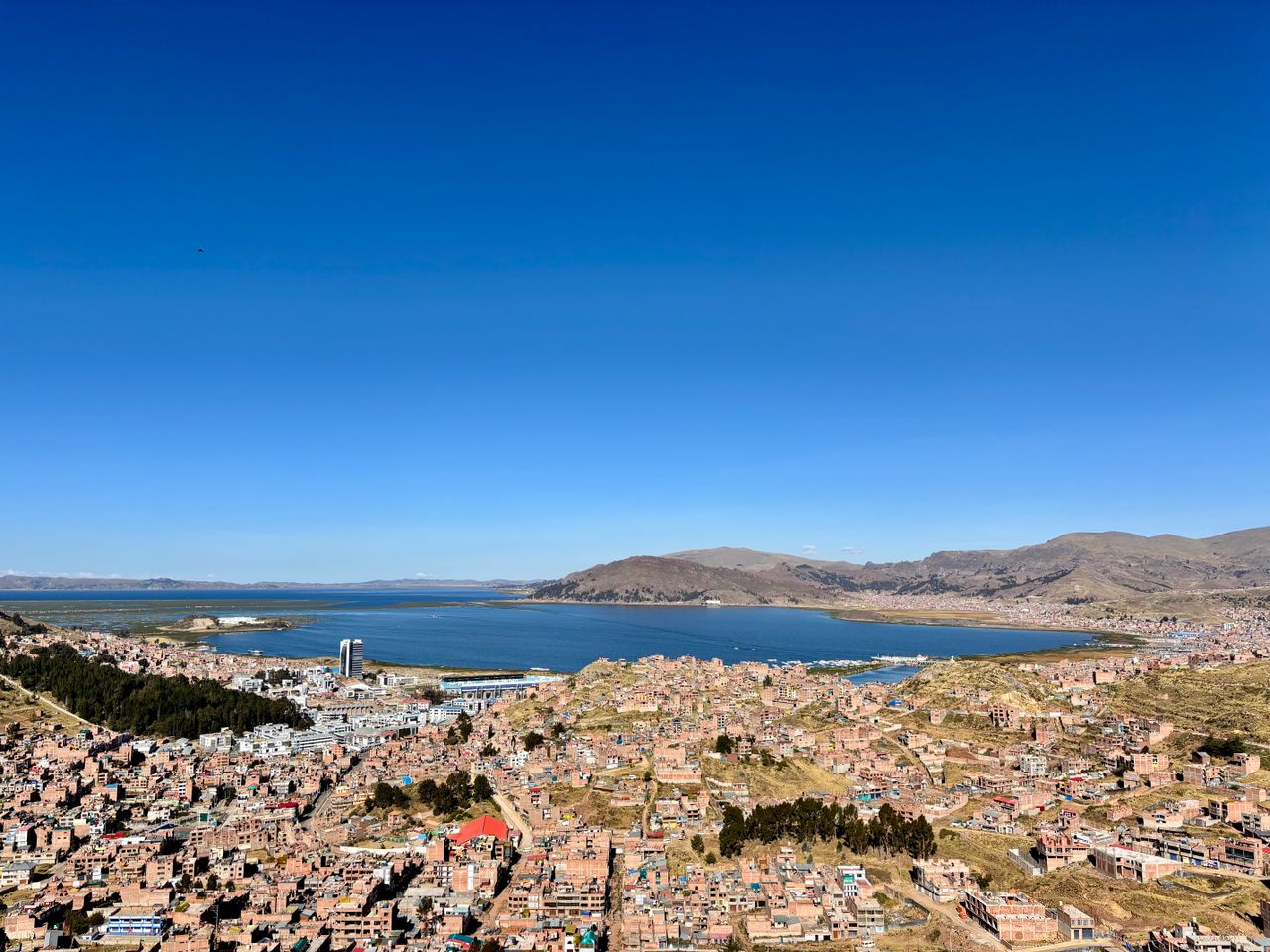
We got off the bus in Puno at midday, bright sun overhead, and were on a boat to the Uros floating islands within the hour, having completely forgotten sunscreen despite years of traveling. Puno sits higher than Cusco at nearly 3,800 meters, so the intense high-altitude sun combined with a chilly morning breeze meant we needed a hat and sunglasses as much as warm layers. None of the floating-island vendors took cards, so we made sure to carry cash for the reed handicrafts, and we always asked before photographing anyone, since the islands are people's actual homes, not a stage set.
Relacje podróżnych — Puno
Co mówią o tym miejscu ci, którzy tam byli — najpierw relacje na cały rok, potem miesiąc po miesiącu.
Puno's forum calls February both the warmest and rainiest month here, a combination that only makes sense once you factor in the 4,000m altitude - days can feel pleasantly warm in the sun, but nights still drop into the single digits C. Most of the rain arrives in the late afternoon and evening in short bursts, leaving a real mix of sun and cloud through the middle of the day rather than a washout. Posters were blunt that if guaranteed sunshine is the priority, February isn't the month for Puno, Cusco or Machu Picchu - but layers and a shell jacket handle the swings just fine.
Forum posters are blunt that August is winter in the Puno area and genuinely cold, with nights dropping into the low 30sF and days warming to around 70F - a swing posters call even more extreme than nearby Cusco. The altitude drives rapid shifts between sun and shade: one traveler described sweating while walking across town in direct sun, only to be cold and caught in hail twenty minutes later once clouds rolled in. Standard packing advice is aggressive layering - short and long-sleeve shirts, a proper sweater, a fleece, hat, gloves, and pants that can handle anything - since the weather here doesn't settle into one predictable state for long, even within a single day.
Dodaj własną notatkę z karty miejsca na mapie — Puno.