Pogoda Puerto Vallarta (Vallarta) — miesiąc po miesiącu
Puerto Vallarta (Vallarta) — najlepszy czas na wyjazd to luty–kwiecień: 96/100 (kwiecień), 31°C i 0 deszczowych dni. Najlepsza pora to pora sucha, listopad–maj (średnio 91/100).
Najgorszy miesiąc: wrzesień, 54/100 — upalnie, ulewnie, czyste powietrze. Zobacz: wrzesień →
Aktualizacja: wrzesień 2026 · normy klimatyczne z reanalizy ERA5
Planujesz większą podróż? Meksyk — najlepszy czas na wyjazd →
Najlepszy sezon: listopad–maj (średnio 91/100) · najgorzej: wrzesień (54/100)
- Dni
- 31°C
- Noce
- 19°C
- Mokre dni
- 0
- Słońce
- 11.8 h
- Wilgotność
- 73%
- Długość dnia
- 13 h
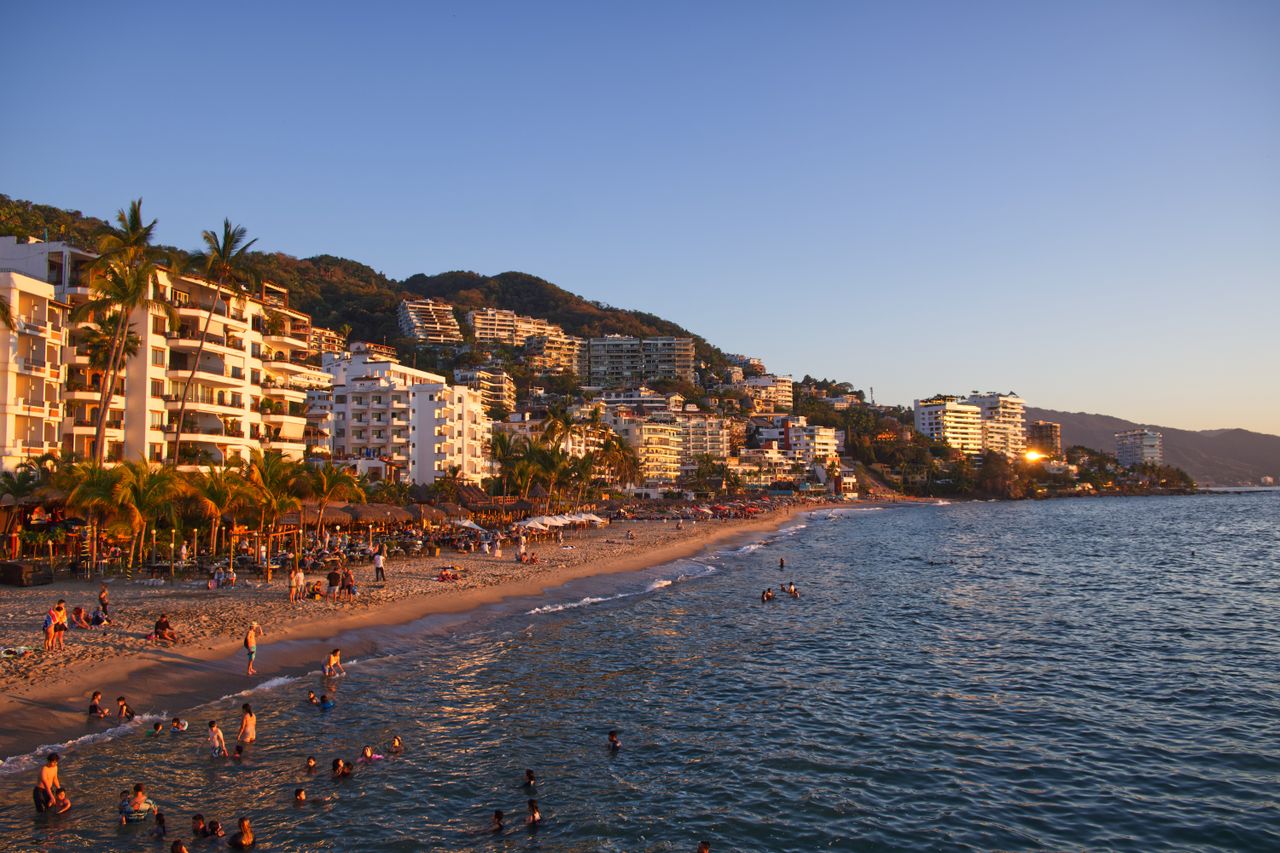
Puerto Vallarta — miesiąc po miesiącu
Wynik komfortu w skali do 100 dla rodzaju podróży, do którego Puerto Vallarta nadaje się najlepiej, a do tego średnia maksymalna, deszczowe dni i godziny słońca dziennie z norm klimatycznych oraz to, jak bywa tłoczno.
Co się dzieje przez cały rok — Puerto Vallarta
Festiwale, spektakle natury, święta i sezony, na które warto uważać — wybrane i ze źródłami. Szczegóły są na stronach poszczególnych miesięcy.
- marzec
- Semana Santa20 mar – 20 kwi (zwykle)Święto
- maj
- Vallarta Pride20–31 maj (zwykle)Festiwal
- Pacific hurricane season15 maj – 30 lisZagrożenie
- czerwiec
- Rainy season15 cze – 15 paźSezon
- listopad
- Festival Gourmet International12–22 lis (zwykle)Festiwal
- grudzień
- Guadalupe processions1–12 gruFestiwal
- Humpback season8 gru – 23 marNatura
Puerto Vallarta, kwiecień: tłumy
Jak tłoczno jest w samym miejscu — wakacje szkolne i święta masowe, miesiące oznaczone przez redakcję oraz to, jak bardzo pogoda podbija popyt. Nigdy nie wchodzi do wyniku komfortu.
TłocznoSemana Santa(szacunkowo)
Szczyt sezonuTłocznoSezon przejściowySpokojnie
Warto wiedzieć przed wyjazdem — Puerto Vallarta
Prawdziwe doświadczenia z własnych relacji podróżnych, cytowane z linkiem do oryginału.
Rytm dnia
A photographer describes timing a Puerto Vallarta Malecón visit specifically for dusk, when the 17 bronze sculptures lining the boardwalk catch the day's last light and the sun sinks directly into Banderas Bay behind them. She singles out El Caballito (The Boy on the Seahorse), the very first sculpture installed on the Malecón back in 1976 by artist Rafael Zamarripa, as the unofficial symbol of the whole city and the piece most worth photographing against the sunset silhouette specifically. Other travelers describe returning to the same stretch in the morning too, finding it worth the double visit since the quality of light and the crowd both shift dramatically between a quiet sunny morning stroll and the busier, more social sunset scene. Posters generally recommend walking the full Malecón slowly rather than rushing straight to any one sculpture, since the sequence of pieces is meant to be experienced as a progression along the boardwalk rather than a single photo stop.
Relacje podróżnych — Puerto Vallarta
Co mówią o tym miejscu ci, którzy tam byli — najpierw relacje na cały rok, potem miesiąc po miesiącu.
January here has two fixed things about it. It is high season, effectively booked out, and it sits in the middle of the whale window - regulars date the humpbacks from about the 8th of December to the 23rd of March, which makes this the safest part of it. Their weather summary is 28 to 30C by day, and our column says 28.8C. What they warn about is the other end of the day: nights and early mornings want a light wrap, and our row has them at 17.9C, an eleven-degree fall. The sea is 25.3C, which they describe as cool but swimmable, and genuinely cold on a rare cloudy day. Rain is effectively over, 21.4mm across 2.6 days. The record: humidity 81 percent, 9.7 hours of sun, an almost still 8.3 kph wind and AQI 31.
February sits squarely inside the humpback season here, which regulars date precisely - roughly the 8th of December to the 23rd of March, with the whales in Banderas Bay through to April - and January reports describe breaching offshore all day. On weather they mostly say February is fantastic, with one dissenting account of a first week of heavy rain and the mountains lost in cloud; our row's 19.9mm across 2 precipitation days says the usual case is the dry one. The number worth checking before packing swimwear is the sea: 24.8C here, noticeably cooler than the Mexican Pacific further south, because this is a winter bay. The record: 29.3C reading as 33C, 18.1C nights, humidity 79 percent, 10.2 hours of sun and AQI 31.
March is the comfortable end of the Puerto Vallarta season on the forum's account: warm days in the low 80s F, cool mornings and evenings early in the month, humidity lower than it will be all year and the odd breezy day. Two dates decide a March trip. Whale season officially runs 8 December to 23 March, so an early-March visit is inside it and a late-March one is picking up strays. And the busiest week of the year is the one either side of Easter, which can land in March - the first fortnight is described as busy but not overwhelming. The record: 29.8C days that feel like 34C, 17.7C nights, 0.2 precipitation days in the whole month, 11.1 hours of sun, a 24.8C sea and AQI 31.
Puerto Vallarta's forum calls April consistently hot, sunny and dry — highs around 28°C by late in the month, low humidity, essentially no rain and no mosquitoes. Regulars rate the stretch from late April into May as some of the best weather of the year locally, warm enough for swimming every day without the peak-season crowds of winter.
May is the gap between two seasons and regulars value it for exactly that. The rains have not started - they arrive late May or early June and run to September - the heat has not reached its summer level, the crowds have gone, and the hotel rates drop from their high-season figures this month. The caveat is at the end: humidity starts building in the last weeks, and every week after that is worse. Our row shows the dry half plainly at 6.4mm across 0.9 days, with 32.1C reading as 37C and a 27.6C sea. Nights hold at 22.4C. It is usually breezy on the beach, and our 11.4 kph average says that breeze is light. The record: humidity 75 percent, 11.9 hours of sun and AQI 56.
Forum posters split October roughly in two: mid-month is still considered rainy season, with daytime highs in the low 90sF, high humidity (often 70%+), and a good chance of afternoon or evening rain, while late October is repeatedly described as when the humidity 'switch flips' and the season's rains largely taper off. Repeat visitors who've come every year in mid-to-late October since the early 2000s call it a genuinely great stretch: summer crowds gone, temperatures still around 90F, plenty of sun, and the whole landscape lush and green from the summer rains. Posters are candid the exact timing varies year to year - 'it's the weather so you never know' - but the general advice is to book the back half of the month over the front half if better odds matter.
Regulars call this a favorite month, warm and sunny by day with the air feeling noticeably less oppressive than the rainy summer stretch, evenings cool enough for a light sweater. Our row backs that warm, still-humid read, 29.8C reading as a hot 33C, over 19.4C nights, with rain minimal at 22.3mm across 3 days and humidity at 84 percent, real moisture in the air even if it's a real drop from summer's peak. Regulars are specific this marks the start of the humpback whale season in Banderas Bay, a real seasonal highlight beyond the weather itself. The sea sits at a warm 26.8C, cooling a touch from summer highs but still comfortably swimmable. The record: 9.6 hours of sun, a 7.8 kph wind and AQI 38.
Dodaj własną notatkę z karty miejsca na mapie — Puerto Vallarta.