Pogoda Nowy Orlean — miesiąc po miesiącu
Nowy Orlean — najlepszy czas na wyjazd to marzec, kwiecień i listopad: 88/100 (marzec), 23°C i 6 deszczowych dni. Najlepsza pora to wiosna, marzec–maj (średnio 80/100).
Najgorszy miesiąc: lipiec, 47/100 — upalnie, ulewnie, parne powietrze. Zobacz: lipiec →
Aktualizacja: wrzesień 2026 · normy klimatyczne z reanalizy ERA5
Planujesz większą podróż? Stany Zjednoczone — najlepszy czas na wyjazd →
Najlepszy sezon: marzec–maj (średnio 80/100) · najgorzej: lipiec (47/100)
- Dni
- 23°C
- Noce
- 14°C
- Mokre dni
- 6
- Słońce
- 9 h
- Wilgotność
- 76%
- Długość dnia
- 12 h
Nowy Orlean — miesiąc po miesiącu
Wynik komfortu w skali do 100 dla rodzaju podróży, do którego Nowy Orlean nadaje się najlepiej, a do tego średnia maksymalna, deszczowe dni i godziny słońca dziennie z norm klimatycznych oraz to, jak bywa tłoczno.
Co się dzieje przez cały rok — Nowy Orlean
Festiwale, spektakle natury, święta i sezony, na które warto uważać — wybrane i ze źródłami. Szczegóły są na stronach poszczególnych miesięcy.
- styczeń
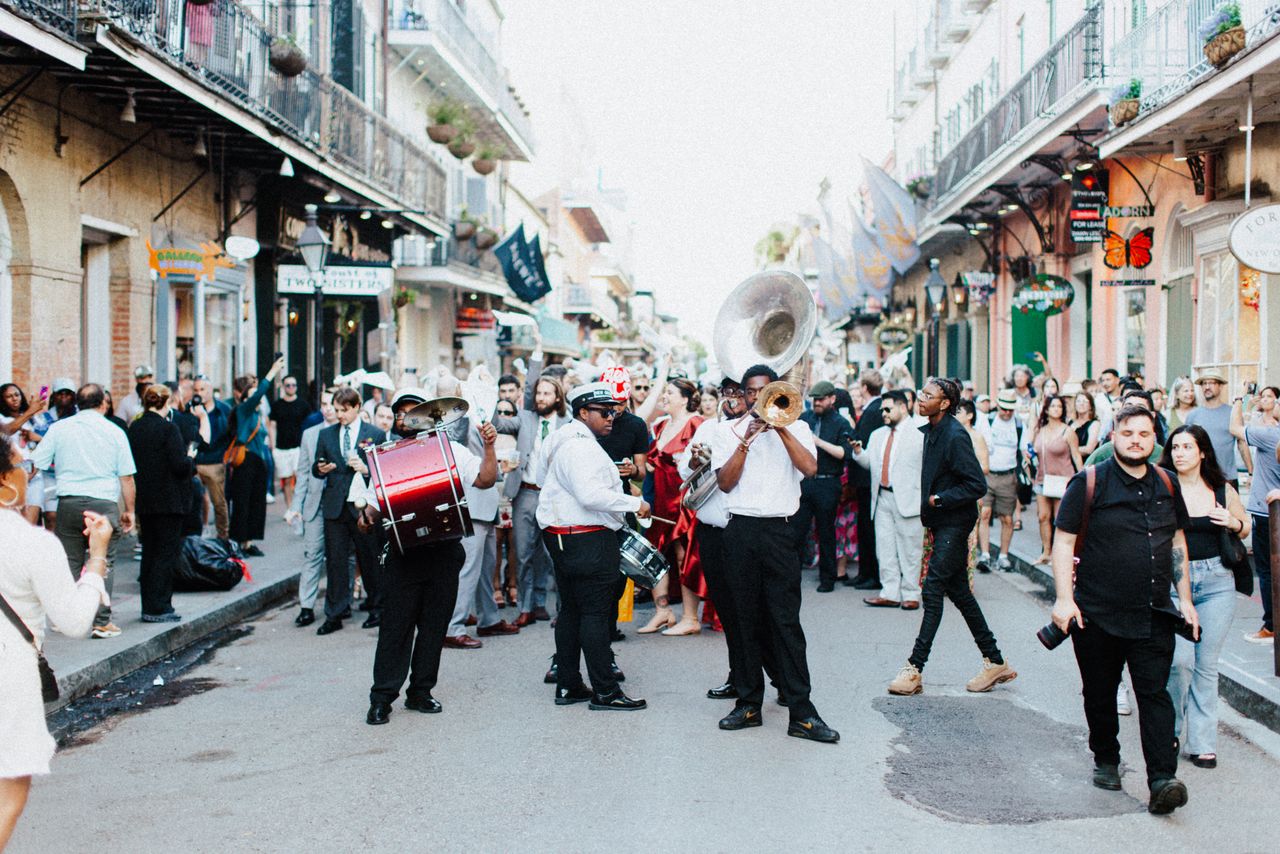
- Carnival and Mardi Gras6 sty – 9 mar (zwykle)Festiwal
- marzec
- St Joseph's Day and Super Sunday15–29 marFestiwal
- kwiecień
- French Quarter Festival5–16 kwi (zwykle)Festiwal
- Jazz Fest20 kwi – 5 maj (zwykle)Festiwal
- maj
- Formosan termite swarms1 maj – 15 cze (zwykle)Zagrożenie
- czerwiec
- Essence Festival of Culture28 cze – 8 lip (zwykle)Festiwal
- Atlantic hurricane season1 cze – 30 lisZagrożenie
- Summer heat and humidity15 cze – 15 wrz (zwykle)Zagrożenie
- lipiec
- Satchmo SummerFest1–2 sieFestiwal
- Independence Day3–5 lipŚwięto
- sierpień
- Southern Decadence28 sie – 8 wrz (zwykle)Festiwal
- październik
- Halloween and Krewe of Boo24–31 paźFestiwal
- grudzień
- Reveillon dinners1–31 gruFestiwal
Nowy Orlean, marzec: tłumy
Jak tłoczno jest w samym miejscu — wakacje szkolne i święta masowe, miesiące oznaczone przez redakcję oraz to, jak bardzo pogoda podbija popyt. Nigdy nie wchodzi do wyniku komfortu.
Szczyt sezonuCarnival and Mardi Gras, Spring break (Stany Zjednoczone)(szacunkowo)
Szczyt sezonuTłocznoSezon przejściowySpokojnie
Warto wiedzieć przed wyjazdem — Nowy Orlean
Prawdziwe doświadczenia z własnych relacji podróżnych, cytowane z linkiem do oryginału.
Jedzenie i picie
A visitor reviewing Bourbon Street directly calls it a tourist trap, describing loud, crowded blocks, cover charges at most live-music bars, and drinks - the Hurricane especially - that are oversized, overly sweet and overpriced relative to quality. Locals interviewed separately roll their eyes at the Hurricane specifically, a drink invented in the 1940s at Pat O'Brien's that's become shorthand among residents for touristy excess rather than a genuine New Orleans cocktail tradition worth seeking out. Posters recommend concrete alternatives just outside the main strip - Chart Room and Bamboula's are cited repeatedly as more affordable, more laid-back bars with a similar French Quarter setting but without the cover charges or aggressive shot-girl sales pitches that define Bourbon Street itself. Posters generally recommend walking through Bourbon Street once for the spectacle and photos, then spending actual drinking time and money a block or two away where the same neighborhood feels calmer and the prices make more sense.
Relacje podróżnych — Nowy Orlean
Co mówią o tym miejscu ci, którzy tam byli — najpierw relacje na cały rok, potem miesiąc po miesiącu.
A local joke has it that New Orleans really does have four seasons: Summer, Hurricane, Christmas, and Mardi Gras. Summer is certainly the longest; for about half the year, from about late April to the start of October, the days are usually hot, or raining, or hot and raining. Combined with the humidity, heat indices hover around during the day and at night throughout the summer. A heat index of during the day and at night is not unheard of on some particularly hot days. Winters are generally short and mild, but subject to occasional cold snaps that may surprise visitors who mistakenly think the city has a year round tropical climate. The high humidity can make the cold snaps feel quite penetrating. Snow is so rare that the occasional light dusting of flakes will make most locals stop what they are doing to stare; they'll excitedly show the phenomenon to local children too young to remember the last time snow visited the city.…
New Orleans forum threads describe January as genuinely unpredictable, with typical highs around 60F and lows near 45F, but posters were emphatic that anywhere from the mid-30s to the 70s is entirely possible depending on the week. High humidity was flagged repeatedly as making even a moderately cool day feel colder than the number suggests, harder to shake off than similar temperatures in a drier climate. On the practical side, Carnival season officially kicks off January 6th, building gradually through the month before the big parades and peak intensity land in February - meaning January visitors catch the early, calmer stretch of the season rather than the full Mardi Gras crush.
February here is mid-sixties by day and mid-forties at night - our 20.4C over 11.4C is those two figures - with a better than even chance of rain and no promise about any of it: regulars remember carnival days near 80F and others below freezing. The line worth carrying is that the damp makes forty degrees feel like thirty, and our felt figures agree, 20C and 9C at 79 percent humidity. Rain totals 117.7mm across just 6.4 days, so eighteen millimetres at a time. Carnival moves with Easter, so look up where it falls before booking; the parades roll in the rain regardless. The record: 7.6 hours of sun, a 21.7 kph wind and AQI 36.
March sits inside what the forum calls one of New Orleans's two best windows — mid-March to mid-May, the other running early October to early December. Expect an average high near 22°C and lows around 15, warm enough that most people are in t-shirts and shorts by day. Hurricane season doesn't begin until mid-to-late June, so March is clear of it entirely. On crowds it's busy without being overwhelming: St Patrick's Day and Easter each bring a parade or two — a small taste of Mardi Gras — but nothing on the scale of Carnival, Jazz Fest or French Quarter Festival.
Perfect, hot, or monsoon is how one regular sums up April here, and our row explains the third word: 174.7mm falls across just 5.5 days, about thirty millimetres a time, so the rain that comes is a wall rather than a shower. The rest of the month is the reason people pick it - 25.8C reading as 27C, nights at 16.7C, and humidity at 75 percent, which is among the lowest this city manages. The other thing April brings is festivals, the French Quarter one mid-month and Jazz Fest at the end, and with them hotel rates that jump for those weekends. A 22.1 kph wind helps. The record: a dew point of 15.6C, 10.1 hours of sun and AQI 43.
New Orleans regulars are candid that September splits into two different months: early September is “mind-numbingly hot and humid with...afternoon thunderstorms,” while late September runs “daily highs in the mid 80s (F)...a bit dryer, both in terms of rain and humidity.” The hurricane conversation stays calm rather than alarmed — this is “the height of hurricane season,” peaking around September 10, but posters note “the chances of it happening the exact date you are there are pretty slim” and recommend trip insurance over cancelling. Our record: 29.5°C days, 24.1°C nights and 11.6 rain days — hot and sticky, matching the early-month read more than the late-month cooldown.
Regulars call this a genuinely fine time to visit, meaningfully cooler and less humid than the July-September stretch, with late October named as arguably the best weather the city sees until late November. Our row backs the pleasant, still-warm read, 28.1C reading as a hot 30C, over 18.9C nights, with 82.8mm of rain across a modest 4.2 days. Regulars are candid the swing within the month can be dramatic - one visitor's Halloween trip saw an 80-degree Fahrenheit day followed immediately by a 60-degree one - and recommend an umbrella or light rain gear on hand regardless, even though the month overall isn't particularly rainy. The record: humidity 75 percent, 9.4 hours of sun, an 18.5 kph wind and AQI 48.
New Orleans-forum threads on November weather describe two different months stitched together: early November running full sun, little rain, mid-70s Fahrenheit and genuinely low humidity, while a cold front or two can roll through bringing cooler, breezy, sometimes wet days, with the back half of the month turning colder still. Crowds follow a similar split - early and mid-November are called minimal, but Thanksgiving weekend draws one of the year's bigger crowds, driven partly by the Bayou Classic football game and its famously rowdy college-age visitors. The record: 21.5C days feeling like 22C, 12.9C nights, 102mm of rain across six days and 7.9 hours of sun - book the first half of the month for the 'full sun, little rain' version posters describe, not the tail end.
Dodaj własną notatkę z karty miejsca na mapie — Nowy Orlean.