Pogoda Hongkong — miesiąc po miesiącu
Hongkong — najlepszy czas na wyjazd to grudzień–luty: 89/100 (grudzień), 21°C i 3 deszczowe dni. Najlepsza pora to zima, grudzień–luty (średnio 86/100).
Najgorszy miesiąc: sierpień, 38/100 — upalnie, ulewnie, parne powietrze. Zobacz: sierpień →
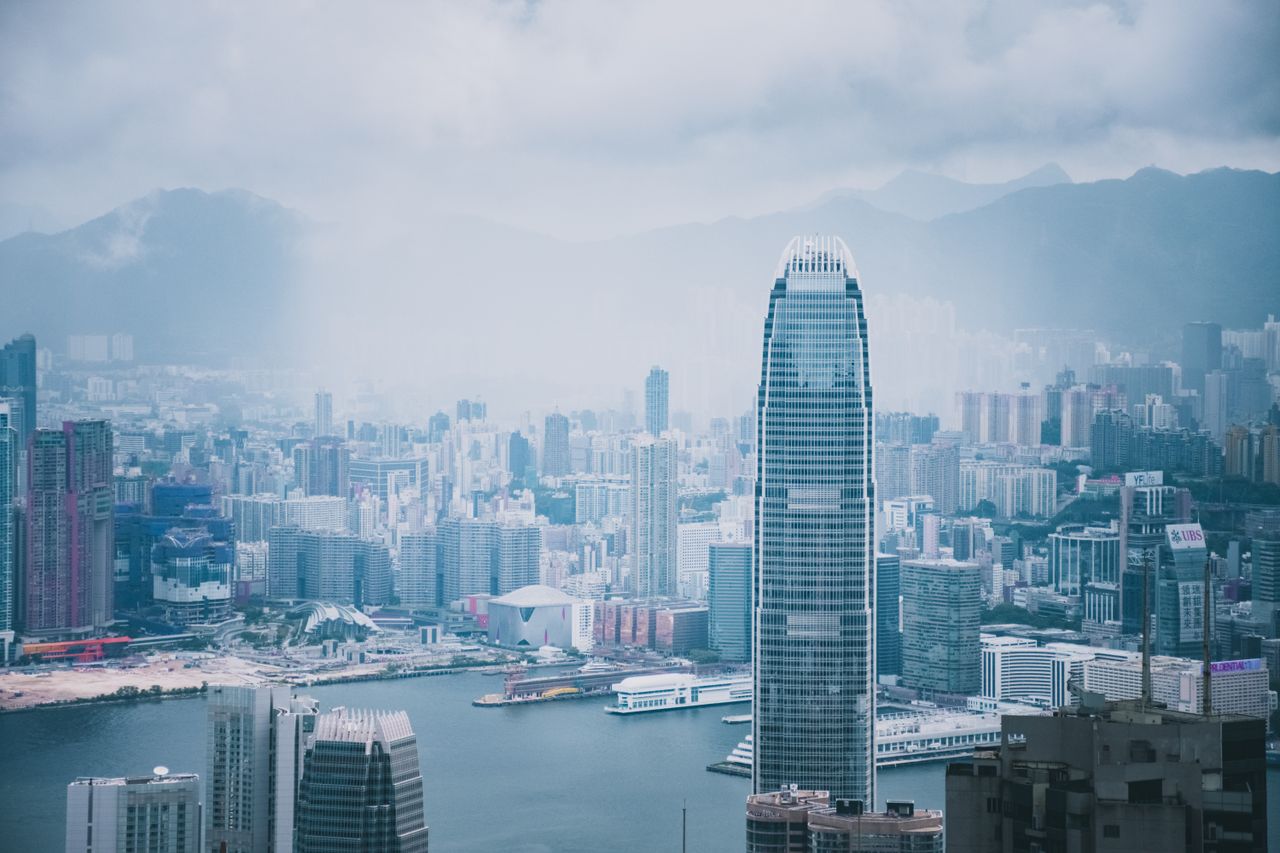
A vertical city of harbour crossings, hill trails and street kitchens, where the sea, the mountains and the towers are all twenty minutes apart.
Aktualizacja: wrzesień 2026 · normy klimatyczne z reanalizy ERA5
Najlepszy sezon: grudzień–luty (średnio 86/100) · najgorzej: sierpień (38/100)
- Dni
- 21°C
- Noce
- 15°C
- Mokre dni
- 3
- Słońce
- 8 h
- Wilgotność
- 67%
- Długość dnia
- 11 h
Hongkong — miesiąc po miesiącu
Wynik komfortu w skali do 100 dla rodzaju podróży, do którego Hongkong nadaje się najlepiej, a do tego średnia maksymalna, deszczowe dni i godziny słońca dziennie z norm klimatycznych oraz to, jak bywa tłoczno.
Jaki jest każdy miesiąc — Hongkong
Pisane przez redakcję SeasonMap na podstawie tego, co naprawdę dzieje się na miejscu — nie ze średnich.
- styczeń
Cool, dry and clear: the best hiking weather of the year, and Chinese New Year (movable, January or February) closes businesses for days.
peakfestival
- luty
Cool and often grey with sea fog. Chinese New Year (movable) brings flower markets, a night parade and fireworks over the harbour.
festival
- marzec
Humidity returns and the hills disappear into cloud as the long misty spring stretch begins.
shoulder
- kwiecień
Humid and wet, with poor visibility across the harbour on many days and trails that are green and slippery.
monsoon
- maj
Hot and humid, and the typhoon season formally opens. The Cheung Chau bun festival (movable, usually May) is worth the ferry.
festivaltyphoon
- czerwiec
The wettest month, with rainstorm warnings and short violent downpours, and dragon boat races (movable, June) in the typhoon shelters.
monsoonfestival
- lipiec
Hot, humid and firmly in typhoon season, when a direct hit shuts the city for a day. The islands and beaches are the escape.
typhoonlow season
- sierpień
The hottest month, humid throughout, and the highest typhoon risk of the year.
typhoonlow season
- wrzesień
Still hot and stormy, and Mid-Autumn (movable, September or October) brings lanterns and the Tai Hang fire dragon.
festivaltyphoon
- październik
The heat breaks in the middle of the month and the good half of the year starts: dry, clear and made for the hills.
peak
- listopad
The best month here: dry, mild, clear air and the hiking season at its height.
peak
- grudzień
Cool and dry, with light shows over the harbour, decorated towers and cold snaps that catch visitors out.
peakfestival
Co się dzieje przez cały rok — Hongkong
Festiwale, spektakle natury, święta i sezony, na które warto uważać — wybrane i ze źródłami. Szczegóły są na stronach poszczególnych miesięcy.
- styczeń
- Hong Kong Marathon25 sty – 25 lut (zwykle)Festiwal
- Chinese New Year17–19 lutŚwięto
- luty
- Sea fog season15 lut – 30 kwi (zwykle)Sezon
- marzec
- Art Basel Hong Kong20 mar – 1 kwi (zwykle)Festiwal
- Hong Kong Sevens17–19 kwiFestiwal
- kwiecień
- Cheung Chau Bun Festival21–25 majFestiwal
- Ching Ming and hill fires2–8 kwi (zwykle)Święto
- maj
- Tuen Ng dragon boat races19 czeFestiwal
- Typhoon season1 maj – 30 lisZagrożenie
- lipiec
- Hong Kong Book Fair15–25 lip (zwykle)Festiwal
- sierpień
- Yu Lan, the ghost month5 sie – 15 wrz (zwykle)Festiwal
- wrzesień
- Mid-Autumn and the fire dragon25–27 wrzFestiwal
- październik
- Dry hiking season1 paź – 31 gruSezon
Hongkong, grudzień: tłumy
Jak tłoczno jest w samym miejscu — wakacje szkolne i święta masowe, miesiące oznaczone przez redakcję oraz to, jak bardzo pogoda podbija popyt. Nigdy nie wchodzi do wyniku komfortu.
Szczyt sezonuszczytowy miesiąc według redakcji, Christmas and New Year holidays (Hongkong), ferie szkolne na 5 rynkach, które je zapełniają
Szczyt sezonuTłocznoSezon przejściowySpokojnie
Warto wiedzieć przed wyjazdem — Hongkong
Prawdziwe doświadczenia z własnych relacji podróżnych, cytowane z linkiem do oryginału.
Poruszanie się
A traveler describes his hotel providing Octopus cards preloaded with HK$50 for him and his wife, which they then topped up and used extensively across the MTR system - eliminating the need to carry exact change for every ride and shaving a small amount off each fare compared to buying single tickets. He notes the card works seamlessly for buses, trams and even convenience-store purchases beyond just the subway, describing it as functionally essential rather than optional for getting around efficiently. His practical tip for other travelers: keep the card topped up proactively rather than letting the balance run low, since a card that goes negative at a gate causes a genuinely inconvenient hold-up rather than a simple decline.
Relacje podróżnych — Hongkong
Co mówią o tym miejscu ci, którzy tam byli — najpierw relacje na cały rok, potem miesiąc po miesiącu.
Hong Kong has a humid subtropical climate. Summers are usually hot and humid, lasting from June to September, with average highs of 32°C and lows of 27°C. Some particularly hot days can see summer temperatures climb upwards to 34°C and 29°C at night. The humidity can make the summer temperatures feel much hotter, the apparent feels like temperature is typically around 38°C during the day and 31°C at night, but cases of extreme humidity and heat can make it feel like 46°C and 38°C at night. Such high feels like temperatures only need an air temperature of 36°C with a dew point of 27°C. The area, like most of southern China, is affected by typhoons, which usually occur between June and September, sometimes as late as October. They seldom halt local business for more than a day. Winters in Hong Kong are generally very mild, with temperatures usually in the range 10°C. Christmas in Hong Kong is warm compared to European countries.…
Hong Kong forum threads describe January as one of the coldest months by local standards but genuinely pleasant overall - typical daytime temperatures in the mid-to-high teens Celsius rising toward 20C, low humidity, and often sunny, dry conditions with little chance of rain. Posters noted an occasional cold front can drop temperatures suddenly into single digits, though this is the exception rather than the norm. A light jacket for outdoors plus something extra for aggressively air-conditioned indoor spaces was the standard packing tip - one visitor specifically noted friends from tropical Singapore found even mild Hong Kong January weather genuinely cold by comparison.
Hong Kong-forum threads on February split on one detail: the general climate is cool and dry, but when Chinese New Year lands in the month the weather is often described as cool and damp, closer to foggy than crisp. Crowds follow the lunar calendar more than the thermometer - the first day of the new year is called a 'very dead city' with museums and markets shut, while day three or four brings a crowded city as everyone comes back out. Outside CNY week, posters say to expect no crazy waits and zero typhoon risk this month. The record: 19.9C days, 14.9C nights, 34mm of rain across 6.2 days, 7.5 hours of sun. What the forums undersell: AQI runs 96 here, the second-haziest month on the calendar after December.
March here is cool by local standards - 15 to 25C is the range regulars quote and our row sits at 22.5C over 17.9C - with showers and sun in roughly equal measure. The thing they warn about is fog. Some March days it is thick enough that you cannot see across the street, and crucially it is worse with height and near the water than it is downtown, so the Peak and the harbour views are the part of the trip to keep flexible. Our 7.8 hours of sun inside 12 of daylight is that greyness counted. Humidity is already 81 percent. Layers rather than a coat; a long sleeve over a t-shirt is their formula. The record: 73.5mm of rain across 10.2 days and AQI 98.
April's problem in Hong Kong isn't heat, it's visibility. "For humidity it is not too bad in terms of comfort, but fogs can be pretty heavy at times to obstruct the view" — which matters if the Peak, the cable car or an observation wheel is on your list, and in bad cases the Macau ferries get disrupted. Temperatures are described as overnight lows in the high teens and highs in the low-to-mid twenties, with the caveat that a warm snap can push into the thirties or a cold snap can drop it to 15°C in late March. Posters disagree on packing: one says winter clothing simply isn't needed, another says bring "at least a thick jumper or so. Just in case." Both agree you need a layer indoors for the air conditioning. Note the Peak and Ngong Ping run a few degrees below the city.
Hong Kong-forum threads on typhoon season confirm August sits at the wettest, most humid stretch of the year, weather closely tracking July with steamy conditions and short, intense afternoon bursts rather than a long, steady soak. Posters run the actual odds for anyone worried: over decades of records, a serious storm signal has been called on average only a handful of days across the entire month, and even a direct hit rarely lasts longer than about half a day before easing. Regulars call the humidity, not any single storm, the real daily challenge - light, breathable clothing and frequent breaks in air-conditioned malls or the MTR are the standing advice regardless of the sky. The record: 31.2C days feeling like a punishing 38C, 26.7C nights, an extraordinarily high 339mm across 26.1 days, 88 percent humidity, a 28.8C sea and an unhealthy 75 AQI.
Hong Kong's October threads make it the pick of the year: days around 27°C, and from mid-month the drier northerly air finally arrives and breaks the humidity. Regulars add two honest caveats — that same wind shift means the sunniest days are often the smoggiest, and hotel rates run high because October is convention season. Typhoons are possible but unlikely this late; ordinary rain is the more realistic disruption.
Hong Kong-forum threads on December packing are consistent: T-shirt weather by day, a light jacket or jumper for evenings and for indoor air conditioning that regulars warn runs full blast regardless of season, and one of the driest stretches of the year so an umbrella is a just-in-case rather than a must. The record matches: 20.5C days feeling like 19C, 15.3C nights, just 14mm total across under three days, and eight hours of sun. What the forum posts don't dwell on but the data does: December's AQI runs 112, the hazier end of the city's year, so it's a comfortable month to be outside but not always a clear one.
Dodaj własną notatkę z karty miejsca na mapie — Hongkong.