Cuaca Nosy Be per bulan
Waktu terbaik mengunjungi Nosy Be adalah Juni sampai Agustus — 94/100 di Juli, 29°C dan 11 hari hujan. Musim terbaiknya adalah musim kemarau, April sampai November (rata-rata 87/100).
Bulan terburuknya adalah Januari dengan 58/100 — panas menyengat, basah kuyup, udara bersih. Lihat Januari →
Diperbarui September 2026 · normal iklim dari reanalisis ERA5
Merencanakan perjalanan yang lebih panjang? Waktu terbaik mengunjungi Madagaskar →
Musim terbaik: April sampai November (rata-rata 87/100) · terburuk Januari (58/100)
- Siang
- 29°C
- Malam
- 18°C
- Hari hujan
- 11
- Matahari
- 10.2 h
- Kelembapan
- 71%
- Jam siang
- 11 h
Nosy Be, bulan demi bulan
Skor kenyamanan dari 100 untuk jenis perjalanan yang paling cocok di Nosy Be, suhu tertinggi rata-rata, hari hujan dan jam matahari per hari dari normal iklim, serta seberapa ramai biasanya.
Agenda di Nosy Be sepanjang tahun
Festival, fenomena alam, hari libur, dan musim yang perlu diwaspadai — dikurasi dan bersumber jelas. Detailnya ada di halaman tiap bulan.
- Mei
- Festival Donia20 Mei – 15 Jun (biasanya)Festival
- The dry season1 Mei – 15 Nov (biasanya)Musim
- Juni
- Independence Day25–26 JunLibur
- Juli
- Humpback whales1 Jul – 30 Sep (biasanya)Alam
- September
- Whale sharks1 Sep – 15 Des (biasanya)Alam
- Desember
- Festive season peak15 Des – 10 Jan (biasanya)Libur
- Cyclone season15 Des – 31 Mar (biasanya)Bahaya
- The hot, wet months1 Des – 31 Mar (biasanya)Musim
Keramaian di Nosy Be pada Juli
Seberapa ramai tempatnya sendiri — libur sekolah dan libur massal, bulan-bulan yang ditandai editor, dan seberapa diburu tempat itu karena cuacanya. Tidak pernah menjadi bagian dari skor kenyamanan.
RamaiThe dry season, libur sekolah di 5 pasar utama yang memenuhinya(perkiraan)
Puncak keramaianRamaiMusim peralihanSepi
Yang perlu diketahui sebelum ke Nosy Be
Pengalaman nyata dari tulisan para pelancong sendiri, dikutip dengan tautan ke aslinya.
practical
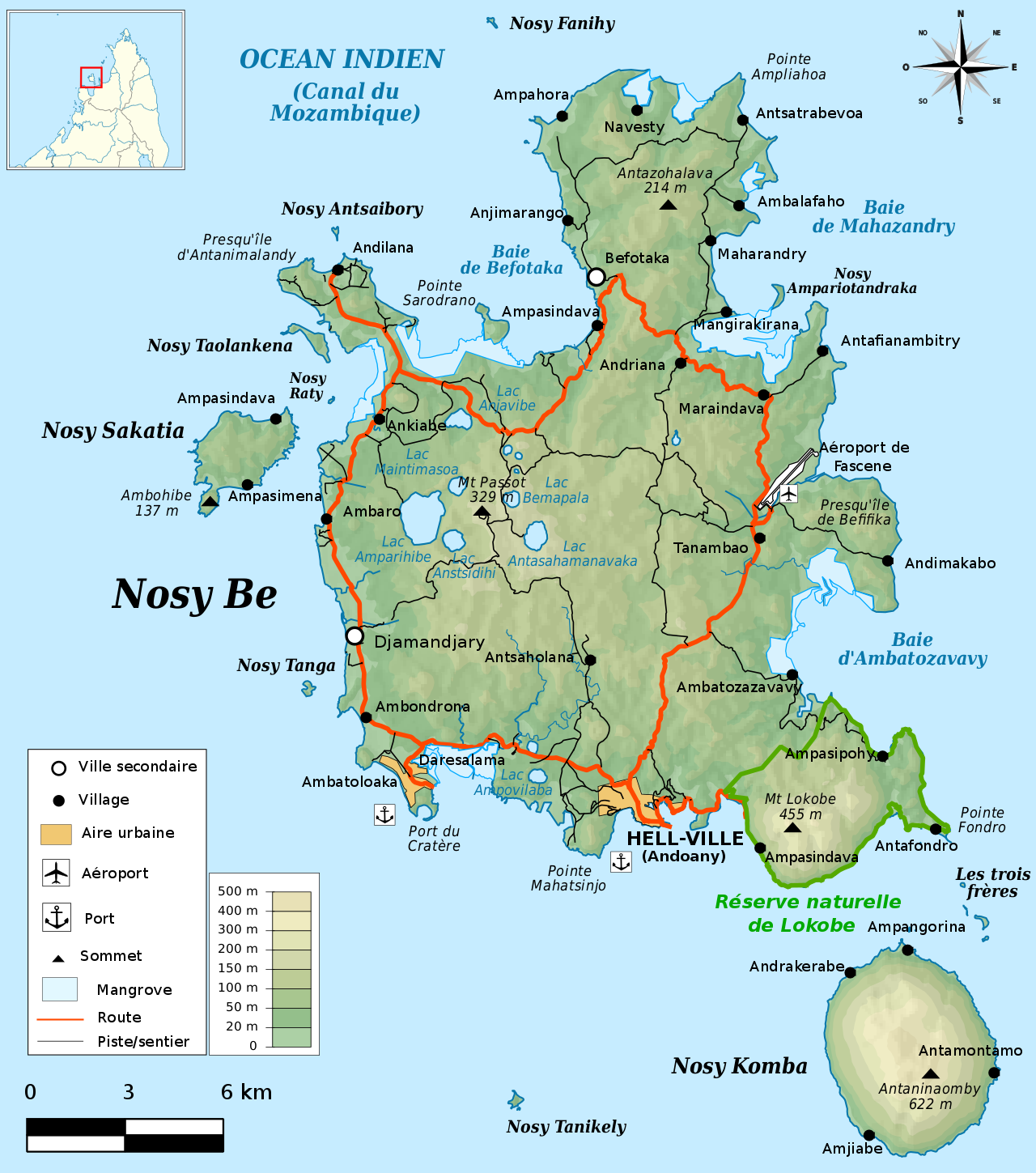
Andilana Beach lived up to its reputation as the island's best, gently sloping sand and calm water that made it easy swimming even for the weaker swimmer in our group, and its west-facing position gave us a genuinely spectacular sunset on our last evening. We brought our own snorkel gear after reading that rental options can be limited, which paid off at a reef just offshore. When Nosy Be itself started feeling a bit too developed and busy for our taste, a short boat ride out to Nosy Komba gave us a quieter village and beach with barely another tourist in sight. Flip-flops and a beach towel covered most of what we actually needed day to day.
Catatan pelancong tentang Nosy Be
Kata mereka yang pernah ke sana — catatan sepanjang tahun lebih dulu, lalu bulan demi bulan.
Regulars are candid that sources disagree on exactly when the wet season ends here - some say after March, others say it can run into the first couple weeks of this month - and even once it's officially the dry season's start, regulars still recommend packing a jacket since rain on some days is likely unless a visitor gets genuinely lucky. Our row backs the still-wet transition, 54.3mm of rain across 14.9 days, alongside real heat, 30.9C reading as a hot 35C at 76 percent humidity, over 21.3C nights. Regulars are consistent the dry season proper, May through October, is still the favoured window overall despite this rough patch at its start. The sea holds a very warm 30.2C. The record: 10.5 hours of sun, a 13.8 kph wind and one of the cleanest air readings in this project, AQI 18.
Nosy Be's forum calls June one of the cooler, drier months in Madagascar — regulars say the water is swimmable but comfort varies by how used you are to warmer seas, since it's noticeably less balmy than the peak of summer. It also marks the start of the island's high season, so booking ahead is worth it.
June and July are Madagascar's cool, dry months - roughly 16 to 26C nationally, which on Nosy Be means warm days and genuinely cooler nights, our row putting them at 18.4C against a 29.2C day. July opens the humpback season, which runs to about September, though the forum is honest that Sainte Marie on the other coast is the better bet for whales. The whale sharks Nosy Be is known for are not here yet: they come to feed from September to December, with October and November the peak. July is the diving and the dry weather rather than the big animals. The record: 11.2 precipitation days carrying 36.1mm, humidity 71 percent, 10.2 hours of sun and a 27.6C sea.
August is the middle of the Madagascan winter and regulars call it the coolest and driest month, with the west coast here warmer than Sainte Marie on the other side. Our 15.5 precipitation days look wrong against that until you see the 47.7mm behind them - three millimetres a wet day, showers rather than rain. On wildlife they draw a line worth knowing: humpbacks are around Madagascar now, but the whale sharks that feed off Nosy Be run roughly September to December with October and November the peak, so August catches only the very start of it. Come now for the whales and the weather; come in October for the sharks. The record: 29.2C over 18.6C reading as 32C, humidity 72 percent, 10.6 hours of sun, a 27.8C sea and AQI 24.
September is the threshold of the whale shark season rather than the season itself. The sharks feed off Nosy Be from September to December with the peak in October and November, and regulars are more precise than that: the excursions themselves generally start at the end of September, so a trip earlier in the month may find nothing running. If the sharks are the reason for the trip, October or November is the answer. Our row's 18.6 precipitation days spread only 61.3mm between them, three millimetres a day, under 29.8C that reads as 33C with a 27.9C sea. Nights are cool for the tropics at 19.6C. The record: humidity 72 percent, 11 hours of sun, a 19.8 kph wind and AQI 25.
Regulars are specific this falls near the tail end of the broader Madagascar dry season, April through October, one visitor calling October a genuinely perfect stretch for travel across much of the country, though by late October and into November the heat itself becomes noticeably more intense. Our row backs that hot, genuinely wet read, 30.7C reading as a scorching 35C, over 21.6C nights feeling 24C, with a substantial 92.6mm of rain across 21.4 days and humidity at 74 percent. Regulars are consistent Nosy Be and its nearby islands, including Nosy Komba and Nosy Sakatia, remain a popular base with Ambatoloaka a convenient spot to arrange local boat excursions. Real showers stay a genuine part of the picture here even this late in the dry season. The sea sits at a bath-warm 29.1C. The record: 11.1 hours of sun, an 18.7 kph wind and AQI 27.
Forum posters describe late November into December as the start of Nosy Be's rainy season, with days often staying sunny and warm (typically 26-28C) while rain shows up mainly in the evening as short, heavy showers rather than sustained all-day rain. Posters are consistent that rainy season here doesn't mean constant rain everywhere - plenty of sunshine still gets through, and activities like snorkeling and diving remain workable with flexible planning around the showers. Posters do flag a real, more serious risk worth taking seriously: December weather can turn cyclonic at times, a genuine planning consideration beyond the routine afternoon thunderstorms. Posters generally recommend staying weather-flexible and checking forecasts for tropical system activity specifically during a December visit.
Tambahkan catatan Anda dari kartu Nosy Be di peta.