लेह का महीने-दर-महीने मौसम
लेह घूमने का सबसे अच्छा समय जुलाई से सितंबर तक है — अगस्त में 93/100, 21°C और 14 बारिश वाले दिन। सबसे अच्छा सीज़न गर्मी है, जून से अगस्त तक (88/100 औसत)।
सबसे कमज़ोर महीना जनवरी है, 37/100 पर — कड़ाके की ठंड, सूखे दिन, साफ़ हवा। जनवरी देखें →
अपडेट: सितंबर 2026 · ERA5 रीऐनालिसिस से जलवायु औसत
पूरी ट्रिप की योजना बना रहे हैं? भारत घूमने का सबसे अच्छा समय →
सबसे अच्छा सीज़न: जून से अगस्त तक (88/100 औसत) · सबसे कमज़ोर जनवरी (37/100)
- दिन
- 21°C
- रातें
- 11°C
- गीले दिन
- 14
- धूप
- 11.5 h
- नमी
- 51%
- दिन की रोशनी
- 13 h
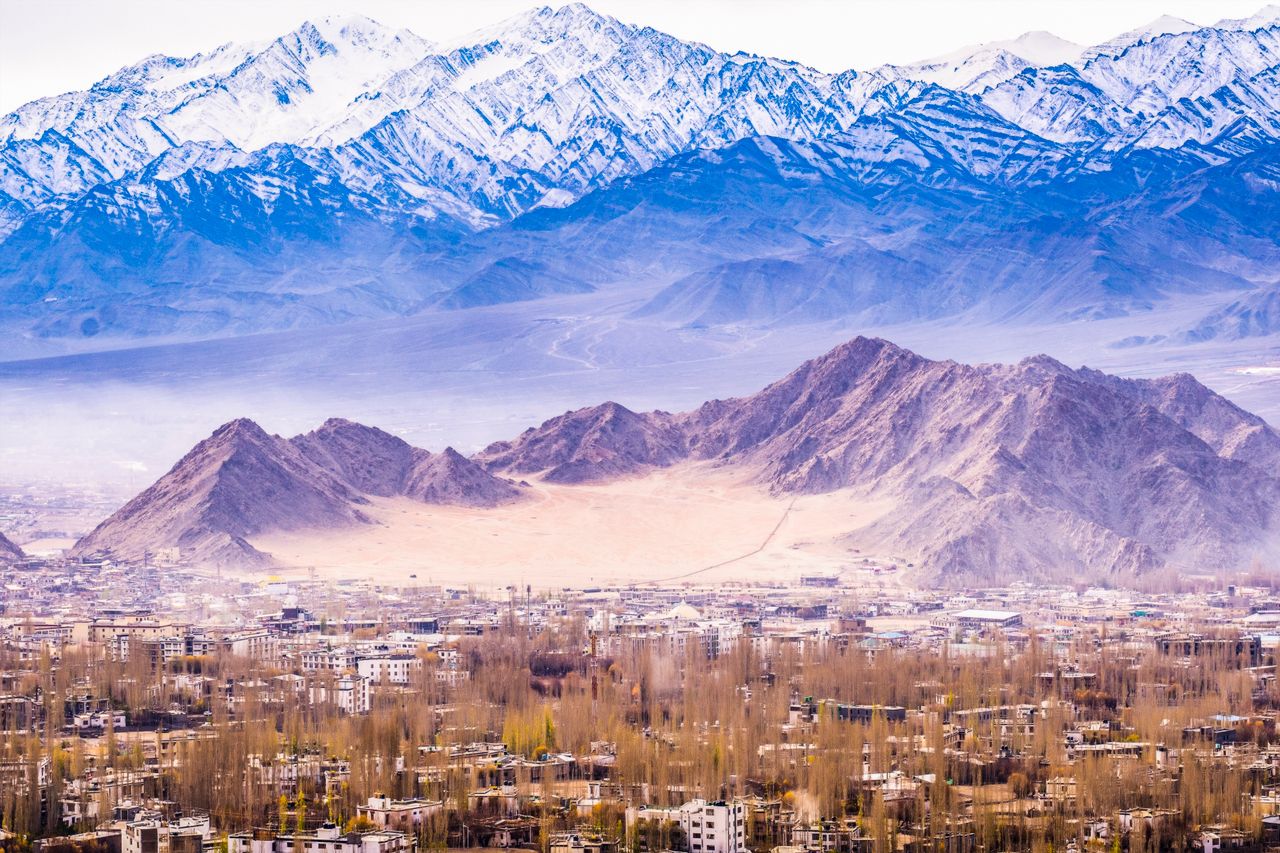
लेह, महीने-दर-महीने
जिस तरह की ट्रिप के लिए लेह सबसे अच्छी है, उसके लिए 100 में से आराम स्कोर, और जलवायु औसत से औसत अधिकतम तापमान, बारिश वाले दिन और रोज़ाना धूप के घंटे — साथ में यहाँ कितनी भीड़ रहती है।
लेह में साल भर क्या-क्या होता है
फ़ेस्टिवल, कुदरती नज़ारे, छुट्टियाँ और वे सीज़न जिनका ध्यान रखना है — क्यूरेटेड और स्रोत सहित। पूरा ब्योरा हर महीने के पेज पर।
- जनवरी
- Chadar trek on the frozen Zanskar15 जन – 20 फ़र (आमतौर पर)खुलना
- Inner Line permits for the valleys1 जन – 31 दिसनियम
- फ़रवरी
- Dosmoche at Leh Palace10 फ़र – 5 मार्च (आमतौर पर)फ़ेस्टिवल
- मार्च
- Srinagar road reopens20 मार्च – 15 मई (आमतौर पर)खुलना
- अप्रैल
- Apricot blossom in the villages5 अप्रैल – 10 मई (आमतौर पर)कुदरत
- मई
- Manali highway season25 मई – 15 नव (आमतौर पर)खुलना
- जून
- Hemis Festival24–25 जूनफ़ेस्टिवल
- Trekking and high-pass season15 जून – 15 सित (आमतौर पर)सीज़न
- सितंबर
- Ladakh Marathon5–20 सित (आमतौर पर)फ़ेस्टिवल
- दिसंबर
- Ladakhi Losar1 दिस – 10 जन (आमतौर पर)फ़ेस्टिवल
- Pangong and the lakes freeze20 दिस – 10 मार्च (आमतौर पर)कुदरत
अगस्त में लेह में भीड़
जगह ख़ुद कितनी व्यस्त रहती है — स्कूल और बड़ी छुट्टियाँ, वे महीने जिन्हें एक एडिटर ने चिह्नित किया, और मौसम उन्हें कितना लोकप्रिय बना देता है। यह कभी आराम स्कोर का हिस्सा नहीं होता।
व्यस्तTrekking and high-pass season, यहाँ भीड़ लाने वाले 4 बाज़ारों में स्कूल की छुट्टियाँ(अनुमानित)
पीक भीड़व्यस्तशोल्डर सीज़नशांत
लेह जाने से पहले जान लें
यात्रियों के अपने लिखे हुए से असली अनुभव, मूल लेख के लिंक के साथ।
सेहत
Everyone told us to do nothing on day one in Leh and we actually listened, staying completely idle near our guesthouse rather than sightseeing, since the town itself sits above 10,000 feet and altitude sickness doesn't care how fit you are. We drank three to four litres of water a day and cut out alcohol entirely for the first 48 hours. When we did start moving to higher passes, we followed the rule of not gaining more than a few hundred metres of sleeping elevation a day and building in a rest day after any bigger climb. A mild headache on day two was the only symptom either of us got, and it passed once we slowed down and hydrated more.
लेह पर यात्रियों के नोट्स
जो लोग वहाँ हो आए हैं वे जगह के बारे में क्या कहते हैं — पहले साल भर वाले नोट्स, फिर महीने-दर-महीने।
Leh-forum threads on a January visit describe conditions as genuinely sub-zero around the clock, posters naming the first two weeks as often the coldest stretch, sometimes dropping near minus twenty. Regulars call the frozen Zanskar river a real highlight, several posters naming the Chadar trek over the ice as a genuine January and February specialty unavailable any other time. Posters call most shops and restaurants genuinely closed for the season, several regulars naming air travel as the only real way in and out. Regulars call locally run guesthouses still genuinely available despite the closures, several threads naming this a real way to experience an authentically quiet Ladakh with very few other travelers. Posters recommend May through September instead if sightseeing variety matters more, several regulars calling this the honest tradeoff for January. The record: -10.7C days, -21.2C nights, 27.3mm across over 9 days and 63 percent humidity.
Forum posters describe February daytime temperatures hovering right around freezing, dropping to roughly -15C at night by late in the month - genuinely harsh winter conditions. The Manali-Leh road is fully closed this time of year, so flights are the only practical way in, with multiple daily Delhi-Leh connections running year-round; posters caution that winter weather can still ground flights, so buffer days are worth building into any itinerary in case of a delay or cancellation. Within Ladakh itself, roads generally stay open, though the high Khardung La and Chang La passes can close for a few days at a time. The clear draw for a February visit specifically: posters name it the best window for the famous Chadar trek, walked directly on the frozen Zanskar river.
Leh-forum threads on a mid-April visit describe the normal travel season as genuinely just getting underway, posters calling most high mountain passes still closed with the main opening typically the last week of April or first week of May. Regulars call the Manali-Leh route effectively unavailable this early, having opened in April only once in the past decade. Posters call flying in the practical option for an April trip, road access from outside the region considered unreliable this time of year. Regulars call food choices genuinely limited until the roads open, fresh vegetables and fruit scarce until supply routes reconnect. Posters recommend real cold-weather layers regardless of a sunny midday, nights here still capable of dropping well below freezing in April. The record: 1.3C days feeling like -3C, -10.7C nights, 31.6mm across over 9 days and 58 percent humidity.
Leh-forum threads on July confirm this is arguably the warmest, most reliable month of the year here, the Manali-Leh and Srinagar-Leh highways both fully open and peak trekking season genuinely underway. Posters describe daytime temperatures as pleasant and inviting, though the sharp overnight drop typical of high-altitude desert remains constant regardless of the afternoon, real cold-weather layers standing advice for any evening out. Regulars are consistent the heavier precipitation risk doesn't build until the very end of July into August, so most of the month runs comparatively settled. Posters call July and August together the peak season for keen trekkers, both highways reliably open and most routes accessible. Altitude is the real ongoing risk regardless of calendar, several posters noting fit travelers affected even in peak summer. The record: 20.7C days feeling like 20C, 9.5C nights, 55 percent humidity, 12.1 hours of sun and an unhealthy 91 AQI.
Leh's forum calls August genuinely pleasant in town — sunny days, little rain locally — while flagging that the real risk sits on the roads in, where monsoon landslides around Manali and Srinagar can strand an itinerary for a day or two. Regulars recommend building slack into any overland plan.
September is the month Leh-forum regulars name for anyone who wants Ladakh without the peak: the last of the tourist season, quieter than June to August, and with hotel and taxi rates coming down. The weather they describe is like May again - roughly 20 to 22C in the day, chilly in the evening, sun most of the time. The high passes, Khardung La and Chang La, are open all year and only shut briefly in bad weather; the real September risk is an early snowfall after mid-month, which mostly matters for the Manali-Leh highway. From mid-September you may see the first dusting on Stok Kangri and the passes. The record: 17.1C days, 5.8C nights, 8.4 precipitation days, 8.9cm of snow, 11 hours of sun and humidity 44 percent.
Leh-forum threads on October weather are consistent conditions run genuinely cool and dry, sunny days with cloudless skies typical though temperatures drop off sharply the moment the sun goes down. Posters call daytime conditions comfortable enough for a t-shirt during a walk or an easier day hike, evenings a completely different story requiring real cold-weather layers. Regulars describe higher spots like Pangong and Tso Moriri as capable of dipping below freezing during the day, elevation a real factor beyond the town forecast. Posters recommend visiting earlier in October, cafes and guesthouses in Changspa already starting to close as the season winds down. Regulars call a first accumulation typically arriving around the last week of October, though timing is never fully predictable. Posters recommend layering regardless of how mild the town center feels midday. The record: 7.1C days feeling like 4C, -4.8C nights, a notably high 10.5cm of fresh accumulation and 47 percent humidity.
Leh-forum threads on a November visit describe conditions as genuinely cold, posters calling daytime readings hovering near or just above freezing with nights dropping considerably further below. Regulars call most hotels closed for the season by November, though a handful of guesthouses and a few hotels stay open for anyone still passing through. Posters call the seasonal tent camps at Pangong Tso the main closure, the lake itself still reachable once those wrap up. Regulars call roads within Ladakh generally staying open year-round, snowfall rarely reaching the heartland along the Indus. Posters describe the Manali-Leh road as closing earlier, the Rohtang and Baralacha La passes shutting well before November arrives. Regulars recommend real expedition-grade cold-weather layers regardless of activity, the thin, dry air here adding a real bite beyond what the numbers suggest. The record: -1.6C days feeling like -5C, -14C nights, 17.4mm across over 6 days and 55 percent humidity.
मैप पर लेह के कार्ड से अपना नोट जोड़ें।