מזג האוויר בצ'יאנג מאי לפי חודשים
הזמן הטוב ביותר לבקר בצ'יאנג מאי הוא דצמבר–פברואר — 87/100 בינואר, 30°C ויומיים גשומים. העונה הטובה ביותר היא עונת היובש, נובמבר–אפריל (74/100 בממוצע).
החודש החלש ביותר הוא אוגוסט, עם 46/100 — מהביל, שטוף גשם, אוויר נקי. לראות את אוגוסט →
A moated northern town in a mountain valley, with temples, food markets and hill country around it, and one seriously bad month for the air.
עודכן ספטמבר 2026 · נורמלים אקלימיים מניתוח חוזר ERA5
מתכננים את הטיול הגדול? הזמן הטוב ביותר לבקר בתאילנד →
העונה הטובה ביותר: נובמבר–אפריל (74/100 בממוצע) · הכי חלש באוגוסט (46/100)
- ימים
- 30°C
- לילות
- 16°C
- ימים גשומים
- 2
- שמש
- 9.8 h
- לחות
- 68%
- אור יום
- 11 h
צ'יאנג מאי, חודש אחר חודש
ציון נוחות מתוך 100 לסוג הטיול שצ'יאנג מאי הכי מתאים לו, המקסימום הממוצע, ימים גשומים ושעות שמש ביום מתוך הנורמלים האקלימיים, וכמה עמוס שם בדרך כלל.
איך נראה כל חודש בצ'יאנג מאי
נכתב על ידי העורכים של SeasonMap ממה שבאמת קורה בשטח — לא מהממוצעים.
- ינואר
The best month: cool mornings, warm dry afternoons and clear air before the burning starts.
peak
- פברואר
Warm and dry, with the Flower Festival taking over the old town on the first weekend and haze starting to build.
festivalsmoke
- מרץ
Burning season. Smoke from agricultural fires fills the valley, and the city regularly records some of the worst air quality in the world.
smokelow season
- אפריל
Smoky at the start, then the hottest weeks of the year. Songkran from 13 to 15 April is at its most serious here, around the moat.
festivalsmokepeak
- מאי
The first monsoon rain clears the air and the valley greens. A good month, and much cheaper than the season.
monsoonshoulder
- יוני
Wet season, but in short heavy bursts. Green, quiet and comfortable between the storms.
monsoonlow season
- יולי
Warm and wet, with the rice going into the terraces on the valley floor below the hills.
monsoonlow season
- אוגוסט
One of the wettest and greenest months. Waterfalls are full and the hill roads can be difficult.
monsoonlow season
- ספטמבר
The wettest month and the quietest. The countryside is saturated and the rivers run high.
monsoonlow season
- אוקטובר
The rain ends during the month and the air is at its cleanest of the year, with the rice turning gold in the valley.
harvestshoulder
- נובמבר
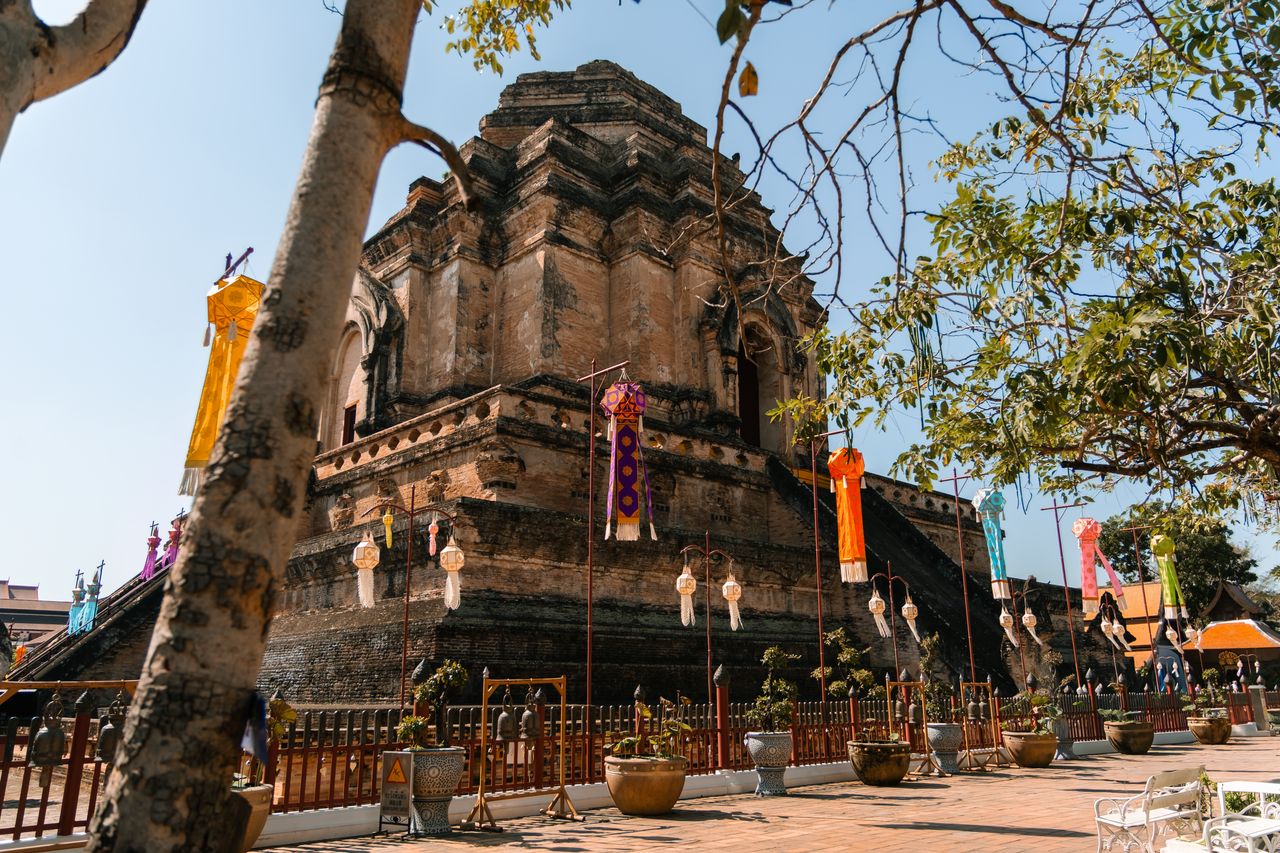
Loy Krathong and Yi Peng (movable, November) send lanterns and floats across the town: the busiest week of its year.
festivalpeak
- דצמבר
Cool, dry and clear, with genuinely cold nights up in the hills and the season at its peak.
peak
מה קורה בצ'יאנג מאי לאורך השנה
פסטיבלים, מופעי טבע, חגים והעונות שכדאי לשים לב אליהן — נבחרים ומגובים במקורות. הפירוט נמצא בעמודי החודשים.
- ינואר
- Bo Sang Umbrella Festival15–25 בינואר (בדרך כלל)פסטיבל
- פברואר
- Chiang Mai Flower Festival13–15 בפברוארפסטיבל
- Burning season1 בפברואר – 20 באפריל (בדרך כלל)סיכון
- אפריל
- Songkran13–15 באפרילפסטיבל
- מאי
- Inthakin city pillar festival15 במאי – 12 ביוני (בדרך כלל)פסטיבל
- Southwest monsoon15 במאי – 15 באוקטובר (בדרך כלל)עונה
- אוגוסט
- Waterfalls at full flow1 באוגוסט – 15 באוקטובר (בדרך כלל)טבע
- אוקטובר
- Rice harvest in the valley15 באוקטובר – 30 בנובמבר (בדרך כלל)טבע
- נובמבר
- Loi Krathong24–25 בנובמברפסטיבל
- Yi Peng24–25 בנובמברפסטיבל
- Lantern-night flight changes23–26 בנובמברכלל
- דצמבר
- Wild Himalayan cherry on the hills20 בדצמבר – 31 בינואר (בדרך כלל)טבע
- Christmas and New Year peak18 בדצמבר – 5 בינוארחג
עומס בצ'יאנג מאי בינואר
כמה עמוס המקום עצמו — חופשות בית ספר וחגים המוניים, החודשים שעורך סימן, וכמה מזג האוויר הופך אותם למבוקשים. אף פעם לא חלק מציון הנוחות.
עומס שיאחודש השיא לפי העורכים, Christmas and New Year peak, חופשות בית ספר ב-6 מהשווקים שממלאים אותו
עומס שיאעמוסעונת בינייםשקט
כדאי לדעת לפני שנוסעים לצ'יאנג מאי
חוויות אמיתיות מתוך הכתבות של מטיילים, מצוטטות עם קישור למקור.
חיות בר
A traveler researching elephant camps around Chiang Mai describes discovering that many tourist-facing operations look more like circuses with trained animals than genuine sanctuaries, despite marketing themselves as ethical - a distinction that isn't obvious from the outside and requires real research before booking. She specifically looked for camps with no riding, no forced tricks, and visible hands-off caretaker relationships as her filter, ultimately choosing a smaller operation over the biggest, most heavily advertised ones precisely because the staff-to-elephant relationship seemed more genuine on closer inspection. Separately, she describes bargaining at Chiang Mai's night markets as expected and even enjoyable when kept lighthearted - starting with a smile and greeting, then negotiating down roughly 20-30% from the initial asking price, with the understanding that you're expected to actually buy once a fair price is reached rather than haggling purely for sport. Posters generally recommend researching a specific elephant camp's actual practices in detail rather than trusting 'sanctuary' branding alone, since the term isn't regulated or verified.
הערות מטיילים על צ'יאנג מאי
מה אומרים אנשים שהיו שם — קודם ההערות של כל השנה, ואחר כך חודש אחר חודש.
The 'burning season' (February~April) causes severe smog due to agricultural fires. Air quality often reaches hazardous levels, masking mountain views. Chiang Mai's northern location and moderate elevation results in the city having a more temperate climate than that of the south. As in the rest of Thailand there are three distinct seasons: * A cool season from Nov-Feb. * A hot season from Mar-Jun. * A wet season from Jul-Oct.
Chiang Mai-forum threads on January cold are consistent: early mornings can drop into the teens Celsius, cold enough on a scooter that posters recommend a jumper or fleece and long trousers for the ride, but it warms fast, hitting shorts-and-t-shirt weather by mid-morning once the sun is properly up. The low humidity through the cool season gets singled out as the real payoff - comfortable for sightseeing and outdoor time in a way the rest of the year isn't. The record: 30.4C days feeling like 33C, 16.2C nights, just 8mm total across under two days and 9.8 hours of sun. One thing the forum's cool-season enthusiasm skips past: AQI runs 79 here, and January sits at the leading edge of the burn season that gets much worse by February and March.
Early February is the sweet spot — dry, 30-ish, cool mornings on the mountain. But watch the date: burning season usually starts to bite in the last week and the AQI here can triple in three days. If you're asthmatic, aim for the first fortnight.
Regulars are direct this isn't the ideal month to visit specifically because of burning season, agricultural fires trapped by the mountains ringing the valley - it's genuinely common in mid-to-late March for Doi Suthep to disappear from view entirely behind the smoke. Our row backs that hot, genuinely dry read, 36.7C reading as a hot 39C, over 21C nights, with rain essentially absent, 6mm across just 1.2 days, and an AQI of 100 reflecting real haze rather than typical dry-season dust. Regulars are consistent the severity varies year to year and even day to day, a good breeze clearing things up quickly while nearby forest fires can make it grey again just as fast. Regulars recommend February instead if the itinerary allows, generally cooler with clearer air before the burning intensifies. The record: humidity 49 percent, 10.9 hours of sun and a 9.4 kph wind.
Forum posters call May hot but a genuine step down from April, the region's hottest month - typical days run around 32C, nights around 24C, though the broader hot season can still push 35-40C. The key difference from April: end-of-afternoon thunderstorms start showing up, cooling the air (while raising humidity) and marking the transition toward the rainy season. Posters are clear this isn't trekking or cycling season - the mountains and streams run dry and parched under the heat - but say it's fine for driving around and sightseeing as long as strenuous outdoor activity and long treks are off the itinerary.
Forum posters describe August as genuine peak rainy season but far from a washout - about as many sunny days as rainy ones, with rain typically falling roughly every second or third day for 1-2 hours, most often in the late afternoon, evening or overnight rather than mid-sightseeing. Days stay hot regardless, low-to-mid 30sC with high humidity. The upside repeatedly cited: noticeably smaller crowds, lush green landscapes, and no seasonal burning haze (unlike the dry-season smoke problem). A folding umbrella and mosquito spray with DEET are the standard packing recommendations, and posters say it's a fine month if the itinerary leans toward temples and cultural sites over long outdoor treks.
November after the rains is the underrated call. Everything is green, the rice terraces around Mae Rim are still gold, and the smoke is six months away. Nights need a sweater — genuinely, people forget that.
December is the cool season and the board's answer to the packing question never changes: days are t-shirt weather, but from before dawn until mid-morning a long-sleeved shirt or light jacket earns its place, and some evenings want a sweater. Our row is that split written out - 30.3C by day against 17.8C at night, a twelve-degree swing under an almost still 6.5 kph wind. The rain has stopped, 8mm across barely a day. The mountains change the answer entirely: regulars report 8C and a hard wind at the summit of Doi Inthanon in early December, so a day trip up there wants a real jacket. The cost of the dry months is the air, AQI 79 here and on its way to 100 by March. The record: humidity 74 percent and 9.5 hours of sun.
הוסיפו הערה משלכם מהכרטיס של צ'יאנג מאי במפה.