Vejret i Yosemite National Park (Yosemite) måned for måned
Den bedste tid at besøge Yosemite National Park (Yosemite) er juni, august og september — 95/100 i august, 23 °C og 5 regnvejrsdage. Den bedste sæson er sommeren, juni til august (92/100 i gennemsnit).
Den værste måned er januar med 45/100 — iskoldt, gennemblødt, ren luft. Se januar →
Opdateret september 2026 · klimanormaler fra ERA5-reanalysen
Planlægger du den større rejse? Bedste tid at besøge United States →
Bedste sæson: juni til august (92/100 i gennemsnit) · værst januar (45/100)
- Dage
- 23°C
- Nætter
- 10°C
- Våde dage
- 5
- Sol
- 12.4 h
- Luftfugtighed
- 44%
- Dagslys
- 14 h
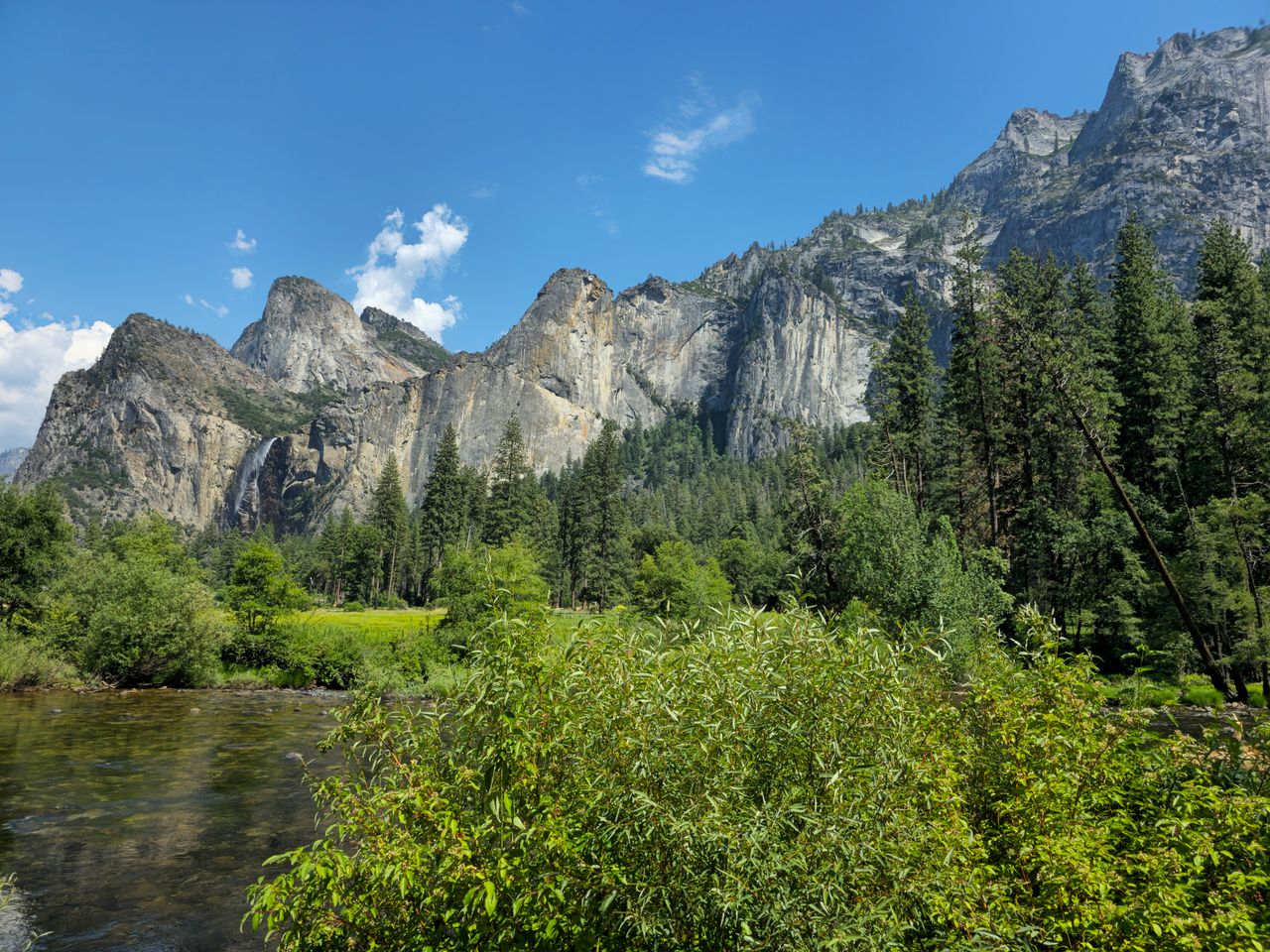
Yosemite National Park, måned for måned
Komfortscore ud af 100 for den slags rejse, Yosemite National Park er bedst til, den gennemsnitlige dagtemperatur, regnvejrsdage og soltimer om dagen fra klimanormalerne, og hvor travlt der typisk er.
Det sker i Yosemite National Park året igennem
Festivaler, naturfænomener, helligdage og de sæsoner, man skal holde øje med — kurateret og med kilder. Månedssiderne har detaljerne.
- januar
- Bear canisters and food lockers1. jan. – 31. dec.Regel
- februar
- Horsetail Fall at sunset8.–27. feb. (normalt)Natur
- april
- Dogwood in the valley15. apr. – 20. maj (normalt)Natur
- Waterfalls at full flow15. apr. – 15. jun. (normalt)Natur
- maj
- Memorial Day weekend23.–25. majHelligdag
- Tioga and Glacier Point roads open10. maj – 10. nov. (normalt)Åbning
- Half Dome cable permits20. maj – 15. okt. (normalt)Regel
- juni
- Summer peak15. jun. – 25. aug.Sæson
- juli
- Tuolumne Meadows in flower1. jul. – 10. aug. (normalt)Natur
- Wildfire smoke15. jul. – 30. sep. (normalt)Risiko
- august
- Labor Day weekend5.–7. sep.Helligdag
- oktober
- Autumn colour in the valley10. okt. – 15. nov. (normalt)Natur
- november
- High country closed for winter10. nov. – 10. maj (normalt)Lukning
- december
- Badger Pass and the winter valley15. dec. – 20. mar. (normalt)Sæson
Travlhed i Yosemite National Park i august
Hvor travlt der er på selve stedet — skoleferier og masseferier, de måneder en redaktør har markeret, og hvor eftertragtet vejret gør dem. Aldrig en del af komfortscoren.
TætpakketSummer peak, Summer break i United States, skoleferie på 2 af de markeder, der fylder stedet(anslået)
TætpakketTravltSkuldersæsonStille
Noter fra rejsende om Yosemite National Park
Hvad folk, der har været der, siger om stedet — noterne for hele året først, derefter måned for måned.
Weather can change rapidly during all seasons of the year, and will also vary greatly with elevation. When visiting it is wise to pack for any season with clothing that can be layered, ready to peel off or add on as conditions dictate. Always include some kind of rain gear; the park receives most of its precipitation in the winter months, but storms are common during the transitional spring and fall seasons, and spectacular thunderstorms may occur during summer. For Yosemite Valley and Wawona (subtract 10-20°F (5-10°C) for Tuolumne Meadows), average weather is as follows: * Summer: Typically warm and dry, with occasional thunderstorms; temperatures from 50°F (10°C) to the low 90°F (30°C) range. * Fall & Spring: Highly variable, with typical high temperatures ranging from 50-80°F (10-27°C), with lows from 30-40°F (-1 to 4°C). Rain is less likely early in fall/late in spring and rain or snow is likely late in fall/early in spring.…
Yosemite forum threads describe January as cold with real snow a genuine possibility, and posters were clear that conditions swing widely - from bright blue skies right after a fresh snowstorm to grey, rainy days with cloud sitting just above the valley floor. Tire chains were flagged as a real consideration, with posters noting most Januaries don't require chains for all vehicles on Highway 140 (the recommended all-weather route), though it has happened in some years when snow falls at 5,000 feet or lower. A genuine safety note repeated across threads: the easy valley-floor walking trails to the base of some waterfalls can turn genuinely icy and hazardous in winter, so posters recommended proper footwear and checking current conditions before setting out, with the YARTS bus system offered as a fallback when road conditions turn unfavorable.
Yosemite-forum threads on how the park runs in February describe this as genuinely one of the best months for anyone comfortable with winter conditions, posters calling the valley considerably quieter than the summer crush. Regulars call chains mandatory for driving in this time of year, Tioga Road and Glacier Point Road both fully closed regardless of conditions elsewhere. Posters describe the YARTS bus from Mariposa or El Portal as a real alternative to driving, avoiding the chain requirement. Regulars call the famous Horsetail Fall 'firefall' effect a genuine highlight, the glow appearing only on clear evenings in the second half of the month when sunset light hits the water right. Posters recommend real layers and traction devices for valley floor walks, icy patches common on shaded trails. Regulars call the near-empty valley a genuine reward for the cold. The record: 0.3C days feeling like -3C, -8.5C nights, an extraordinarily high 202.7mm across 10 days and 68 percent humidity.
Yosemite-forum threads on a March visit describe waterfall flow as genuinely still building toward the May snowmelt peak, posters naming this month strong but not yet at full volume. Regulars call valley-floor snow genuinely inconsistent given the roughly four-thousand-foot elevation, several posters naming a real chance of a spring storm and tire-chain requirements at higher elevations. Posters call Yosemite Falls genuinely viewable from most valley vantage points in March, several regulars naming this a reason the month still works well for waterfall viewing. Regulars call Tuolumne Meadows and Glacier Point genuinely closed this time of year, several threads naming this a real limitation for the high country. Posters recommend checking tire-chain requirements before a March trip, several regulars calling this standard given how unpredictable spring storms remain. The record: 0.9C days, -7.3C nights, an extraordinarily high 220mm across nearly 13 days and 74 percent humidity.
May is peak waterfall season in Yosemite Valley — the forum puts high water at roughly mid-May to mid-June, with the falls thundering rather than trickling by late May. The catch is elevation, and it is worth knowing that the park-wide averages shown here reflect the high country rather than the Valley floor: while the Valley is mild and green in May, Tioga Road and the high country are usually still under snow, typically opening late May or into June. Across the last thirty years the earliest opening was 29 April and the latest 1 July, and a late spring storm can close it again afterwards. Plan the Valley for May; plan Tuolumne for July.
Yosemite-forum threads on July waterfalls are consistent the valley's falls are well past their spring peak by this point, Yosemite Falls typically the first to thin to a trickle, but posters call the flow entirely dependent on how much water built up in the high country the prior winter - a heavy winter can keep real water moving well into the month. Vernal and Nevada Falls, reached via the Mist Trail, are repeatedly named the best bet for still-flowing water in July regardless of the year. Days run warm enough for shorts and a t-shirt, evenings cool enough that a proper jacket is standing advice, and afternoon thunderstorms are common enough that ponchos are worth packing even under a clear morning sky. Regulars call July warm on the valley floor but genuinely pleasant once up on the higher trails. The record: 23.3C days feeling like 22C, 10.3C nights, just 16mm across 4.8 days, 42 percent humidity and 13.5 hours of sun.
Yosemite-forum threads on August split the month cleanly at the halfway point: the first two weeks run just as busy as July, while the back half turns into a secret getaway once the kids are back in school, with mostly European visitors filling the gap. Waterfalls are the other seasonal trade-off worth knowing - Yosemite Falls will have dried up entirely by this point in summer, while Bridal Veil, Nevada and Vernal keep running year-round, so 'no waterfalls' isn't quite true, just narrower than spring. Posters call the roads all open and the high-country mosquitoes gone, but also flag it as warm, sunny and dusty enough to put a premium on air conditioning and off-peak hiking. The record: 22.6C days, 9.8C nights, just 22mm of rain across five days, humidity a dry 44 percent and 12.4 hours of sun.
Yosemite National Park-forum threads on a September visit call this genuinely one of the better windows, posters describing considerably fewer crowds compared with peak summer while daytime conditions stay comfortable and dry. Regulars call high Sierra hiking a real September highlight, trails there noticeably less crowded than the main Valley routes even during one of the park's busier months overall. Posters call waterfall flow genuinely reduced by September, Vernal and Nevada Falls still holding some water while Yosemite Falls can run down to a thin trickle or even stop entirely. Regulars recommend planning around lower water levels rather than expecting a spring-style spectacle, September's appeal here resting more on hiking than waterfalls. Posters recommend booking well ahead regardless of the lighter crowds, September still ranking among the park's three busiest months. The record: 18.6C days feeling like 19C, 6.2C nights, 27.5mm across over 5 days and 42 percent humidity.
Yosemite forum regulars call November a genuine sweet spot for anyone who doesn't mind cool weather: “average temperature...is a high of 56 and a low of 33°F” in the Valley itself, “sweater warm during the day, cold at night,” good hiking conditions with “NO crowds except around the holiday.” Snow at low elevation in the Valley stays unlikely most of the month, but “snow at upper elevations (above 7000 feet) is a near certainty,” and posters warn Tioga Road and Tioga Pass may already be closed for the season. Some years bring an earlier storm that changes the picture fast — regulars specifically reference a November that saw “another storm, more road closures” — so checking current conditions before a trip matters more than the average. Our record: 5.9°C days, -4.6°C nights, 41.5cm of snow and 5.4 rain days — cold with real high-elevation snow, matching the “cool valley, snowy high country” read.
Tilføj din egen note fra Yosemite National Park på kortet.