Vejret i Malé (Maldives) måned for måned
Den bedste tid at besøge Malé (Maldives) er februar, marts og juni — 88/100 i februar, 31 °C og 8 regnvejrsdage. Den bedste sæson er tørsæsonen, januar til april (84/100 i gennemsnit).
Den værste måned er maj med 67/100 — trykkende hedt, gennemblødt, ren luft. Se maj →
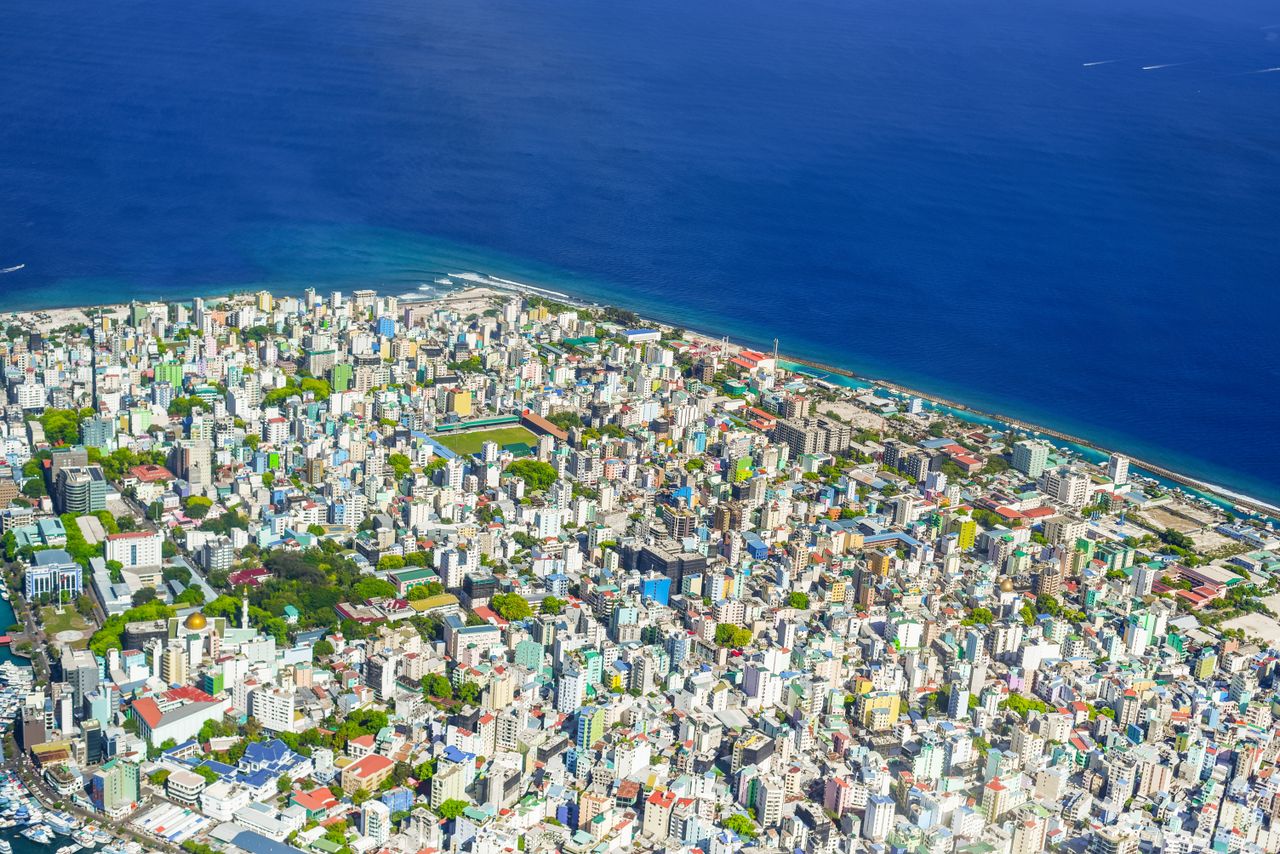
The dense, seawalled capital island of the Maldives and the transfer point for everywhere else; its weather is the weather for the whole atoll chain.
Opdateret september 2026 · klimanormaler fra ERA5-reanalysen
Bedste sæson: januar til april (84/100 i gennemsnit) · værst maj (67/100)
- Dage
- 31°C
- Nætter
- 27°C
- Våde dage
- 8
- Sol
- 10.8 h
- Luftfugtighed
- 77%
- Dagslys
- 12 h
Malé, måned for måned
Komfortscore ud af 100 for den slags rejse, Malé er bedst til, den gennemsnitlige dagtemperatur, regnvejrsdage og soltimer om dagen fra klimanormalerne, og hvor travlt der typisk er.
Sådan er hver måned i Malé
Skrevet af SeasonMaps redaktion ud fra, hvad der faktisk sker på stedet — ikke ud fra gennemsnittene.
- januar
The dry northeast monsoon: calm sea, light wind and the best underwater visibility of the year. Peak season and peak prices.
peaksea warm
- februar
The driest, sunniest month, with flat water and ideal conditions for diving and seaplane transfers.
peak
- marts
Dry and hot, still calm, with the season starting to soften towards the end of the month.
peak
- april
The hottest month, humid and still, as the monsoon changes over and the first squalls appear.
shoulder
- maj
The southwest monsoon sets in with wind, squalls and rain, and prices fall across the country.
monsoonlow season
- juni
Wet season, with rain in heavy bursts and choppier crossings, and manta rays gathering to feed on the western atolls.
monsoonlow season
- juli
Windy and wet, low season, and the surf season at its best on the eastern reefs.
monsoonlow season
- august
One of the wettest months, with storms and swell. The value is at its best and the diving is still good in the lee.
monsoonlow season
- september
Wet, humid and quiet, with the mantas still feeding on the plankton the monsoon brings in.
monsoonlow season
- oktober
Rain eases towards the end of the month and the wind drops: the shoulder between the two monsoons.
shoulder
- november
The dry monsoon returns, the sea flattens and the season restarts, before the peak prices arrive.
shouldersea warm
- december
Dry, calm and at its most expensive, with the final fortnight the busiest of the Maldivian year.
peak
Det sker i Malé året igennem
Festivaler, naturfænomener, helligdage og de sæsoner, man skal holde øje med — kurateret og med kilder. Månedssiderne har detaljerne.
- januar
- Whale sharks in South Ari1. jan. – 31. dec. (normalt)Natur
- februar
- Ramadan17. feb. – 19. mar.Regel
- marts
- Eid al-Fitr19.–21. mar.Helligdag
- Surf season on the eastern reefs1. mar. – 31. okt. (normalt)Sæson
- maj
- Manta season on the western atolls1. maj – 30. nov. (normalt)Natur
- Eid al-Adha1. maj – 15. jun. (normalt)Helligdag
- Hulhangu, the wet monsoon1. maj – 30. nov.Sæson
- juli
- Independence Day26.–27. jul.Helligdag
- december
- Iruvai, the dry monsoon1. dec. – 30. apr.Sæson
- Peak festive fortnight20. dec. – 10. jan.Sæson
Travlhed i Malé i februar
Hvor travlt der er på selve stedet — skoleferier og masseferier, de måneder en redaktør har markeret, og hvor eftertragtet vejret gør dem. Aldrig en del af komfortscoren.
Tætpakketredaktionens travleste måned, Iruvai, the dry monsoon, skoleferie på 2 af de markeder, der fylder stedet
TætpakketTravltSkuldersæsonStille
Godt at vide, før du tager til Malé
Rigtige oplevelser fra rejsendes egne beretninger, citeret med link til originalen.
Skik & brug
A practical warning for anyone flying into Male: alcohol cannot be brought into the country or consumed on inhabited islands, including the capital itself, and airport customs will confiscate any bottles found in luggage on arrival, holding them until departure rather than letting you keep them for the trip. The same piece notes that on Male and other local islands, dress should stay modest, with both men and women expected to keep shoulders and knees covered, quite different from the resort-island norm most visitors picture.
Noter fra rejsende om Malé
Hvad folk, der har været der, siger om stedet — noterne for hele året først, derefter måned for måned.
Regulars are clear this sits inside the dry season, past the unsettled wet-to-dry transition that wraps up in December, but is far from a calm month - genuinely windy, especially around the central atolls near Male, sometimes enough to churn up choppy seas and reduce underwater visibility. Our row backs a warm, still fairly wet read for a nominal dry-season month, 31C over 26.1C nights, with 135.9mm of rain across 11.4 days and a real 23.4 kph wind. Regulars note wind levels vary meaningfully by atoll, with the central atolls and the first half of February typically windier than other parts of the archipelago. The sea holds a warm 27.8C regardless. The record: humidity 78 percent, 10.2 hours of sun and AQI 62.
The Maldives forum treats February as close to a sure thing — calm seas, reliable sun, the smoothest speedboat transfers of the year between islands. It's also high season, so regulars' main advice is to book resorts and transfers well ahead rather than worry about the weather.
March is traditionally the most settled month of the Maldives year, and the forum's regulars recommend January to March as the block - calm breezes, calm sea, and the best snorkelling visibility of the year, with the caveat that visibility swings on tide, weather and which side of the atoll you are on. They are careful not to promise no rain: one poster's six March trips produced a storm on arrival that cleared, a pre-dawn thunderstorm and one five-minute squall across all of them, with the rest blue. The cost of the settled months is the obvious one - this is the most expensive and busiest stretch of the year. The record: 32C days that feel like 37C, 27C nights, 9.8 precipitation days, 10.9 hours of sun and a 29C sea.
Maldives-forum threads on typical April weather describe a month balanced right on the seasonal hinge: certainly hot and humid at least part of the time, with some rain likely at some point, since the end of April marks the changeover from the dry monsoon to the wet one - a shift nobody can predict the exact timing of, though it more often lands later in April or slips into May. Experiences reported directly split along that line: some visitors get hot, clear days with great visibility straight through mid-April, others get predominantly sunny stretches with occasional showers that never last long. The consistent advice is that early April runs more reliable than late April. The record: 32.4C days feeling like a sticky 39C, 27.3C nights, 97mm across 14.6 days, a 30.9C sea, 79 percent humidity and 11 hours of sun - already leaning toward the wetter half of the changeover.
June sits inside the Maldives' south-west monsoon, which runs from about May to November and is the wetter and windier of the two. The forum's arithmetic is more useful than the label: across any fortnight expect roughly five wet and windy days, with the rest moderately windy and the odd shower, and rain that might be five minutes, an afternoon, or the whole day. Our row gives 15.6 precipitation days carrying 80.8mm and a 24.1 kph wind. Two things they add. The weather is local enough that you can sit in sunshine watching a neighbouring island get drenched; and the pattern usually gives a long break somewhere in June before July and August turn properly bad. The record: 31.7C days that feel like 36C, 27C nights and a 29.6C sea.
Regulars are specific that the southwest monsoon driving this month's rain hits the southern atolls noticeably harder than the northern ones, southern islands averaging roughly 2,300mm of rain a year against about 1,800mm in the north - a real factor when picking which atoll to book. Our row backs that hot, genuinely wet read, 31.4C reading as a hot 36C, over 26.5C nights, with a substantial 148mm of rain across 16.8 days and humidity at 80 percent. Regulars are consistent rain here tends to arrive in short, intense bursts rather than all-day downpours, often concentrated overnight, and that this counts among the cheapest months to visit precisely because of the rainy reputation. The sea sits at a bath-warm 29.7C regardless of atoll. The record: 10 hours of sun, a 22.7 kph wind and one of the cleanest air readings in this project, AQI 25.
Forum posters call August one of the wettest months, squarely inside the May-October southwest monsoon - but they're clear the Maldives never actually delivers constant monsoon-style rain even at its wettest: rarely more than about 3 consecutive rainy days, with showers typically frequent but short, interspersed with real sunshine. One useful quirk: rain can fall on one island and leave the resort next door completely dry. The clear financial upside is that July-August usually rank among the cheapest months to visit. Posters describe outcomes as genuinely mixed trip to trip - some report excellent weather throughout, others get more overcast, showery stretches - but call a full washout of half a two-week stay a real outlier rather than the norm.
Tilføj din egen note fra Malé på kortet.