Vejret i Darvaza Gas Crater måned for måned
Den bedste tid at besøge Darvaza Gas Crater er marts, april og oktober — 94/100 i oktober, 20 °C og 2 regnvejrsdage. Den bedste sæson er efteråret, september til november (84/100 i gennemsnit).
Den værste måned er juli med 32/100 — trykkende hedt, tørt. Se juli →
Opdateret september 2026 · klimanormaler fra ERA5-reanalysen
Planlægger du den større rejse? Bedste tid at besøge Turkmenistan →
Bedste sæson: september til november (84/100 i gennemsnit) · værst juli (32/100)
- Dage
- 20°C
- Nætter
- 9°C
- Våde dage
- 2
- Sol
- 9.5 h
- Luftfugtighed
- 48%
- Dagslys
- 11 h
Darvaza Gas Crater, måned for måned
Komfortscore ud af 100 for den slags rejse, Darvaza Gas Crater er bedst til, den gennemsnitlige dagtemperatur, regnvejrsdage og soltimer om dagen fra klimanormalerne, og hvor travlt der typisk er.
Travlhed i Darvaza Gas Crater i oktober
Hvor travlt der er på selve stedet — skoleferier og masseferier, de måneder en redaktør har markeret, og hvor eftertragtet vejret gør dem. Aldrig en del af komfortscoren.
Travltskoleferie på 3 af de markeder, der fylder stedet, en af stedets bedste måneder vejrmæssigt(anslået)
TætpakketTravltSkuldersæsonStille
Noter fra rejsende om Darvaza Gas Crater
Hvad folk, der har været der, siger om stedet — noterne for hele året først, derefter måned for måned.
Darvaza-forum threads on a February visit describe genuine shoulder season, posters naming February alongside May, September and December as months locals recommend for lower prices and thinner crowds. Regulars call nights here genuinely freezing despite daytime highs staying above zero, several posters warning campers to bring real cold-weather gear for a tent stay at the site. Posters call a sunset-timed arrival the real standard plan, several regulars naming the shift from daylight to the crater's night glow as the highlight most visitors time their trip around. Regulars call February considerably quieter than the summer rush, several threads naming this a real advantage for anyone wanting the crater without tour-group crowds. Posters recommend real layered clothing regardless of the afternoon, several regulars calling this standard given how fast temperatures drop after dark. The record: 10.5C days, 0.5C nights, 11.2mm across over 3 days and 65 percent humidity.
Darvaza-forum threads on a May visit describe spring as genuinely one of the most favored windows, posters calling March through May a real sweet spot with mild daytime readings good for exploring the desert on foot. Regulars call the crater genuinely at its best with fewer people around, several posters recommending an overnight yurt stay specifically to see the flames after the day-trip crowds leave. Posters call this genuinely difficult to visit independently, an organized tour cited repeatedly as close to essential given how remote the site sits in the Karakum Desert. Regulars call evenings here noticeably cooler than the warm days, several threads recommending real layers for anyone staying overnight regardless of a hot afternoon. Posters recommend booking well ahead for a May trip, several regulars calling spring genuinely one of the busier windows for organized tours reaching the crater. The record: 30.4C days, 18.9C nights, 18.9mm across nearly 4 days and 42 percent humidity.
Darvaza-forum threads on a July visit describe this as genuinely off-season, posters naming daytime readings around forty-two degrees with overnight lows near twenty-six as a real reason most guides steer visitors away from summer. Regulars call June through August genuinely dangerous, several posters warning heat exhaustion and dehydration are not hypothetical risks. Posters recommend March-May or September-November instead, several regulars calling these the only real sensible windows for a proper visit. Regulars call the heat at the crater's edge itself genuinely intense regardless of season, several threads describing waves of real warmth washing over anyone close, on top of already brutal July conditions. Posters recommend an organized tour and real caution for a July trip if attempted at all, several regulars calling this standard advice for anyone determined to visit in peak summer. The record: 38.7C days, 26.9C nights, 0.6mm across under 1 day and 22 percent humidity.
Darvaza-forum reviews on a September visit describe this as genuinely shoulder season here, posters naming daytime readings in the low-to-mid thirties with overnight lows considerably cooler, manageable rather than punishing. Regulars call dusk the real recommended timing, several posters naming this as when the crater's flames look most impressive against the fading light. Posters call a nearby yurt stay a real inexpensive option, several regulars citing roughly ten dollars a night as the standard way to see the crater lit up after dark without a rushed day trip. Regulars call a four-by-four genuinely necessary regardless of exact September dates, several threads warning the final kilometers run over a real sand track no standard car can handle. Posters recommend an organized tour, several regulars calling this close to essential given how difficult the site is to reach independently. The record: 28.8C days, 16.6C nights, 1.5mm across under 1 day and 28 percent humidity.
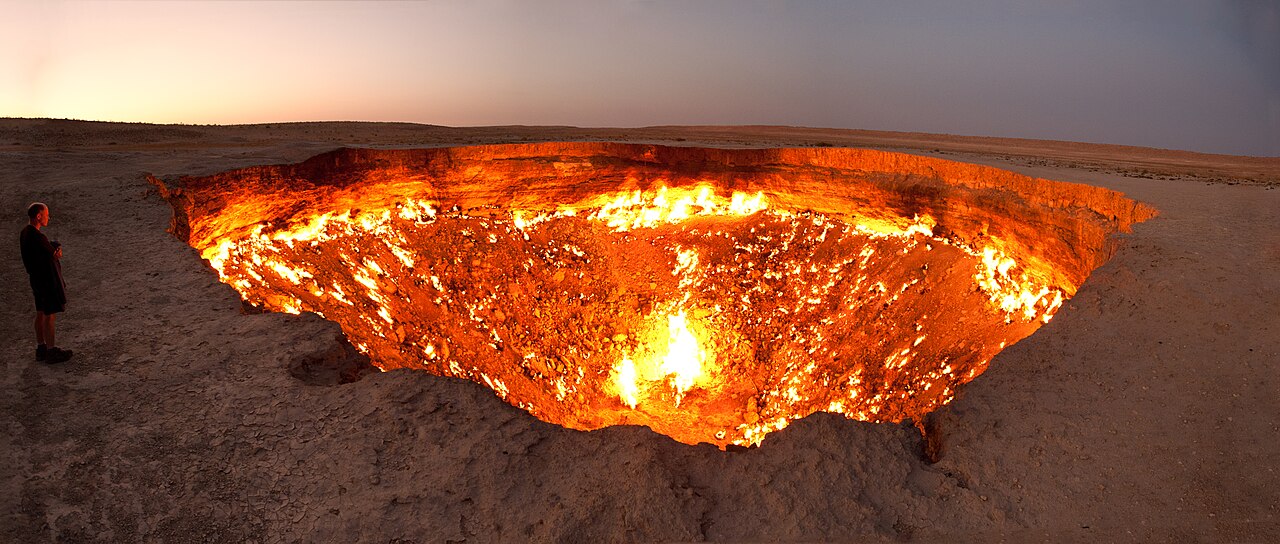
Darvaza-forum threads on an October visit describe the crater's blazing flames as genuinely unforgettable both at daylight and after dark, posters calling the nighttime view the real highlight most visitors come to see. Regulars call yurt camps near the crater generally hosting visitors from April through the end of October, several posters noting October sits right at the tail end of that window. Regulars call this genuinely difficult to visit independently, an organized tour cited repeatedly as close to essential given the crater's remote desert setting. Posters recommend staying overnight at a yurt camp rather than a rushed day trip, several regulars calling the after-dark glow considerably more dramatic than seeing it under full daylight. Regulars call real desert conditions here clear this time of year, several threads noting warm layers still worth packing once the desert cools after sunset. The record: 20.4C days, 8.9C nights, 5.5mm across 2 days and 48 percent humidity.
Darvaza-forum reviews on a November visit describe an organized tour as genuinely close to essential, posters naming how few English speakers there are in Turkmenistan as a real reason independent travel gets complicated fast. Regulars call a multi-day tour from a nearby city the standard way in, several posters naming three-day, two-night itineraries with an overnight at the crater as typical. Posters call the site genuinely still active and evolving, several regulars naming a drilling rig on-site working to divert the gas toward a sales pipeline as a real recent development. Regulars call real cold nights standard by November despite mild days, several threads recommending a proper sleeping bag for camping at the site. Posters recommend booking through an established operator well ahead, several regulars calling this standard given how remote and bureaucratically complex a Turkmenistan visit is. The record: 11.4C days, 1.7C nights, 5.9mm across under 2 days and 63 percent humidity.
Tilføj din egen note fra Darvaza Gas Crater på kortet.