طقس ملبورن شهرًا بشهر
أفضل وقت لزيارة ملبورن هو فبراير، مارس وديسمبر — 93/100 في مارس، 26°C و6 أيام مطر. أفضل موسم هو الصيف، من ديسمبر إلى فبراير (90/100 في المتوسط).
أسوأ شهر هو يوليو بدرجة 74/100 — منعش، بعض المطر، هواء نظيف. اطّلع على يوليو →
A flat grid of laneways, coffee and sport, on a bay that faces the Southern Ocean, with weather that changes four times a day.
آخر تحديث: سبتمبر 2026 · معدلات مناخية من تحليل ERA5
تخطّط لرحلة أوسع؟ أفضل وقت لزيارة أستراليا →
أفضل موسم: من ديسمبر إلى فبراير (90/100 في المتوسط) · الأسوأ يوليو (74/100)
- النهار
- 26°C
- الليل
- 15°C
- أيام المطر
- 6
- الشمس
- 9.5 h
- الرطوبة
- 67%
- ضوء النهار
- 12 h
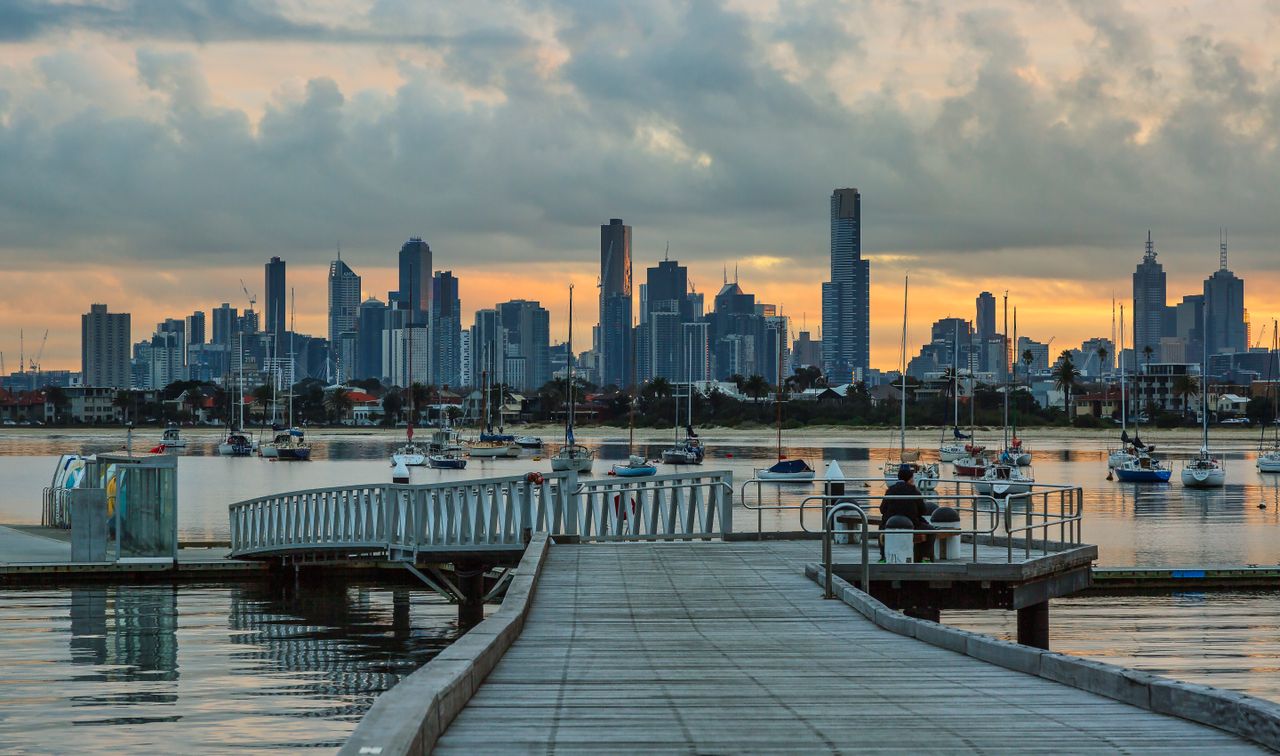
ملبورن، شهرًا بشهر
درجة الراحة من 100 لنوع الرحلة التي تناسب ملبورن أكثر، ومتوسط الحرارة العظمى، وأيام المطر، وساعات الشمس في اليوم من المعدلات المناخية، ومدى الازدحام المعتاد.
كيف يكون كل شهر في ملبورن
كتبها محررو SeasonMap مما يحدث فعلًا على أرض الواقع — لا من المتوسطات.
- يناير
High summer, and the tennis fills the second half of the month: hot northerly winds one day, a cool change off the bay the next.
peakfestival
- فبراير
The hottest, driest month, and the point at which the bushfire risk in the country around the city is at its highest.
peak
- مارس
The best month: warm, settled and dry, with Moomba over the long weekend and the food and wine festival running alongside it.
festivalshoulder
- أبريل
Autumn colour in the gardens, cool mornings, and the football season filling the MCG every weekend.
harvestshoulder
- مايو
Grey and cool, with the first real cold of the year. The light is low and the city moves into its bars and galleries.
low season
- يونيو
Cold and wet by local standards, and the ski season opens in the mountains two hours away on the June long weekend.
snowlow season
- يوليو
The coldest month, damp and dark in the city, and the best of the snow season up in the Victorian Alps.
snowlow season
- أغسطس
Still cold and grey, with the last of the ski season above and the city compensating indoors.
snowlow season
- سبتمبر
Spring: blossom in the suburbs, a lot of wind, and the football finals taking over the city at the end of the month.
blossomfestival
- أكتوبر
Changeable and often excellent, with the spring racing carnival building and jacaranda out at the end of the month.
blossomshoulder
- نوفمبر
The Melbourne Cup on the first Tuesday stops the state. Warm days, sharp cool changes, and the beaches starting to work.
festivalshoulder
- ديسمبر
Summer, holidays, and cricket at the MCG from Boxing Day, with hot spells broken by cool changes off the bay.
peakfestival
الفعاليات في ملبورن على مدار السنة
مهرجانات ومشاهد طبيعية وعطلات ومواسم تستحق الانتباه — منتقاة وموثّقة المصدر. والتفاصيل في صفحات الأشهر.
- يناير
- Australian Open12 ينا – 1 فبرمهرجان
- Chinese Lunar New Year Festival21 ينا – 5 مار (عادةً)مهرجان
- Australia Day26 يناعطلة
- فبراير
- Antipodes Festival25 فبر – 2 مار (عادةً)مهرجان
- مارس
- Moomba6–11 مار (عادةً)مهرجان
- Comedy Festival25 مار – 20 أبر (عادةً)مهرجان
- أبريل
- Autumn colour in the gardens15 أبر – 20 مايو (عادةً)طبيعة
- يونيو
- Alpine ski season opens6–8 يون (عادةً)افتتاح
- سبتمبر
- AFL Grand Final20 سبت – 3 أكت (عادةً)مهرجان
- أكتوبر
- Spring Racing and the Cup3 نوفمهرجان
- Jacaranda25 أكت – 5 ديس (عادةً)طبيعة
- ديسمبر
- Boxing Day Test26–30 ديسمهرجان
- Christmas and Boxing Day24 ديس – 1 يناعطلة
- Bushfire season1 ديس – 15 مار (عادةً)خطر
الازدحام في ملبورن في مارس
مدى ازدحام المكان نفسه — العطل المدرسية والعطل الجماعية، والأشهر التي وسمها المحرّر، ومدى الإقبال الذي يصنعه الطقس. لا يدخل هذا أبدًا في درجة الراحة.
مزدحمبين ذروتين، Chinese Lunar New Year Festival، Antipodes Festival
ذروة الازدحاممزدحمالموسم البينيهادئ
معلومات مفيدة قبل السفر إلى ملبورن
تجارب حقيقية من كتابات المسافرين أنفسهم، مقتبسة مع رابط إلى النص الأصلي.
المأكل والمشرب
A career Melbourne barista with seven years of experience serving tourists breaks down why visitors often get confused ordering coffee in the city: a 'flat white' isn't just a milky coffee elsewhere in the world, it's a specific, precisely calibrated drink Melburnians take seriously enough that a A$6 cup gets judged with the same scrutiny some cities reserve for fine dining. She describes watching tourists unknowingly order the wrong drink for what they actually wanted, simply because Melbourne's coffee vocabulary doesn't map cleanly onto what's standard in the US or UK. A separate traveler comparing Melbourne to Seattle and Portland - two cities he'd previously considered coffee-obsessed - concluded Melbourne actually goes further, with an entire specialty scene built around laneway cafes that don't advertise themselves and require knowing to look for. Posters generally recommend just asking the barista directly what a flat white is if unsure, rather than guessing from a menu, since staff are used to explaining it and would rather clarify than serve the wrong drink.
ملاحظات المسافرين عن ملبورن
ما يقوله من زاروا المكان — الملاحظات على مدار السنة أولًا، ثم شهرًا بشهر.
The city's climate is notorious for its changeability, often referred to as "four seasons in a day". Its climate can be described generally as temperate, with warm summers and cool winters. During the summer of December to February, daytime temperatures average around 26°C, with mildly comfortable nights averaging around 15°C, and humidity is rarely an issue. Despite this, it's not out of the ordinary for the city to swelter through heatwaves with temperatures that can exceed 35°C and top out around 40°C; such sweltering days come with nighttime lows that don't go below 20°C. With approximately 600 mm of rainfall annually, Melbourne gets only half as much rain as Sydney. October is typically the wettest month. Days are long, with sunrise at 6AM and sunset at 8:45PM. Winter (June–August) is usually cool with a mix of clear, sunny weather and cold & damp conditions. Temperatures in winter can range from chilly overnight lows as low as 0°C to daytime highs as high as 19°C at times.…
Melbourne forum threads are unanimous that January weather here is genuinely volatile - the city's famous 'four seasons in one day' reputation is fully earned this month, with temperatures capable of swinging from the high 30s Celsius down to the high teens within 24 hours, sometimes triggered by a sudden wind change from the north to the south. One poster described a mid-40s afternoon dropping to the low teens within an hour once the change hit. The consistent packing advice: bring layers regardless of the forecast, including a light cardigan or jacket, since a hot, sunny morning can turn cold and stormy with startlingly little warning.
February is Melbourne's hottest month and its most volatile. Regulars give the local rule bluntly: it can be 40C at two in the afternoon and 26C at half past, and February holds both some of the city's hottest days on record, into the mid-40s, and some of its wettest, with more than 80mm in 24 hours. They are divided on the four-seasons-in-one-day slogan, some calling it more myth than reality, but agreed on the consequence, which is layers and a flexible plan. The geography is the explanation - a hot dry continent to the north and Antarctica as the nearest southern neighbour. The record: 26.7C days, 15.5C nights, 3.8 precipitation days carrying 25.2mm and a 21.2C sea.
March is autumn here, which Melbourne-forum regulars rate as one of the best seasons - with the standing warning that the weather is very changeable: hot one day, quite cool the next, and a big drop overnight. The advice even to visitors from hot climates is to pack light winter layers, not just summer clothes. March is also the month posters name as the most reliable for staying out of the rain. Moomba lands early in the month over the long weekend, with the parade on the Monday from about 11am and the Yarra parkland given over to stalls, food vans, kids' activities and live music. The record: 25.6C days, 14.8C nights, 5.9 precipitation days, 9.5 hours of sun, a 19.9C sea and AQI 33.
Melbourne forum threads describe July as one of the two coldest months of the year - the other being August - with daytime temperatures around 12-17C and nights dropping into single figures, though posters are specific that it rarely reaches 0C in the city and a frosty morning usually promises a sunny, still day rather than a grim one. Rain is framed as drizzle that passes reasonably quickly rather than all-day soakers, with the heavier rain of the year arriving in spring, not winter. The season's defining feature is the swing - still frost-calm mornings against blustery days when a front pushes up from the Southern Ocean - which is why the repeated packing advice is layers. Posters also supply the upside: winter Melbourne means thinner crowds and Australian Rules football in full swing, and several locals note that by northern-hemisphere standards this is a mild winter - cold here is relative to what you are used to.
Regulars back their reputation for wild swings with a specific example rather than a general claim: one October saw 16C, then 26C the very next day, then back down to 16C the day after that - three days, three different seasons in effect. Our row backs a mild average across that range, 21C over 10.3C nights, with 78mm of rain across 9.9 days and a real 21.7 kph wind. Regulars describe the realistic range across the month as anywhere from 14 to 35C, most likely landing in the low 20s, with layering the only sensible way to handle a day that can genuinely go either way. The sea sits at a cool 15.8C. The record: humidity 70 percent, 9.7 hours of sun and one of the cleanest air readings in this project, AQI 32.
Regulars are direct that late spring here means genuine swing rather than a single number: a warm afternoon can meet a cold front and drop ten degrees in half an hour, with cool mornings, mild-to-warm afternoons and a cooling evening all inside the same day. Our row backs the range, 22.9C over 12.3C nights, with 68.4mm of rain across 9.1 days and a real 20.8 kph wind - regulars describe the rain itself as more heavy passing showers than steady drizzle. The standard packing list follows directly from the swing: shorts and a t-shirt for the warm stretch, a long-sleeved layer and a cardigan or light jacket for the cooler hours either side. The sea holds 18.2C. The record: humidity 69 percent, 10.4 hours of sun and AQI 32.
Locals will tell you the four-seasons-in-a-day line is more legend than forecast - by their own count it happens two or three days a year - but they will also tell you December is genuinely changeable, running mid-twenties to low thirties with the odd heatwave near forty and cool stormy spells that often follow one. Our row averages that at 25.6C over 14C with 55.4mm across 7.2 days. The night is the part people underpack for: fourteen degrees, feeling thirteen in a 21.2 kph wind, after an afternoon in the high twenties. The bay reaches 19.8C. The record: humidity 66 percent, 11.4 hours of sun inside 14.7 of daylight, and AQI 30.
أضف ملاحظتك من بطاقة ملبورن على الخريطة.